

Maddy summaryHB 2564, titled "The Business and Public Area Liability Protection Act," removes restrictions on carrying firearms in state or municipal buildings and public areas when adequate security measures (like metal detectors or armed personnel at entrances) are not present. It directly affects legally qualified individuals (those not prohibited by law from carrying firearms) who enter public buildings without such security. The bill requires public employers to allow firearm carrying in public areas and throughout buildings if security is inadequate, but prohibits such carrying only where adequate security measures are in place. This amendment changes existing rules by shifting the burden to public buildings to implement security before banning firearms.
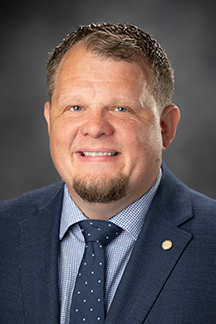
Rep. Ryan Browning
Sponsored bills
Maddy summaryHB 2565 prohibits West Virginia municipalities from charging user fees to employees who were not physically present in the municipality while performing job duties. This directly affects employees and their employers, particularly those working for companies serving multiple jurisdictions but not physically located in a specific city during their work. The bill requires employers to provide a sworn affidavit confirming the employee's absence, and if a fee was incorrectly charged, the municipality must issue a credit for future payments. The law amends existing fee regulations to prevent municipalities from imposing such fees when the employee's work did not occur within the city limits.
Maddy summaryHB 2380 would amend West Virginia law to impose a life sentence for individuals convicted of knowingly selling fentanyl. Specifically, it targets dealers who handle fentanyl classified as a Schedule II controlled substance, escalating penalties from the standard 3-15 year sentence for other Schedule II drugs to life imprisonment. The bill applies only to fentanyl sales (not other drugs or lower-schedule substances) and requires proof the dealer knew the substance was fentanyl. This change modifies Section 60A-4-401 of West Virginia Code, directly affecting fentanyl dealers convicted under this provision.
Maddy summaryHB 2149 requires tow operators, repair facilities, and salvage yards to implement specific safety protocols for damaged electric vehicles (EVs) to prevent fire hazards. The bill mandates that damaged EVs be towed to offsite locations for inspection (checking for battery leaks or structural damage), transported on flatbeds (or at under 5 mph if wheels turn), and stored with a 50-foot separation from combustibles or physical barriers like earth/concrete. These rules, to be enforced by the Division of Motor Vehicles and State Fire Marshal, directly affect businesses handling damaged EVs by standardizing safety procedures for transportation, storage, and repair. The law responds to fire risks linked to damaged EV batteries, particularly in states with higher EV adoption.
Maddy summaryThis bill proposes a constitutional amendment to lock the assessed value of a primary residence for West Virginia homeowners aged 65 or older. It would prevent future property tax increases based on rising market values by fixing the taxable value at either the age the owner turned 65 or the date they purchased the home - whichever occurred later. The amendment, if approved by voters in 2026, would replace current rules requiring periodic statewide reappraisals for these properties. It directly affects senior homeowners who occupy their property as a primary residence and are subject to ad valorem property taxes.
Maddy summaryHB 2183 creates a state loan program for local airports to fund hangar construction. It authorizes the West Virginia Division of Multimodal Transportation to provide loans (not grants) to counties, municipalities, and regional airport authorities for hangar facilities. The bill establishes a pilot program with eligibility criteria including site readiness, economic impact, and market demand, and requires annual reports to the Joint Committee on Government and Finance. This policy directly affects local airports seeking capital for hangar infrastructure, aiming to support aviation-related economic development in the state.