

Maddy summaryHB 2895 sets the assessed value of business machinery, equipment, and inventory used directly in business operations, plus all personal motor vehicles, to $0 for property tax purposes starting July 1, 2025. This policy change directly affects businesses that own such equipment or inventory, as well as owners of personal vehicles (which are typically not business property but are included in the bill). The key mechanism is a flat $0 valuation for these specific property types, removing them from the standard ad valorem property tax calculation. This represents a significant tax relief for affected businesses and vehicle owners by eliminating property tax liability on these items.
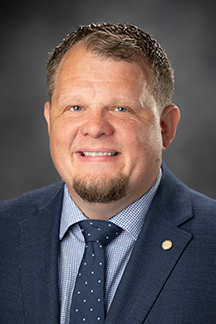
Rep. Ryan Browning
Sponsored bills
Maddy summaryHB 2813 sets a maximum limit of 75 grams of carbohydrates served to elementary school students during any school day. It directly affects all West Virginia county school boards and elementary schools, requiring them to implement this limit in their nutrition programs. The bill mandates that schools must not exceed this 75-gram daily carbohydrate threshold, with non-compliance resulting in reduced funding for school lunch programs. This policy change specifically targets the quantity of carbohydrates in school meals, without altering other nutritional standards or meal types.
Maddy summaryHB 2862 exempts ambulances transporting patients for non-emergency appointments from paying tolls on West Virginia turnpikes. The bill amends state law to specifically exclude these vehicles from toll obligations under the electronic toll collection system. This change directly affects ambulance operators and emergency service providers using toll roads for scheduled non-emergency medical transports. The provision removes the requirement for these vehicles to pay tolls, though it does not apply to emergency response trips. The bill focuses solely on removing a financial burden for this specific type of vehicle during non-urgent patient transport.
Maddy summaryHCR 65 is a West Virginia legislative resolution urging the U.S. Congress and Department of Energy to fulfill federal obligations under the Nuclear Waste Policy Act of 1982 regarding spent nuclear fuel. It highlights that over 90,000 metric tons of spent fuel are stored at 76 sites nationwide, with taxpayers bearing $9 billion in costs and nuclear customers having prepaid $46 billion for disposal, yet no permanent repository exists. The resolution specifically requests Congress and the DOE to implement recommendations from the Blue-Ribbon Commission, streamline regulations, and establish a deep geologic repository. It directly affects nuclear utilities, taxpayers, and communities hosting nuclear sites that face long-term storage challenges. The resolution is procedural and non-binding, aiming to prompt federal action on a decades-old policy gap.
Maddy summaryHB 2804 would increase criminal penalties for assaulting or battering athletic officials during sporting events in West Virginia. It raises fines for assault to a minimum of $500 (up to 6 months jail) and for battery to a minimum of $1,000 (up to 12 months jail). The bill defines "athletic official" to include umpires, referees, and coaches acting in their official capacity. This amendment would change current penalties under West Virginia Code §61-2-15a, applying specifically to incidents occurring while officials are enforcing rules or supervising events. The bill is currently pending in the House Judiciary Committee.
Maddy summaryHB 2786 exempts the salaries of specific public safety workers from West Virginia's personal income tax. It directly affects law enforcement officers, firefighters, correctional officers, and emergency medical services personnel who meet the definitions in existing state law. The bill adds a new tax provision stating these workers' salaries are not subject to state income tax. This creates a concrete policy change by removing a tax burden on these frontline public safety professionals.
Maddy summaryHB 2671 creates a $60 monthly (capped at $720 annually) income tax exemption for West Virginia residents who pay for gym memberships at facilities located within the state. This provision directly affects individual taxpayers who maintain gym memberships at in-state fitness centers. The bill sets a specific, fixed amount for the exemption with a clear annual cap, rather than offering a percentage-based deduction. It applies to personal income tax returns filed by West Virginia residents who meet the membership requirement. The bill is currently pending in the House Finance Committee.
Maddy summaryHB 2670 would double West Virginia's homestead property tax exemption from $20,000 to $40,000. This change directly affects homeowners aged 65 or older, or those certified as permanently and totally disabled, who occupy their primary residence and meet residency requirements. The bill increases the dollar amount covered by the exemption, meaning eligible homeowners would pay property taxes on the value above $40,000 instead of $20,000. It maintains existing eligibility conditions, including two years of continuous West Virginia residency (with exceptions for returning residents and military personnel), without altering other provisions.
Maddy summaryHB 2563 amends West Virginia's parole eligibility rules to automatically exclude individuals convicted of a felony against a police officer who was performing their official duties. This means such offenders cannot be considered for parole at any point and must serve their full sentences without early release. The bill directly affects inmates convicted of crimes where a law enforcement officer was the victim during work-related duties. It applies to all felony offenses meeting this criteria, regardless of the specific crime committed.
Maddy summaryHB 2561 establishes a formal process for appealing municipal ordinances that may violate West Virginia's home rule provisions. It allows any person subject to a municipality's jurisdiction - such as residents paying local taxes or fees - to appeal to the Intermediate Court of Appeals. During an appeal, 1% of municipal sales tax revenue is held in an escrow fund; if the court rules the ordinance invalid, the funds go to the state general fund, otherwise they return to the municipality. This bill creates procedural rules for appeals but does not change what municipalities can or cannot do under home rule.