

Maddy summaryHB 5365 regulates pharmacy benefit managers (PBMs) that provide prescription drug coverage services to West Virginia's Public Employees Insurance Agency (PEIA). The bill amends state code to create a special investigating unit within PEIA and grants the Insurance Commissioner authority to investigate PBM practices. It defines key terms related to PEIA operations and establishes oversight mechanisms for PBMs handling state employee health benefits. This bill directly affects PEIA and its contracted PBM providers, focusing on increasing transparency and accountability in prescription drug benefit management. The legislation is currently in committee review (House Banking and Insurance) after introduction on February 9, 2026.
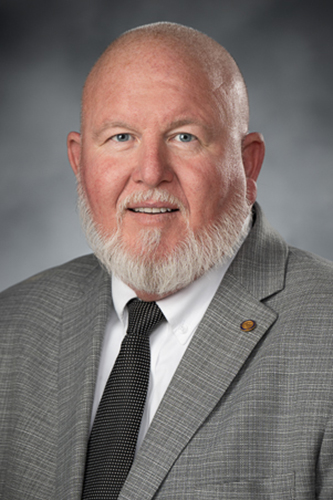
Del. Scot Heckert
Sponsored bills
Maddy summaryHB 4462 bans the sale of cell-cultured food products (like lab-grown meat, eggs, fish, or poultry) for human consumption in West Virginia. It defines these products as those made by growing animal cells in a lab to mimic traditional food items, and removes any requirement for labeling them as "lab-grown" or similar. The bill specifically targets cell-cultured products, not plant-based alternatives (defined as "analogue products"). This is a direct sales prohibition with no new labeling rules for the banned products.
Maddy summaryHB 5493 would require West Virginia courts to offer convicted sex offenders (specifically those found guilty of crimes against minors under §61-8-12 or related statutes) a choice between hormone treatment (medroxyprogesterone acetate or MPA) or surgical castration as an additional penalty, alongside standard sentencing. Courts must first confirm a defendant's medical suitability for MPA treatment through a court-appointed expert, and the treatment duration is specified in the sentence. Refusing MPA treatment after sentencing could result in a 1-5 year prison term. The bill also mandates a prerelease risk assessment for these offenders before their release from prison.
Maddy summaryHB 5526 clarifies rules for purchasing tax-abandoned land at public auctions held by West Virginia's State Auditor. It requires all bidders - individuals and businesses - to register in advance or submit a notarized affidavit confirming eligibility, with disqualifications for those with unpaid taxes, code violations, or prior auction defaults. The bill specifically allows 501(c)(3) nonprofit housing organizations to win auctions if their bid is no more than 5% below the highest non-profit bid, excluding for-profit entities or religious groups. It also mandates that businesses (foreign or domestic) must provide proof of valid registration to participate in these land sales.
Maddy summaryHB 5500 exempts open-top farm vehicles transporting hay, straw, silage, and other natural farm products between farms from penalties for load escape. It specifically applies to vehicles carrying loose, bio-degradable materials that pose no environmental hazard (like fall foliage), but excludes fully loaded vehicles with large bales that could cause injury if dislodged. The bill requires farmers to obtain special permits for these vehicles and limits their speed to 45 mph when hauling materials prone to blowing away. This change directly affects farmers using open-top transport for agricultural products, removing fines for incidental escape while maintaining safety standards.
Maddy summaryHB 5460, the Construction Cost Relief Act, provides a sales tax rebate for construction materials used in new single-family homes built for residential ownership in West Virginia. The rebate covers up to 30% of the home's sale price (or construction loan amount if the builder occupies the home), calculated using a county-specific housing index relative to the state average. Homeowners and builders must claim the refund within one year of construction completion using state forms, and the refund cannot be transferred to another party. This law applies only to new construction starting on or after July 1, 2026.
Maddy summaryHB 4405 requires West Virginia public defender corporations in any judicial circuit to split into two separate, independent offices when they employ six or more assistant public defenders (including the chief public defender). This change directly affects public defender offices that reach this staffing threshold, mandating a structural split while keeping the same governing board for both new entities. The bill expands the executive director's authority to create, merge, or dissolve public defender corporations to improve legal representation quality, address conflicts, and manage state funds more effectively. It also requires the executive director to consult with circuit judges before making such changes and submit reports to the Legislature. The key mechanism is the automatic split trigger at six attorneys, aiming to enhance resource allocation without adding new staff.
Maddy summaryHB 4466 expands West Virginia's public intoxication law to include impairment from narcotics. It amends §60-6-9 to define "intoxicated" as covering impairment from controlled substances (narcotics), not just alcohol, when appearing in public. This makes it a misdemeanor for individuals to be publicly impaired by narcotics, punishable by fines ($5-$100) or mandatory education programs for first offenses. The law directly affects people appearing in public while impaired by narcotics, with penalties increasing for repeat violations. The change clarifies enforcement standards for law enforcement and judicial officers.
Maddy summaryHB 5433 requires all state-regulated health insurance plans to cover hearing aids and annual audiological evaluations for insured individuals with hearing impairment. The bill mandates coverage for initial and replacement hearing aids (every 36 months), necessary adjustments, and at least one yearly hearing evaluation. It limits coverage to $1,400 per hearing-impaired ear every 36 months for standard hearing aids, while allowing individuals to pay extra for more expensive options without penalties. The law applies to policies issued or renewed after January 1, 2026, and excludes batteries and cords from coverage.
Maddy summaryHB 5432 creates a tax credit for West Virginia taxpayers subject to the severance and business privilege tax who spend money on disaster repair and recovery efforts, such as debris removal, public infrastructure repairs, and emergency services after events like hurricanes or floods. The credit covers qualified costs for labor, materials, and services directly tied to disaster recovery, excluding purchases above fair market value. Taxpayers must apply for the credit through a specific process, with unused credits allowed to be carried forward or transferred to successors. This policy aims to incentivize private sector participation in disaster recovery by reducing tax liabilities for eligible expenses.