

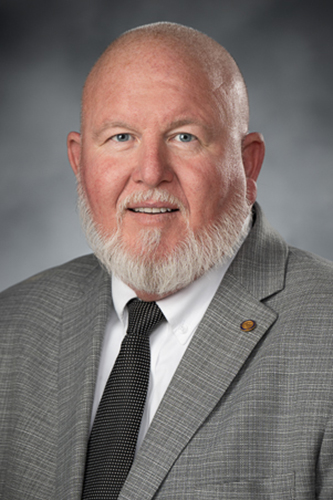
Photo of Scot Heckert
R West Virginia House of Delegates · District 13

Del. Scot Heckert

Compare
Total votes
3,175
all sessions
Attendance
98%
68 missed
Near the chamber average
With party
95%
of cast votes
Near the chamber average
Bipartisan score
2%
crosses aisle rarely
Near the chamber average
Sponsored
538
bills & resolutions
Higher than 96% of chamber peers
Committees
6
assignments
538 bills and resolutions

Sponsored bills

Total
538
Primary
58
Co-sponsor
480
This page
538
matching current filters
Co-sponsor HB 5025
In committee · West Virginia House of Delegates · Co-sponsor
Allowing the burning of obsolete farm structures.

Maddy summaryHB 5025 allows farm owners to burn obsolete, uninsured farm structures on agricultural land without facing second-degree arson penalties. It directly affects farmers who own outdated buildings (like barns or sheds) that are uninsured and no longer in use. To qualify, owners must submit a notarized letter to the county assessor and fire department seven days before burning, confirming the structure is uninsured and meets Department of Environmental Protection permitting requirements. The bill modifies existing arson law to create this specific exemption for eligible farm structures.

In committee Feb 11, 2026 1 co-sponsor
Primary HB 4458
In committee · West Virginia House of Delegates · Lead sponsor
Creating Substance Abuse Intervention Act

Maddy summaryHB 4458, known as "Joel’s Law," creates a legal process for involuntary treatment of individuals with substance use disorders who pose an imminent danger to themselves or others. It requires a petition from a family member, friend, or guardian to a West Virginia Circuit Court, accompanied by a guarantee to cover treatment costs, and sets strict criteria: the person must have a substance use disorder, present an immediate danger, and be likely to benefit from treatment. The bill establishes a 72-hour emergency treatment option and a formal court process for 60- to 360-day treatment orders, including medical examinations and a hearing within 14 days. This law directly affects individuals meeting these specific danger criteria and their families, while ensuring procedural safeguards like court oversight and cost accountability.

In committee Feb 11, 2026 0 co-sponsors
Co-sponsor HB 4011
Passed · West Virginia House of Delegates · Co-sponsor
Relating to advanced recycling.

Maddy summaryHB 4011 creates a certification framework for verifying that recycled materials used in manufacturing actually contribute to the final product, through third-party certification of "mass balance attribution." This directly affects manufacturers who want to use recycled feedstock (like plastic waste) in new products, as it standardizes how recycled content is measured and verified. The bill amends West Virginia's solid waste laws to clarify that advanced recycling facilities (which convert waste plastics into raw materials) are not considered waste disposal sites, supporting their role in recycling. By streamlining certification, the bill aims to reduce barriers for businesses adopting recycled materials in production.

Passed Feb 11, 2026 1 co-sponsor
Co-sponsor HB 4179
Passed · West Virginia House of Delegates · Co-sponsor
To create felony charge for individuals who assault police officers or police dogs

Maddy summaryHB 4179 creates a new felony charge for individuals who injure or kill animals used by law enforcement or fire officials, such as police dogs or horses. It replaces existing provisions and adds specific penalties for harming these animals, including 3-15 years in prison. The bill also requires restitution for victims, covering veterinary costs and replacement expenses for injured or killed animals. This directly affects anyone who assaults or harms trained animals working with police, fire, or emergency response teams. The law focuses on concrete penalties and financial accountability, not broader policy speculation.

Passed Feb 11, 2026 1 co-sponsor
Co-sponsor HB 4600
Passed · West Virginia House of Delegates · Co-sponsor
Require all ballots for primary and general elections be received not later than the close of the polls on election day.

Maddy summaryHB 4600 requires that all absentee ballots for primary and general elections must be received by 8:00 p.m. on election day to be counted. This applies to voters who request absentee ballots by mail or electronically. The bill amends West Virginia law to establish a clear deadline for ballot receipt, ensuring all absentee ballots are processed by the same time as in-person voting. It directly affects voters who choose to mail in their ballots, requiring timely delivery to meet the election day cutoff.

Passed Feb 11, 2026 1 co-sponsor
Co-sponsor HB 4978
In committee · West Virginia House of Delegates · Co-sponsor
Permitting Workforce WV to actively reach out to Unemployment Compensation filers with available jobs that fit their prior job history and salary range

Maddy summaryHB 4978 requires Workforce West Virginia to proactively match unemployment claimants with job openings from private employers based on their prior job history and salary range. This affects individuals receiving unemployment benefits in West Virginia, who will now receive tailored job referrals instead of only general job listings. The bill mandates that claimants apply for referred jobs within one week and accept suitable offers, while employers must report rejections or job acceptances to the state. It also ensures claimants accepting part-time work below their benefit rate retain full unemployment payments without reduction. The policy changes eligibility requirements to prioritize job matching as part of active job search efforts.

In committee Feb 11, 2026 1 co-sponsor
Co-sponsor HB 5426
In committee · West Virginia House of Delegates · Co-sponsor
To add the Bradford Peat Pear (Pyrus calleryana) to the noxious weeds list

Maddy summaryHB 5426 would add the Bradford Peat Pear (Pyrus calleryana) to West Virginia's official list of noxious weeds under the state's agricultural regulations. This designation directly affects farmers and landowners, as it would require measures to control or eradicate the plant to protect crops and agricultural land. The bill creates a new section (§19-12D-13) in the noxious weeds law, declaring the tree a "detriment to agriculture" and establishing it as a regulated weed. This policy change would trigger existing state requirements for managing noxious weeds, such as restrictions on sale, transport, and control methods.

In committee Feb 10, 2026 1 co-sponsor
Co-sponsor HB 5400
In committee · West Virginia House of Delegates · Co-sponsor
Relating generally to punishment for child neglect resulting in death.

Maddy summaryHB 5400 increases criminal penalties for child neglect resulting in death in West Virginia. It raises the minimum prison sentence from 3 to 10 years for offenders convicted of causing a child's death through neglect when both a fine and imprisonment are imposed. The bill also clarifies that religious healing methods meeting IRS criteria for medical expenses do not count as neglect (but this exception does not apply to professionals like teachers or doctors responsible for a child's health). Additionally, it specifies that interfering with court-ordered medical treatment is considered neglect under this law. The bill directly affects parents, guardians, custodians, and others in positions of trust responsible for a child's well-being.

In committee Feb 10, 2026 1 co-sponsor
Co-sponsor HB 5397
In committee · West Virginia House of Delegates · Co-sponsor
Remove sales tax from firearm suppressors.

Maddy summaryHB 5397 would exempt the sale of firearm suppressors from West Virginia's consumer sales and service tax. This bill directly affects individuals purchasing suppressors, which are devices designed to reduce the sound of a firearm discharge. The key provision amends the tax code to specifically exclude suppressor sales from taxable transactions, aligning them with existing exemptions for small arms and ammunition. The bill does not change ownership laws or safety requirements for suppressors, only the tax treatment of their purchase.

In committee Feb 10, 2026 1 co-sponsor
Co-sponsor HB 5103
In committee · West Virginia House of Delegates · Co-sponsor
Relating to requiring the Office of Health Facility Licensure and Certification to inspect office-based medication-assisted treatment programs at least every 24 months

Maddy summaryHB 5103 requires the West Virginia Office of Health Facility Licensure and Certification to inspect office-based medication-assisted treatment programs (which provide opioid addiction treatment using medication) at least once every 24 months. These inspections must include reviewing patient records to ensure compliance with licensing rules and may involve a pharmacist and law enforcement officer. The bill mandates formal inspections every two years, in addition to unannounced complaint inspections already allowed. It directly affects opioid treatment programs operating in medical offices across West Virginia.

In committee Feb 10, 2026 1 co-sponsor
Showing 71 to 80 of 538 bills
Previous 1 … 7 8 9 … 54 Next