

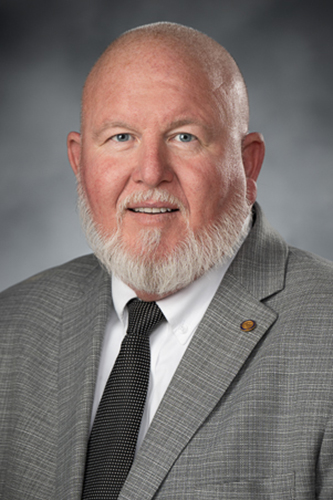
Photo of Scot Heckert
R West Virginia House of Delegates · District 13

Del. Scot Heckert

Compare
Total votes
3,175
all sessions
Attendance
98%
68 missed
Near the chamber average
With party
95%
of cast votes
Near the chamber average
Bipartisan score
2%
crosses aisle rarely
Near the chamber average
Sponsored
538
bills & resolutions
Higher than 96% of chamber peers
Committees
6
assignments
538 bills and resolutions

Sponsored bills

Total
538
Primary
58
Co-sponsor
480
This page
538
matching current filters
Primary HB 4973
In committee · West Virginia House of Delegates · Lead sponsor
Relating to raising the state minimum salary for teachers to $50,000 beginning in school year 2026-2027

Maddy summaryHB 4973 raises West Virginia's state minimum teacher salary to $50,000 beginning with the 2026-2027 school year, affecting all public school teachers across the state. The bill updates the salary schedule to guarantee a minimum base salary of $50,000 for every teacher regardless of experience or degree level, while also adding a $2,000 annual increase for all teachers. Additionally, teachers providing math instruction or special education services receive an extra $1,200 minimum salary increase. This amendment to West Virginia Code §18A-4-2 directly changes the state's minimum pay structure for educators starting in 2026-2027.

In committee Jan 29, 2026 0 co-sponsors
Co-sponsor HB 4963
In committee · West Virginia House of Delegates · Co-sponsor
Relating to establishing an additional modification reducing federal adjusted gross income relating to taxes on tips and overtime

Maddy summaryThis bill creates a tax break for West Virginia taxpayers who earn tips or overtime income. For 2026-2028, it allows taxpayers to subtract federal deductions for qualified tips and overtime from their state taxable income. Starting in 2029, it caps the tip deduction at $25,000 annually and overtime at $12,500 annually, phasing out the break for taxpayers with modified adjusted gross income over $150,000. Nonresidents only qualify for the break if their tips or overtime were earned while working in West Virginia.

In committee Jan 29, 2026 1 co-sponsor
Primary HB 4975
In committee · West Virginia House of Delegates · Lead sponsor
To consolidate county boards of education and create regional districts.

Maddy summaryHB 4975 consolidates West Virginia's 55 county-based school districts into 11 regional districts, effective July 1, 2030. The bill directly affects all 55 counties by merging their school governance structures into the specified regional groupings (e.g., Region 1 combines McDowell, Mercer, and Monroe counties). Key provisions define the exact county compositions for each of the 11 regional districts, eliminating separate county boards of education. This change streamlines administrative oversight while maintaining local school operations under the new regional framework.

In committee Jan 29, 2026 0 co-sponsors
Co-sponsor HB 4863
In committee · West Virginia House of Delegates · Co-sponsor
The West Virginia Refugee Absorptive Capacity Act

Maddy summaryHB 4863, the West Virginia Refugee Absorptive Capacity Act, requires state and local officials to assess community capacity before resettling refugees or immigrants. The bill mandates that the state office within the Department of Human Services evaluate factors like healthcare access, housing availability, school capacity, job market impact, and law enforcement resources through a formal assessment. It also requires quarterly coordination meetings with local governments, 30 days of public notice for resettlement plans, and fiscal impact reports before new resettlements begin. This directly affects local governments (counties/cities), the Department of Human Services, refugee resettlement organizations, and the communities receiving refugees.

In committee Jan 28, 2026 1 co-sponsor
Co-sponsor HB 4864
In committee · West Virginia House of Delegates · Co-sponsor
Providing for election reform and protections

Maddy summaryHB 4864 requires West Virginia counties to make all election data - including voting records, system logs, and audit files - publicly accessible under the state's Freedom of Information Act (FOIA) to any registered voter, removing all standard exemptions for this information. It mandates random physical inspections of electronic voting systems, restricts certain software, and establishes hand-counting procedures for verification. The bill directly affects all West Virginia counties using electronic voting systems and registered voters seeking election data transparency. Key provisions become effective immediately upon passage, shifting election data access from limited official review to direct public disclosure.

In committee Jan 28, 2026 1 co-sponsor
Co-sponsor HB 4469
In committee · West Virginia House of Delegates · Co-sponsor
Establish residency requirements for county surveyor be a resident of the state and provide exemption for holding more than one office.

Maddy summaryHB 4469 requires county surveyors first elected or appointed after January 1, 2027, to be West Virginia residents, defined as someone who lives in the state and has intent to stay (e.g., holds a driver's license, pays state taxes, or registers vehicles there). It does not affect current county surveyors but applies to future appointments. The bill also creates a process for county surveyors to request exemptions from the Ethics Commission if they wish to hold multiple public offices simultaneously. These exemptions require demonstrating the office is not widely available, requires personal prestige, and allows financial gain outside the role.

In committee Jan 28, 2026 1 co-sponsor
Co-sponsor HB 4081
Passed · West Virginia House of Delegates · Co-sponsor
To create the Higher Education Health and Aid Grant.

Maddy summaryHB 4081 creates the Higher Education Health and Aid Grant program for West Virginia public colleges with multiple campuses. The bill requires these institutions to use grant funds to establish campus food and health aid stations, specifically for non-perishable food items and basic hygiene products like toothpaste, sanitary supplies, and first-aid items. Funds cannot cover fresh food, medical care, or prescription items. Institutions must track all purchases and inventory monthly, and submit annual reports to the Higher Education Policy Commission detailing program impact on student food/hygiene insecurity.

Passed Jan 27, 2026 1 co-sponsor
Co-sponsor HJR 26
In committee · West Virginia House of Delegates · Co-sponsor
Change the Sheriff term limits from 2 consecutive terms to 3 consecutive terms

Maddy summaryThis bill proposes a constitutional amendment to change West Virginia's term limits for county sheriffs. Currently, sheriffs are barred from serving more than two consecutive terms; the amendment would allow them to serve up to three consecutive terms before becoming ineligible. The change would apply to future elections and does not affect current sheriffs serving in 2026. The amendment must be approved by voters in the 2026 general election to take effect.

In committee Jan 27, 2026 1 co-sponsor
Co-sponsor HB 4478
In committee · West Virginia House of Delegates · Co-sponsor
Relating to racing facilities

Maddy summaryHB 4478 creates legal immunity for West Virginia racing facilities from certain civil claims by surrounding property owners. It protects facilities operating lawfully for five or more years against lawsuits based on noise, vibration, nuisance, or similar claims brought by owners who acquired property after the facility opened or failed to sue within five years. The bill also prohibits local governments from enacting rules that conflict with this immunity. Key provisions include defining "racing facility" broadly and stating that compliance with state/federal law is prima facie evidence of reasonable operation. The law would take effect immediately upon passage.

In committee Jan 27, 2026 1 co-sponsor
Co-sponsor HB 4815
In committee · West Virginia House of Delegates · Co-sponsor
Allow community health center to provide sign-on bonus

Maddy summaryHB 4815 allows West Virginia community health centers designated as political subdivisions to offer recruitment and retention bonuses to staff. These centers, which primarily serve rural and underserved communities and rely on federal grants or third-party funding for most operations, may use non-state funds (like federal grants) for such bonuses. The bill requires all bonuses to comply with federal rules and prohibits the use of state-appropriated funds. It does not create new funding but clarifies how existing non-state resources can be used to address staffing challenges.

In committee Jan 26, 2026 1 co-sponsor
Showing 111 to 120 of 538 bills
Previous 1 … 11 12 13 … 54 Next