

Maddy summaryHB 5177 creates a state sales tax rebate for builders constructing modest homes under 1,600 square feet in West Virginia. The bill provides a rebate equal to the state's 6% sales tax paid on qualifying building materials purchased from in-state suppliers, subject to strict fixed quantity limits (e.g., 174 sheets of sheathing, 475 pieces of lumber). Builders must use only specified materials, retain documentation for 60 months, and receive approval after the home is sold and inspected. The rebate excludes municipal taxes unless a municipality voluntarily participates, and materials like basement finishes or out-of-state purchases are ineligible.
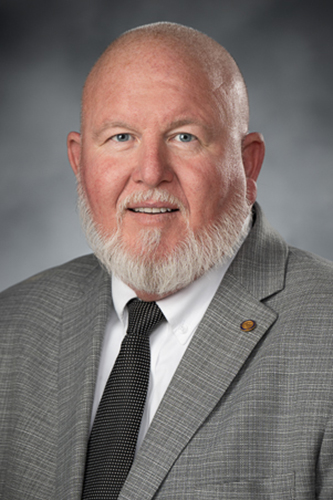
Del. Scot Heckert
Sponsored bills
Maddy summaryHB 4601 expands West Virginia's Child Abuse and Neglect Investigations Unit from a minimum of six to at least 21 members, requiring each of the 21 State Police districts to contribute at least one retired officer. The bill establishes unit offices in every State Police district (located within Human Services offices) and allows honorably retired State Police officers to rejoin under specific conditions - without accruing pension rights and after completing required training in areas like firearms and child abuse investigation protocols. The unit must coordinate with Child Protective Services, maintain statewide statistical data on child abuse/neglect convictions (without identifying individuals), and submit annual reports to the legislature. This directly affects Child Protective Services offices, law enforcement agencies, and retired State Police officers who may rejoin the unit.
Maddy summaryHB 5104 requires parolees or probationers identified through a standardized risk assessment as having a history of substance abuse to participate in approved support services for a minimum of 60 days. This applies specifically to individuals under supervision whose assessment (mandated under §62-12-6) confirms substance abuse history. The bill adds this as a mandatory condition of release under §62-12-17(a)(4), with participation schedules approved by probation or parole officers. It directly affects individuals on parole or probation in West Virginia whose substance abuse history is documented via the court-mandated assessment process.
Maddy summaryHB 5107 requires West Virginia courts to verify specific conditions before returning a child to a home where they were previously removed due to abuse or neglect. The bill mandates courts confirm that child welfare agencies made reasonable efforts to preserve the family, provided reasonable accommodations for parents with disabilities (per the Americans with Disabilities Act), and documented why reunification isn't safe or appropriate. This applies to all cases where a child is being considered for return home after removal, affecting courts, child welfare departments, parents, and the children involved. The law aims to ensure safety and proper planning before reunification decisions are made.
Maddy summaryThis is a symbolic House Resolution (not a bill), introduced by multiple West Virginia delegates. It designates the month of June as "Fidelity Month" to promote the values of faith, family, and patriotism across the state. The resolution cites declining support for these values in polling and research, and calls for the state to "rededicate" itself to them during June. It has no binding policy requirements or direct impact on specific groups; it is purely a commemorative gesture.
Maddy summaryThis West Virginia House resolution states that the U.S. national debt (over $38 trillion in 2026) poses a national security threat, citing foreign debt ownership, projected Social Security/Medicare shortfalls, and warnings from military/intelligence leaders. It urges Congress to establish regular budgeting procedures but does not create new laws or alter federal spending. As a symbolic resolution, it has no direct legal effect on national debt policy or federal budgets. The resolution focuses on raising awareness rather than implementing concrete changes.
Maddy summaryHB 4508, the Public Utility Stability Act, allows publicly owned water and sewer utilities (like city or county systems) to automatically increase rates annually without needing commission approval or local government ordinances. The bill sets rate increases equal to the annual change in the U.S. Bureau of Labor Statistics' Water and Sewerage Maintenance Index, calculated between specific September dates. Utilities must file revised tariffs and provide notice, but increases matching the index are considered fair and reasonable. Smaller utilities (under 4,500 customers or $3 million revenue) face limited commission review if increases exceed the index, while larger systems may be reviewed by county commissions. The bill aims to simplify rate adjustments tied to inflation for essential water and sewer services.
Maddy summaryHB 5030 modifies West Virginia's tax code to expand tax exemptions for certain public safety pensions. It adds Division of Natural Resources police, deputy sheriffs, full-time firefighters, and municipal police officers to the existing list of law enforcement personnel who can exclude the first $2,000 of retirement benefits from state taxable income. The bill amends §11-21-12(c)(6) of the West Virginia Code to include these roles under the tax-exempt pension provision. This change directly affects current and future retirees in these specific public safety professions by reducing their state income tax burden on pension payments. The policy change is limited to the first $2,000 of qualifying pension income per year, consistent with existing tax rules.
Maddy summaryHB 5003 clarifies the process for emergency involuntary hospitalization in West Virginia, allowing authorized hospital physicians to temporarily hold individuals at risk of harming themselves or others if they are addicted or mentally ill. The bill requires physicians to file a formal petition within 72 hours to extend hospitalization beyond that period, with courts then scheduling a hearing. It specifies that individuals must be released within 72 hours unless a petition is filed, and outlines payment rules for hospitals treating uninsured patients through the Legislative Claims Commission. The law also protects medical staff from liability when acting in good faith under these procedures.
Maddy summaryThis bill amends West Virginia law to allow parties (complainants or respondents) in Human Rights Commission (HRC) discrimination cases to transfer their cases directly to circuit court. It affects individuals or organizations involved in HRC complaints by providing an option to bypass HRC proceedings and seek resolution in judicial court. The change modifies existing procedures under §16B-17-10, enabling parties to "remove the matter" to circuit court instead of proceeding through the HRC's investigation and hearing process. This is a procedural adjustment with no new substantive policy changes.