Issue · Criminal Justice

Criminal Justice

Every criminal justice bill, vote, and legislator stance in West Virginia, automatically classified by Maddy, our AI policy reader.

Total bills
259
2026 Regular Session
Top supporter
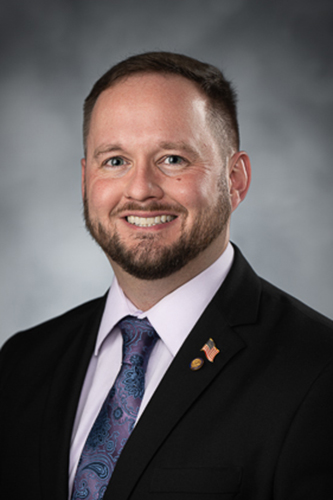
Elliott Pritt
80% support rate
Top opponent
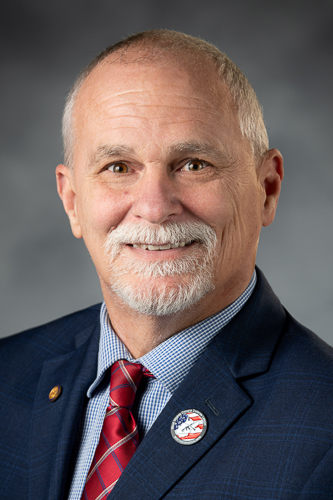
Guy Ward
12% support rate
Ranked legislators
10
5 support · 5 oppose
Key legislators

Who's moving criminal justice in West Virginia

Legislators moving criminal justice in West Virginia
Legislator Party Stance Support rate Votes
Elliott Pritt
Elliott Pritt House · District 50
R
Strong +
80% 24
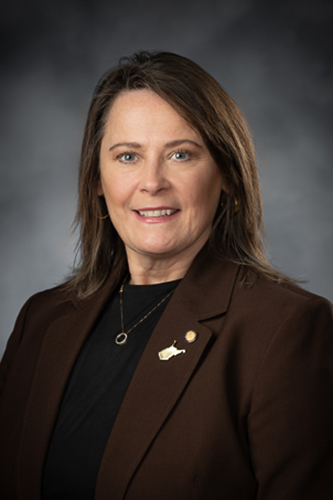
Margitta Mazzocchi
Margitta Mazzocchi House · District 31
R
Support
71% 27
Tresa Howell
Tresa Howell House · District 52
R
Support
67% 29
Chuck Horst
Chuck Horst House · District 95
R
Support
67% 29
Corby Dillon
Corby Dillon House · District 29
R
Support
67% 29
Guy Ward
Guy Ward House · District 74
R
Strong −
12% 28
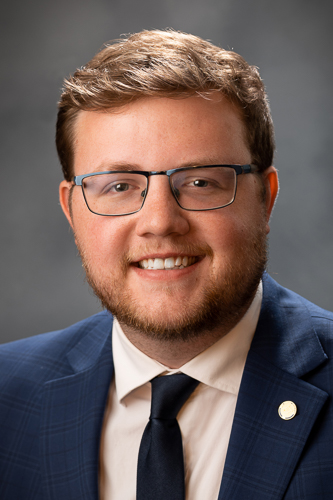
Jarred Cannon
Jarred Cannon House · District 21
R
Strong −
14% 24
Betsy Kelly
Betsy Kelly House · District 9
R
Strong −
14% 21
Mickey Petitto
Mickey Petitto House · District 70
R
Strong −
17% 20
Phil Mallow
Phil Mallow House · District 75
R
Oppose
22% 29
Showing 151–160 of 259 bills

All criminal justice bills

in committee · West Virginia · Senate Jan 14, 2026

SB 154: Prohibiting digital manipulation of sexually explicit content including minors

SB 154 prohibits digitally inserting an actual minor’s image into sexually explicit content to falsely depict the minor as participating in the conduct. It directly affects anyone who modifies photographs, videos, or recordings containing sexually explicit material by adding a visual image of a living or former minor (under 18 when the original image was taken). The bill creates a new felony offense punishable by up to five years in prison, a $10,000 fine, or both. This law establishes a separate criminal penalty distinct from other offenses under West Virginia law.
Sub-Topics Corrections
in committee · West Virginia · Senate Jan 14, 2026

SB 74: Establishing criminal offense of obstructing highway or other passageway

SB 74 (introduced by Senator Thorne) creates a new criminal offense for intentionally blocking public highways, streets, sidewalks, or other public passageways without legal authority. It defines "obstruct" as making passage impassable or unreasonably inconvenient/hazardous, and penalizes violations as a misdemeanor (fines of $500+ or up to 1 year in jail). Aggravated cases - such as blocking emergency vehicles, hospitals, or repeat offenses - become felonies with penalties of $1,000+ fines or 1-3 years in prison. The bill directly affects individuals who obstruct public routes (e.g., during protests or accidents) and law enforcement tasked with enforcing it.
in committee · West Virginia · House of Delegates Jan 19, 2026

HB 4543: Prohibit certain individuals from living within 5,000 feet of a school or daycare

HB 4543 requires individuals convicted of stalking or harassing minors to live at least 5,000 feet away from schools or daycares. This applies specifically to those with prior convictions under West Virginia's stalking and harassment laws (§61-2-9a), including those violating protective orders involving minors. The bill amends existing criminal penalties by adding this residency restriction as a condition of probation or post-release supervision. It directly affects individuals convicted of these offenses, imposing a geographic limitation on their housing options near educational facilities.
in committee · West Virginia · House of Delegates Jan 16, 2026

HB 4451: Relating to establishing the Veteran Justice Act allowing conditional opportunity for veterans to avoid a record conviction

HB 4451, the Veteran Justice Act, creates a program allowing eligible veterans charged with certain offenses to avoid a criminal conviction or have a felony reduced to a misdemeanor. It applies to veterans with military-related conditions like PTSD, TBI, or substance use disorder (SUD) that contributed to their offense, provided the crime is probation-eligible and not excluded (e.g., murder, sexual assault). Eligible veterans enter a court-supervised program involving evidence-based treatment tailored to their military service challenges, a personalized case plan, and probation instead of incarceration. If they successfully complete the plan, they avoid conviction; failure results in standard sentencing. The bill excludes serious crimes like human trafficking and requires verification of veteran status using federal databases like SQUARES.
in committee · West Virginia · House of Delegates Jan 30, 2026

HB 4998: Provide for a raise for private investigators hired by public defender offices or court appointed panel attorneys

HB 4998 increases the hourly pay rate for private investigators working with West Virginia public defender offices or court-appointed panel attorneys, raising it from $30 to $45 per hour. The bill amends existing law to directly affect these investigators by changing their compensation rate without altering application or payment processes. This is a straightforward pay adjustment targeting a specific group of public service workers who support indigent defense cases. The change applies to all such investigators employed under public defender services or court-appointed panels across the state.
Sub-Topics Courts
signed · West Virginia · House of Delegates Jun 29, 2026

HB 4415: Creating crime of attempting to smuggle contraband into federal correctional institutions within the state

HB 4415 amends West Virginia law to explicitly include federal correctional facilities in existing statutes prohibiting the smuggling of prohibited items into correctional settings. The bill makes it a misdemeanor to deliver items like food, clothing, or money without permission (fines up to $500, jail up to 12 months) and a felony to transport weapons, drugs, escape tools, or telecommunications devices (fines $1,000-$5,000, prison 1-10 years). It directly affects individuals attempting to smuggle contraband into federal prisons located within West Virginia, such as visitors, family members, or others delivering unauthorized items. The law updates prior penalties for smuggling into state facilities to apply uniformly to federal correctional institutions.
in committee · West Virginia · House of Delegates Jan 28, 2026

HB 4898: Requiring the West Virginia Department of Corrections and Rehabilitation to provide an inmate with one physical copy of their birth certificate and social security card upon release

HB 4898 requires West Virginia's Division of Corrections to provide every person on probation with one physical copy of their birth certificate and one physical copy of their Social Security card upon release from any correctional facility. This applies specifically to individuals being released after serving time under probation supervision. The bill mandates this document handout as a standard procedure, ensuring probationers have essential identification documents immediately after release. It directly affects all probationers exiting West Virginia correctional facilities, helping them access services like employment, housing, or government benefits that require these documents. The requirement is a straightforward administrative change with no additional fees or conditions specified.
in committee · West Virginia · Senate Jan 28, 2026

SB 396: Creating WV Job training and Placement Act

SB 396 creates the West Virginia Job Training and Placement Act, allowing certified retailers (specifically "workforce training community centers" meeting strict criteria) to keep 75% of sales tax revenue collected after their first $1 million in annual sales. These retailers must use the retained funds exclusively to provide job training and placement services for people facing barriers to employment, such as disabilities, criminal records, homelessness, or low education. The law requires certified organizations to serve at least three people per $10,000 retained, with an average of 2.25 successful job placements, and to monitor job retention for 90 days. Certification lasts three years, with renewal possible, and organizations must report usage to the state Department of Revenue.
in committee · West Virginia · House of Delegates Jan 29, 2026

HB 4923: Protecting Due Process in Firearm Confiscation Related to Protective Orders

This bill changes West Virginia law for domestic violence protective orders by requiring a court hearing with the respondent present and represented by counsel before restricting firearms. It mandates that courts must find "clear and convincing evidence" of an immediate danger (via documented threats or sworn testimony), not just general allegations, and prohibits using firearm confiscation as punishment. Respondents would automatically receive a 10-day appeal of any firearm restriction in the protective order. The bill directly affects individuals subject to domestic violence protective orders who might face firearm restrictions.
signed · West Virginia · House of Delegates Jun 29, 2026

HB 4053: To establish the blue envelope program.

HB 4053 establishes the "Blue Envelope Program" to improve communication between law enforcement and drivers with autism spectrum disorder, dementia, or intellectual/developmental disabilities during traffic stops. Eligible drivers (with a valid license/permit) can request a specially designed blue envelope containing their license, registration, and emergency contact information, along with a vehicle decal and communication guidance for officers. The program, set to launch January 1, 2027, will be administered through the West Virginia Division of Motor Vehicles, sheriff's offices, and police stations.
Showing 151 to 160 of 259 bills
Previous 1 15 16 17 26 Next