

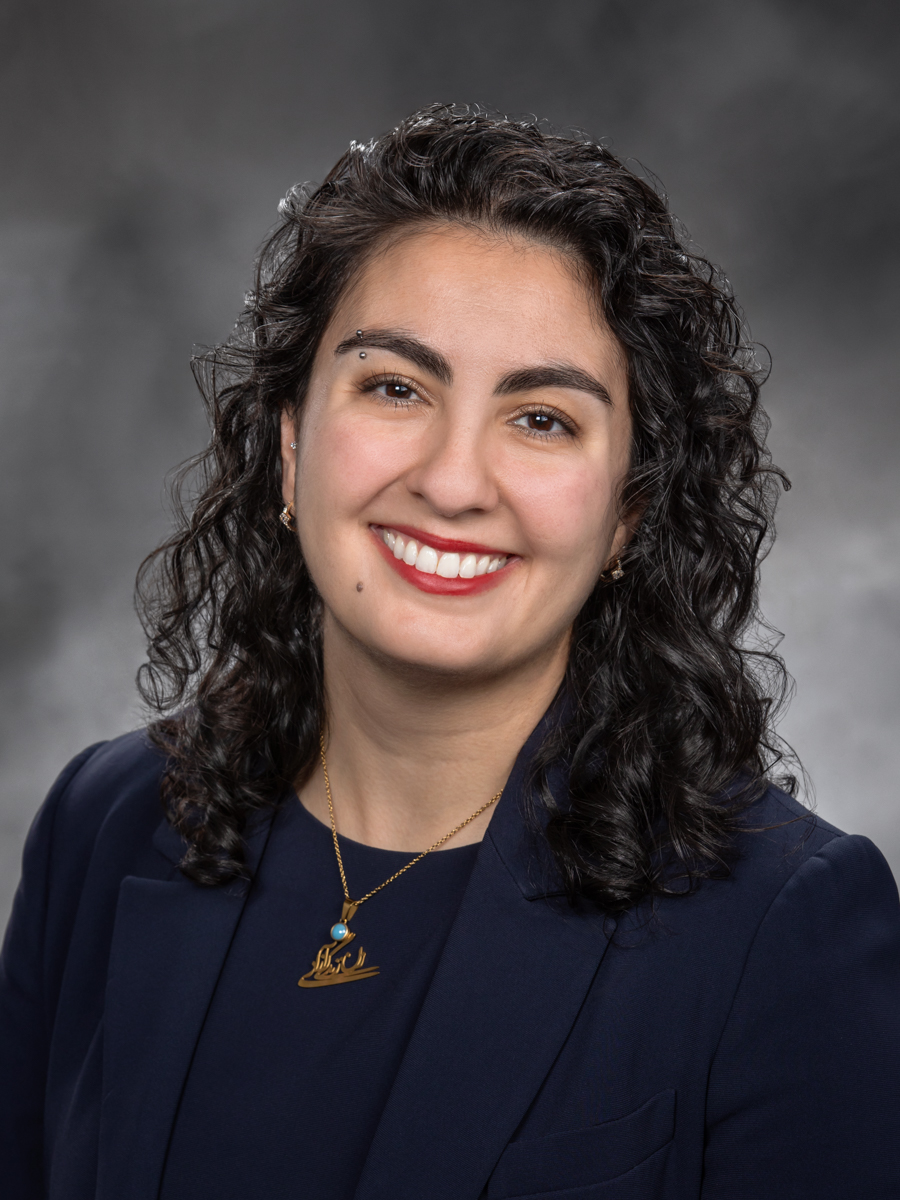
Photo of Darya Farivar
D Washington House · District 46 On the 2026 ballot

Rep. Darya Farivar

Compare
Total votes
2,532
all sessions
Attendance
99%
23 missed
Near the chamber average
With party
99%
of cast votes
Near the chamber average
Bipartisan score
0%
crosses aisle rarely
Near the chamber average
Sponsored
293
bills & resolutions
Near the chamber average
Committees
5
assignments
293 bills and resolutions

Sponsored bills

Total
293
Primary
54
Co-sponsor
239
This page
293
matching current filters
Primary HB 2600
In committee · Washington House · Lead sponsor
Updating the supported living cost report.

Maddy summaryHB 2600 requires Washington's Department of Social and Health Services to update the supported living cost report template by July 2026 to align with federal law and address workforce shortages. The updated report must include detailed data on staff counts, wages, benefits (like health insurance and paid time off), and revenue breakdowns by client tier. A new work group - comprising providers, disability advocates, and union representatives - will develop recommendations to improve compensation for direct support professionals, with a final report due to the legislature by December 2026. The bill expires September 1, 2028, and directly affects supported living providers who must submit the new report format.

In committee Feb 24, 2026 0 co-sponsors
Primary HJM 4017
In committee · Washington House · Lead sponsor
Supporting the Iranian people’s pursuit of democracy and accountable governance.

Maddy summaryThis Washington state joint memorial (HJM 4017) urges the U.S. federal government to take specific actions regarding Iran, directly affecting U.S. agencies and policymakers. It requests the U.S. refrain from military intervention, strengthen targeted sanctions against Iranian officials violating human rights, minimize harm from broad sanctions on civilians, and support Iranian democracy movements through diplomatic and humanitarian means. The resolution emphasizes prioritizing Iranian-led democratic processes and includes nine specific policy requests, such as expanding internet access and halting deportations to Iran. As a symbolic state resolution - not a binding law - it has no legal effect but formally expresses Washington’s position to federal authorities.

In committee Feb 23, 2026 0 co-sponsors
Co-sponsor HR 4692
Passed · Washington House · Co-sponsor
Honoring Japanese-Americans who suffered relocation and internment during World War II.

Maddy summaryThis resolution (HR 4692) acknowledges the 84th anniversary of Executive Order 9066, which led to the forced relocation and internment of over 120,000 Japanese Americans during WWII, including 12,000 from Washington State. It recognizes Japanese American veterans, incarcerees, and civil rights activists from Washington, and urges reflection on the principle "with liberty and justice for all," without creating new policies or requiring government action.

Passed Feb 19, 2026 1 co-sponsor
Co-sponsor HB 2281
In committee · Washington House · Co-sponsor
Concerning the state and tribal government-to-government relationship.

Maddy summaryHB 2281 strengthens Washington State's government-to-government relationship with federally recognized tribes by requiring state agencies to consult with tribes before actions affecting tribal cultural sites or practices. It defines "tribal traditional cultural places" and prohibits agencies from imposing "undue burdens" on tribal traditions without proving a compelling government need and using the least restrictive approach. Tribes can seek legal remedies in court if agencies violate these protections, with specific burden-of-proof rules for cases involving sacred tribal knowledge. The bill directly affects tribes whose cultural sites or practices may be impacted by state projects like construction or land management.

In committee Feb 19, 2026 1 co-sponsor
Primary HB 2297
In committee · Washington House · Lead sponsor
Incentivizing grocery stores located in underserved communities.

Maddy summaryHB 2297 creates incentives to support grocery stores in underserved communities across Washington, directly affecting low-income residents, communities of color, rural populations, immigrants, refugees, and people with limited transportation access. The bill requires cities to adopt model tax ordinances that reduce structural cost barriers for grocery retailers through mechanisms like tax credits and standardized small business thresholds. It aims to preserve existing stores and encourage new development in areas where market forces have failed to provide adequate food access, with the goal of strengthening local jobs and neighborhood stability. The legislation focuses on concrete policy changes to address food access barriers, not on speculative outcomes.

In committee Feb 19, 2026 0 co-sponsors
Co-sponsor HB 2389
In committee · Washington House · Co-sponsor
Modifying provisions related to individuals found to have committed criminal offenses when under the age of 18.

Maddy summaryHB 2389 modifies Washington state's juvenile sentencing system to reduce racial disparities and replace an outdated 1978 sentencing grid with individualized approaches. It creates new alternatives to confinement for youth offenders, particularly for non-violent offenses like robbery (which disproportionately impacts Black youth), and eliminates mandatory minimums for most cases. The bill requires courts to consider rehabilitation progress and community-based supervision instead of long-term incarceration (over 6 months), which research shows increases health risks without reducing recidivism. It directly affects youth under 18 in Washington's juvenile justice system, aiming to provide equitable sentencing options while reducing reliance on secure confinement.

In committee Feb 19, 2026 1 co-sponsor
Co-sponsor HB 2092
In committee · Washington House · Co-sponsor
Establishing a passenger rail advisory committee.

Maddy summaryHB 2092 establishes a passenger rail advisory committee for Washington State's Amtrak Cascades route. Counties with rail stations will appoint committee members (three from counties with over 750,000 residents, two from other counties) to provide community input on rail service challenges to the state transportation department. The committee must include rail users, commerce representatives, and local government staff, meeting three times yearly to advise on passenger rail concerns. This procedural bill creates a formal channel for community feedback but does not change rail service, funding, or operations.

In committee Feb 19, 2026 1 co-sponsor
Co-sponsor HB 1152
In committee · Washington House · Co-sponsor
Enhancing public safety by establishing secure storage requirements for firearms in vehicles and residences.

Maddy summaryHB 1152 requires firearm owners in Washington to securely store firearms in vehicles and residences under specific conditions. In vehicles, unloaded firearms must be in a locked, concealed container (hard-sided for pistols, soft-sided with trigger locks for rifles/shotguns), with exemptions for farm vehicles, people living in vehicles, law enforcement, hunters, and military personnel. At residences, firearms must be locked or stored in a safe when not being carried or controlled by the owner or authorized user, with similar exemptions for antique firearms. The bill creates the Washington Office of Firearm Safety and Violence Prevention to coordinate prevention efforts and imposes penalties ranging from $1,000 civil fines to felonies if prohibited persons access firearms.

In committee Feb 19, 2026 1 co-sponsor
Co-sponsor HB 1343
In committee · Washington House · Co-sponsor
Limiting the scope of cause for loss of aid.

Maddy summaryHB 1343 would repeal existing state law (RCW 28B.10.281) that allowed students to lose financial aid for certain activities. This bill directly affects Washington state college students receiving financial aid by removing a specific eligibility restriction. The key mechanism is the deletion of the provision that tied aid loss to particular student conduct, replacing it with a broader, undefined standard. The bill does not create new requirements but eliminates a specific cause for aid termination. (Note: The bill did not pass, as indicated by "Minority; do not pass" on its legislative record.)

In committee Feb 19, 2026 1 co-sponsor
Co-sponsor HB 1339
In committee · Washington House · Co-sponsor
Shifting general elections for local governments to even-numbered years to increase voter participation.

Maddy summaryHB 1339 proposes shifting general elections for Washington state cities, towns, and special purpose districts from odd-numbered years to even-numbered years to increase voter participation. Local governments would have the option to move elections to even years by adopting an ordinance, passing a charter amendment, or securing voter approval through initiatives. The bill requires public hearings and specifies transitional term adjustments during the shift, aiming to boost turnout - particularly among younger voters, low-income families, and people with disabilities - by aligning local elections with higher-turnout even-year cycles. It amends several election statutes to allow this change while maintaining existing rules for special elections.

In committee Feb 19, 2026 1 co-sponsor
Showing 31 to 40 of 293 bills
Previous 1 3 4 5 30 Next