

Maddy summaryHB 1324 redirects revenues from Washington's Climate Commitment Act (CCA) auction system to fund major state transportation projects, including the I-5 Columbia River bridge replacement and the US 395 North Spokane corridor. The bill amends existing law to require that CCA auction proceeds - previously restricted from road projects - be allocated specifically to highway and bridge infrastructure, rather than solely to climate or environmental programs. Key provisions mandate that funds support projects improving freight movement (like the Gateway freight project) and reducing congestion, which the bill states contributes to lower greenhouse gas emissions. This reallocation changes how CCA revenue is spent but does not alter the underlying auction system or funding amounts.
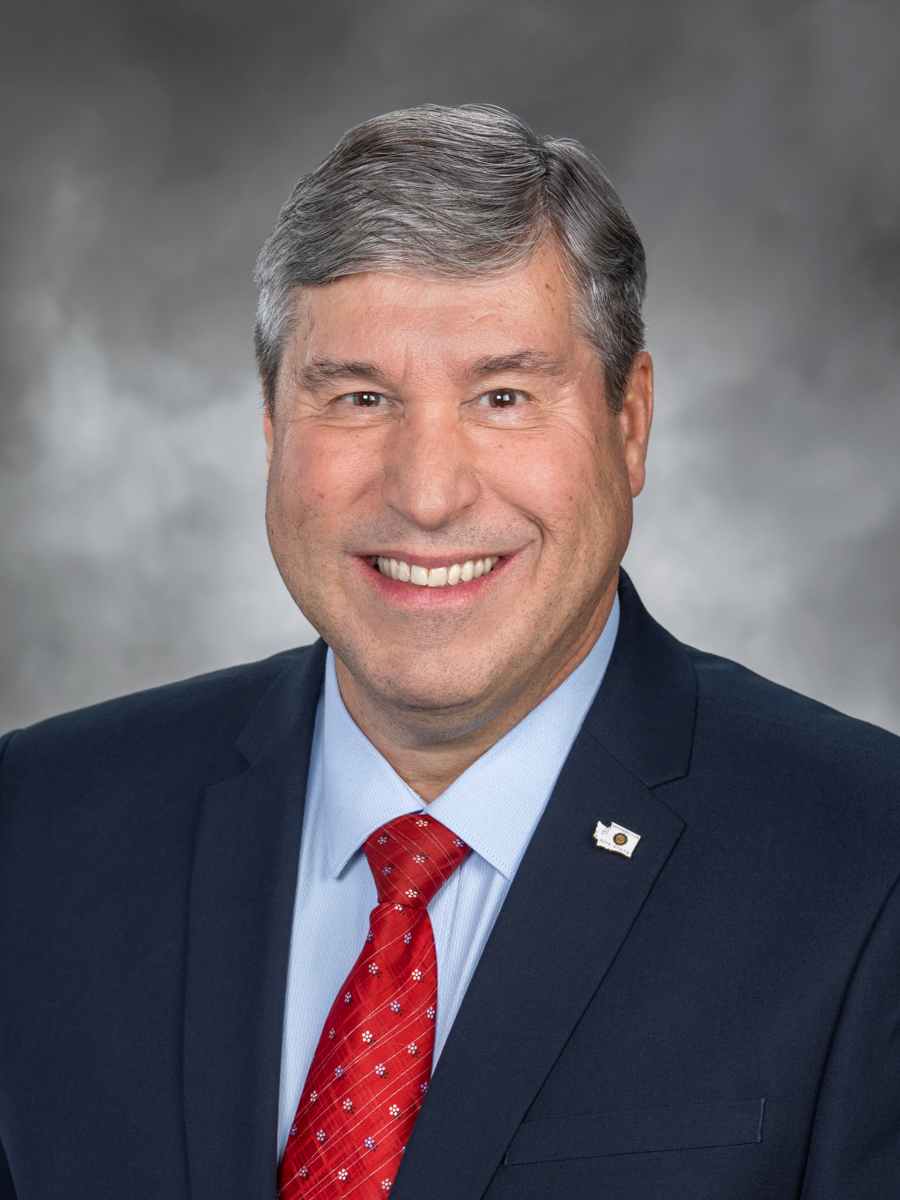
Rep. Michael Keaton
Sponsored bills
Maddy summaryHB 1087 expands Washington's "endangerment with a controlled substance" law to include fentanyl and other high-potency synthetic opioids, in addition to methamphetamine. It directly affects individuals who knowingly expose dependent children or adults to these substances. The bill amends the law to specifically list fentanyl (and its salts/isomers) and other defined high-potency synthetic opioids as covered substances, making such exposure a class B felony. This change explicitly excludes cases where substances are administered under a valid prescription, as outlined in chapter 69.50 RCW.
Maddy summaryHB 1092 modifies Washington state law to clarify when children may be removed from homes due to safety concerns. It expands grounds for removal to include un-prescribed use of strong opioids or other Schedule I/II drugs while caring for a child, and requires courts to prioritize health/safety during removal decisions. The bill mandates a shelter care hearing within 72 hours (excluding weekends/holidays) to determine if a child can safely return home, and requires courts to ensure parents receive notice of their rights and access to legal counsel. It also requires efforts to place children with relatives before long-term shelter care and specifies that parental waiver of hearings must be fully informed.
Maddy summaryHB 1869 prohibits Washington state funds from covering capital costs - such as construction, transit vehicle purchases, or major equipment - for transit agencies created under the laws of neighboring states (e.g., Oregon or Idaho). It directly affects regional transit agencies operating across state lines, restricting state funding for capital projects but not ongoing operational expenses. The law, effective July 1, 2025, ensures Washington taxpayers’ money cannot subsidize infrastructure built by out-of-state transit entities.
Maddy summaryHB 1969 establishes a law enforcement aviation support grant program to provide financial assistance to local law enforcement rotary wing aviation support units. The Department will implement this program, identifying eligible units that offer aviation support to any jurisdiction in the state without charging them. Fifty percent of appropriated funds will be equally distributed to these recognized units for maintenance and operational costs, including pilot, crew, and aircraft expenses. Remaining funds will reimburse these units for search and rescue mission costs, with any final leftover amounts going to the Washington State Patrol's aviation section. These funds are intended to supplement, not replace, existing local funding.
Maddy summaryHB 1083 changes how Washington's aircraft fuel tax revenue is split between airport projects and the state general fund. Starting July 2025, 0.5% of the tax revenue (increasing to 1% after 2027) goes to airport projects via the aeronautics account, while the remaining 6.5% minus that amount flows to the general fund. It requires the transportation department to track and annually report on funded airport projects, including state grants, federal matching funds, and local contributions. This directly affects airports receiving project funding and state budget allocations through these revenue changes.
Maddy summaryHB 1832 aims to improve student performance in Washington state by focusing on evidence-based literacy and math instruction, primarily affecting public schools, students in grades K-4, and educators. It mandates schools to implement science-based reading programs by 2027-28 (emphasizing phonics, fluency, and comprehension), prohibits guessing-word methods, and requires hiring reading coaches in elementary schools. The bill allocates $250 per eligible student (adjusted for inflation) to school districts for targeted support, calculated based on the percentage of students not meeting grade-level standards in math and English language arts. Additionally, it updates teacher training standards to align with the science of reading and requires the superintendent to monitor school compliance with new literacy requirements.
Maddy summaryHB 1249 proposes creating a 13-member advisory commission to support Washington's nuclear energy development. The commission, composed of representatives from universities, national labs, tribal governments, industry groups, and state agencies, will develop a roadmap for building new nuclear facilities and submit annual recommendations to the governor and legislature by October 1 each even year. It aims to address workforce needs and coordinate efforts to advance nuclear energy as part of the state's goal to provide all retail electricity from nonemitting sources by 2045. The bill does not fund projects or change regulations but establishes a structured process for gathering input and planning.
Maddy summaryThis bill proposes a constitutional amendment requiring the Washington State Senate to confirm the governor's appointments to vacant Supreme Court seats. Currently, the governor appoints justices to fill vacancies without Senate approval; this change would add a confirmation step for all such appointments. The amendment would modify Article IV, Section 3 of the state constitution to state that appointments "shall be subject to confirmation by the senate as provided by statute." It directly affects the governor (who makes appointments), the Senate (which must confirm), and the process for filling Supreme Court vacancies. The change would take effect if approved by voters at the next general election.
Maddy summaryHB 1942 creates a state program to support economic growth through innovative artificial intelligence (AI) applications. It requires the state department to collaborate with an AI task force quarterly, seek federal grants and private funding for small businesses developing AI solutions, and issue biennial reports starting in 2026 on progress, funding obtained, and state priorities. The bill also mandates a study by the Washington State Institute for Public Policy to identify AI opportunities in areas like wildfire management and healthcare by 2027, with the main program expiring in 2035. This directly affects state agencies, small businesses, and the AI task force.