

Maddy summaryHB 1249 proposes creating a 13-member advisory commission to support Washington's nuclear energy development. The commission, composed of representatives from universities, national labs, tribal governments, industry groups, and state agencies, will develop a roadmap for building new nuclear facilities and submit annual recommendations to the governor and legislature by October 1 each even year. It aims to address workforce needs and coordinate efforts to advance nuclear energy as part of the state's goal to provide all retail electricity from nonemitting sources by 2045. The bill does not fund projects or change regulations but establishes a structured process for gathering input and planning.
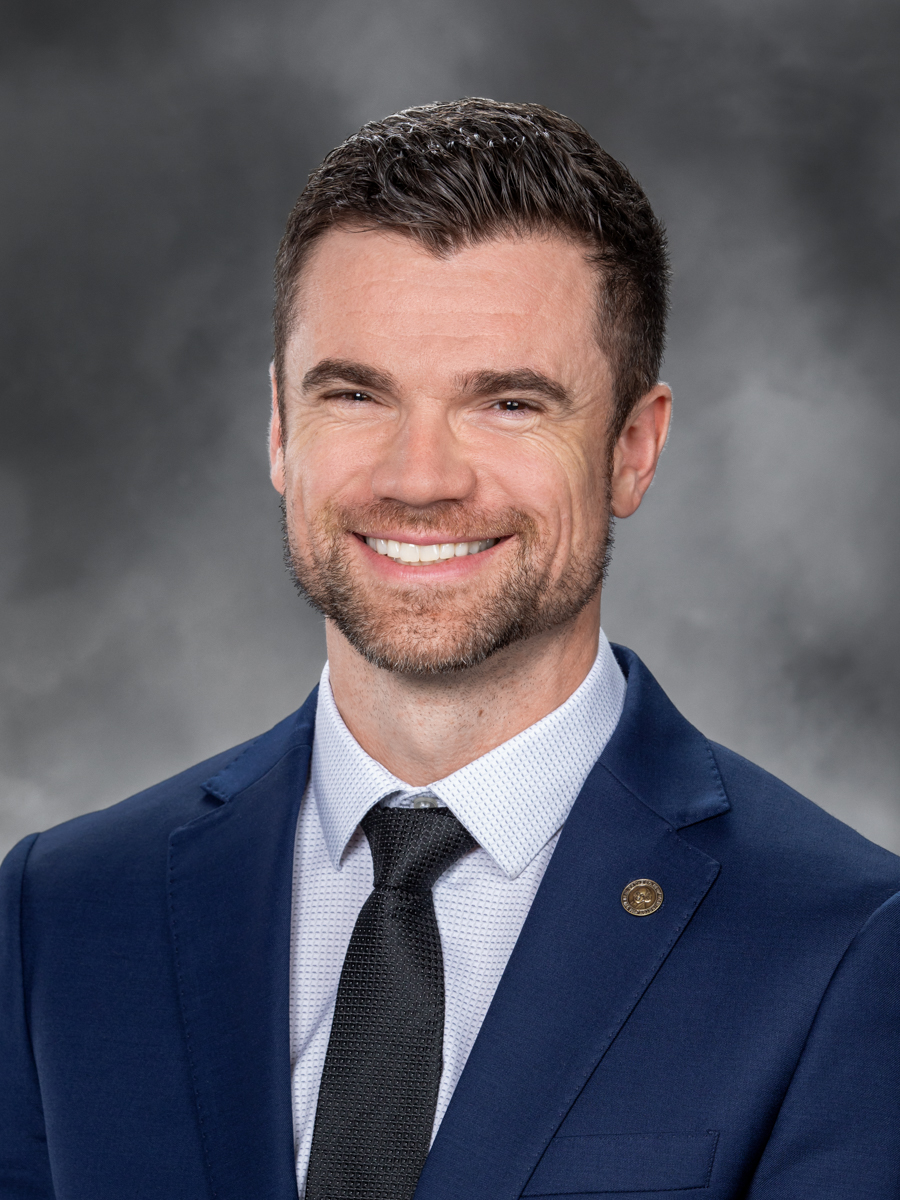
Rep. Skyler Rude
Sponsored bills
Maddy summaryHB 1886 creates a new "Firefighter Memorial" special license plate for Washington vehicle owners. The plate features a Maltese cross with "never forget" and requires a $40 initial fee plus $30 annual renewal, with funds distributed to the Firefighter Memorial Fund. This plate directly affects vehicle owners who choose to display it, joining existing specialty plates like "Law Enforcement Memorial" under state law. The bill amends vehicle registration statutes to add this plate type while maintaining standard fee structures for special license plates.
Maddy summaryHB 2002 establishes a reward program to encourage the public to report information about firearms used in felony crimes. It provides up to $500 for locating such firearms, or up to $5,000 if the report leads to a conviction, excluding law enforcement officers, individuals with warrants, or government employees acting in their official capacity. The cash rewards will be funded from existing county and municipal criminal justice assistance accounts, which distribute funds based on population, crime rates, and court case volumes. The bill directly affects law enforcement agencies (who receive the information) and the public (who may submit tips for rewards), while amending funding mechanisms for local criminal justice programs.
Maddy summaryHB 1433 would establish a regulated system in Washington for adults 21+ to access psychedelic substances for therapeutic use under licensed professionals. It directs the Department of Health to license facilitators and service centers, and the Liquor & Cannabis Board to oversee manufacturers and testing, requiring sessions in controlled environments with trained guides. The bill emphasizes reducing costs to improve equity, particularly for historically disadvantaged communities, while explicitly stating it does not require insurance coverage or override federal law. This would create a legal framework for safe, supervised use and research, pending legislative approval.
Maddy summaryHB 1435 creates a state grant program to help local and tribal law enforcement agencies hire more officers. It provides up to 75% of entry-level salaries and benefits (capped at $125,000 per officer position) for 36 months, requiring a 25% local cash match. Grants cannot cover non-salary costs or fund officers recently hired by the same agency. The program requires agencies to apply through a formal process, report on hiring impacts, and includes a $100 million appropriation for fiscal year 2026.
Maddy summaryHB 1285 establishes financial education instruction as a graduation requirement for public high school students in Washington state. Beginning in the 2027-28 school year, all high schools must provide instruction in the state financial education learning standards. Starting with the graduating class of 2031, students will be required to meet these standards to graduate. The bill also tasks the Office of the Superintendent of Public Instruction with making instructional materials available and outlines monitoring responsibilities for the State Board of Education.
Maddy summaryHB 1777 streamlines the state approval process for apprenticeship programs that already have federal approval, directly affecting program sponsors (including tribal and nontribal organizations) and employers seeking to expand training opportunities. It requires the apprenticeship council to expedite reviews of federally-approved programs by limiting state-specific scrutiny to unique requirements, while reforming competitor objections: objections must be filed within 30 days of provisional approval, and frivolous objections can trigger penalties like attorney fee payments or $10,000 fines. The bill also mandates annual reports comparing Washington’s program approval rates to federal standards and other states, including details on pending applications and denial reasons. These changes aim to reduce current delays - where 4 of 17 2024 applications remained pending after federal approval - without altering apprenticeship content or creating new training slots.
Maddy summaryHB 1538 creates a new grant program to help small, financially struggling school districts (with 1,000 students or fewer) modernize or rebuild aging school buildings. It requires projects to address critical safety issues like seismic risks, outdated infrastructure, and accessibility barriers in buildings over 30 years old and rated "poor" by the state. Districts must first secure a planning grant to assess needs before applying for construction grants, with funding prioritized based on financial need and building conditions. Grants cover project planning, design, and construction costs (excluding district administration), but cannot exceed 110% of the statewide average cost per square foot.
Maddy summaryHB 1762 prohibits Washington state's public colleges and universities from requiring students to live in on-campus housing or university residence halls. This bill directly affects public higher education institutions (like the University of Washington or community colleges) and their students. The key provision adds a new legal restriction to state law, making it illegal for these public schools to mandate residential living as a condition of enrollment. The bill focuses solely on eliminating this requirement, without changing other housing policies or financial aspects.
Maddy summaryHB 1876 amends Washington State's Death with Dignity Act to clarify requirements for terminally ill residents seeking end-of-life medication. It requires patients to make both an oral and written request to their doctor, with a 7-day waiting period between requests unless the patient is expected to die within 7 days, cannot self-administer within 7 days, or has unrelenting pain not manageable by treatment. The bill also specifies that patients choosing a non-physician attending provider must select a physician as their consulting provider, and prohibits direct supervisory relationships between physician assistants and other providers in this process. These changes directly affect qualified patients (competent Washington residents with a terminal illness expected to end life within six months) and their medical providers.