

Maddy summaryHB 1295 requires Washington public school districts to implement evidence-based reading and writing literacy programs for kindergarten through fourth grade students. These programs must include phonics, phonemic awareness, fluency, vocabulary, and comprehension instruction, and be fully operational by the 2027-28 school year. The bill also mandates revised teacher training standards for educators to deliver these programs, with new certification requirements by 2026 and educator preparation programs updated by 2027. This directly affects elementary schools, teachers, and students, particularly those identified as reading below grade level, with specific attention to improving equity in dyslexia screening and support.

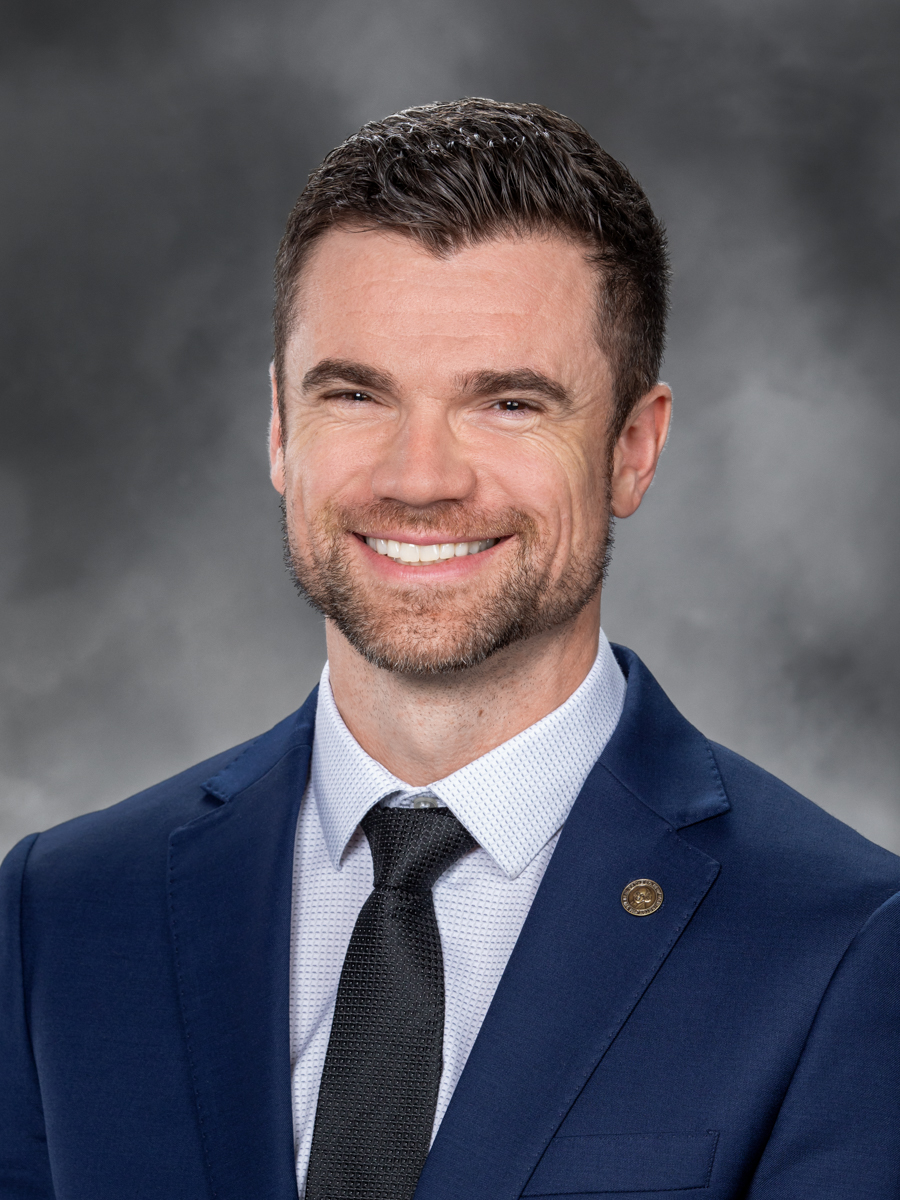
Rep. Skyler Rude
Sponsored bills
Maddy summaryHB 2452 requires landlords in manufactured and mobile home communities to provide tenants with a standardized notice for rent increases, detailing the exact percentage and dollar amount of the increase. The notice must also explain if the increase exceeds Washington’s 5% annual limit and include supporting documentation for any claimed exemptions (such as community purchases or public housing programs). This applies specifically to tenants in manufactured/mobile home communities, not all rental properties. The bill amends existing laws to ensure transparency and compliance with rent increase rules.
Maddy summaryHB 2309 eliminates unnecessary postgraduate degree requirements for most state jobs in Washington. It directly affects state job applicants and current employees by changing hiring standards to allow qualification through experience or other means, unless a degree is legally required for the job's essential functions. The bill amends state law to require that classification plans for state positions not mandate postgraduate degrees as the sole qualification method. This aims to broaden the pool of eligible candidates and align hiring with actual job needs rather than arbitrary educational requirements. The bill passed unanimously in the House during the 2026 legislative session.
Maddy summaryThis bill is a House resolution that formally recognizes Representative Virginia "Jenny" Graham for her public service in the Washington State House of Representatives. It highlights her eight-year tenure, her advocacy for public safety, and her work on community safety and veterans' issues. The resolution does not create new laws or policies but serves as an official acknowledgment of her contributions and legacy.
Maddy summaryThis bill is a House resolution that formally honors John Michael Sattgast for his 35 years of dedicated service as a communications professional for the House Republican Caucus in the Washington State Legislature. It recognizes his work producing over 4,000 radio stories and coordinating media coverage for state representatives, as well as his leadership roles with the National Conference of State Legislatures. The resolution acknowledges his contributions to sharing legislative history and public information, noting his receipt of the 2023 Legislative Staff Achievement Award. This measure serves as a commemorative tribute rather than establishing new policy or affecting government operations.
Maddy summaryThis bill formally acknowledges the service of Representative Steve Tharinger to his district and the Washington state legislature. It recognizes his long career in public service, including his time as a Clallam County Commissioner, his work on the House Capital Budget Committee, and his advocacy for environmental protection and healthcare. The resolution serves as a commemorative tribute to his contributions and personal qualities rather than establishing new laws or policies.
Maddy summaryHB 2636 requires independent, balanced reviews of Washington's K-12 public education system to assess whether current policies and funding effectively support student success. It establishes a 15-member Public Education Review Advisory Council - including educators, administrators, fiscal experts, and non-legislative representatives - to evaluate existing laws and funding based on five criteria: achieving legislative goals, improving student outcomes, cost-effectiveness, ongoing relevance, and efficient resource use. The council must annually recommend priority policies for review to the legislature and provide annual reports analyzing these evaluations. These reviews aim to identify policies that should be maintained, modified, consolidated, or eliminated, particularly those enacted without adequate funding. The bill directly affects state education policy decisions and resource allocation for all public school districts and students across Washington.
Maddy summaryHB 1002 recognizes posttraumatic stress disorder (PTSD) as an occupational disease for county coroners, medical examiner personnel, and investigative staff in Washington State. It amends workers' compensation rules (RCW 51.08.142) to allow these workers to file claims for PTSD-related injuries, which were previously excluded. The bill requires pre-employment psychological exams for some groups (like firefighters and law enforcement) hired after specific dates to confirm no preexisting PTSD. This change directly affects public safety workers in high-stress roles who develop PTSD from job-related trauma, expanding their eligibility for workers' compensation coverage.
Maddy summaryHB 2152, titled "Ryan's law," allows terminally ill patients with a qualifying medical condition to use cannabis in hospitals, nursing homes (excluding some residential facilities), and hospice care centers starting January 1, 2027. Facilities must establish written policies prohibiting smoking/vaping, requiring secure storage, documenting use in medical records, and having patients or their designated providers manage cannabis. Patients must provide valid authorization, and staff cannot administer or retrieve cannabis. The law excludes emergency departments and does not require facilities to comply if federal agencies block it, though it clarifies federal scheduling alone cannot override the policy.
Maddy summaryHR 4700 designates March 9 as "Billy Frank Jr. Day" to honor the late Nisqually Tribe leader who dedicated his life to protecting tribal treaty fishing rights and environmental conservation. The resolution commemorates his pivotal role in landmark legal cases securing tribal fishing rights and his decades-long efforts to foster collaboration on salmon habitat restoration and natural resource management. It recognizes his legacy of consensus-building between tribes, state authorities, and diverse stakeholders to uphold treaty obligations and protect Washington's ecosystems. The resolution does not create new policy but serves as a symbolic tribute to his advocacy.