

Maddy summaryThis bill limits University of Vermont (UVM) enrollment when Burlington's housing vacancy rate falls below 5%, requiring UVM to cap enrollment at the previous fall semester's level. It mandates that all UVM-owned or affiliated housing meet Burlington's municipal housing codes and rental safety standards by July 2025, with current students in non-compliant housing offered compliant alternatives first. The bill also creates a UVM Housing Task Force (including city officials, UVM representatives, and legislators) to monitor compliance, review housing strategies, and submit annual reports to the state legislature. These provisions directly affect UVM’s enrollment decisions, housing management, and Burlington residents experiencing housing market pressures.
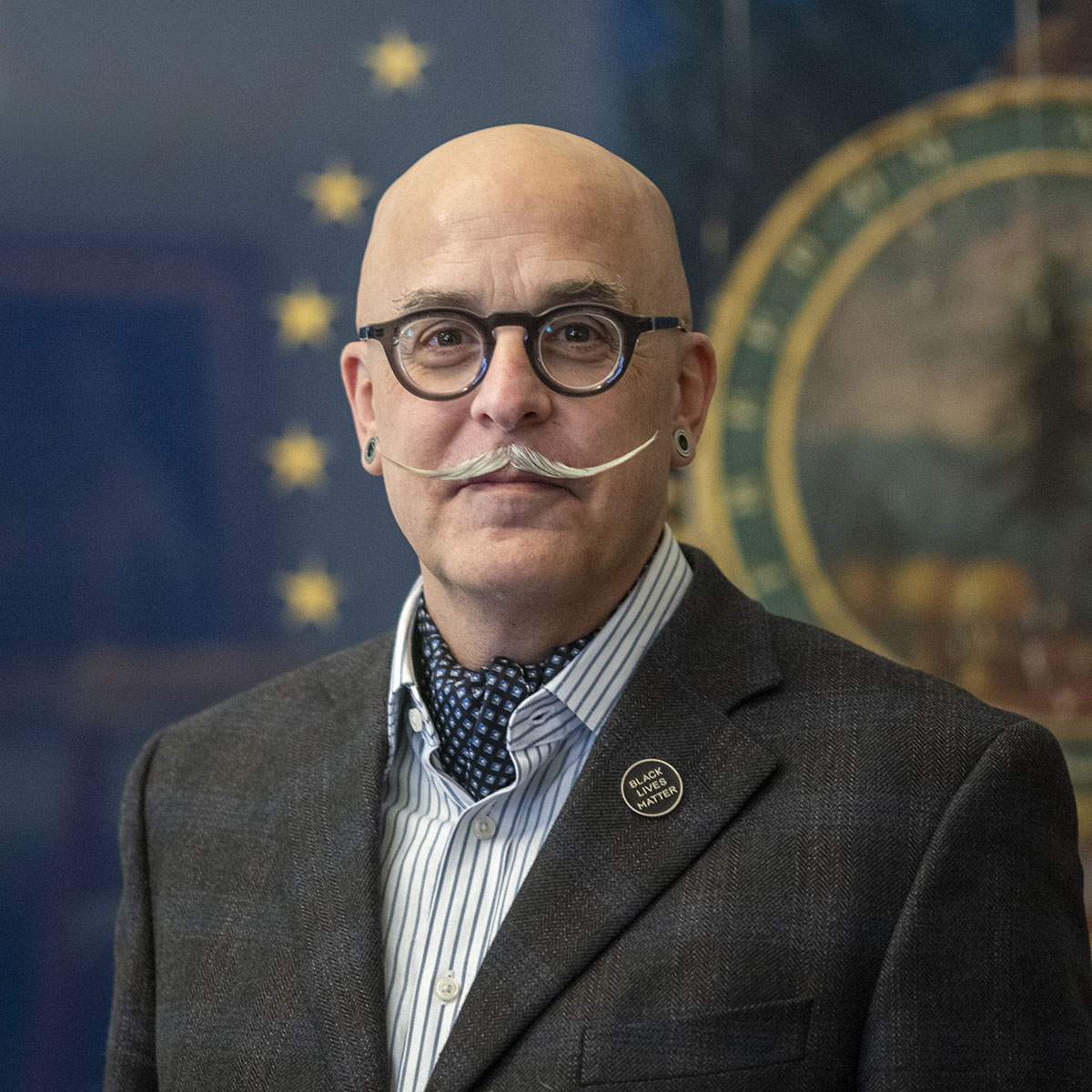
Rep. Troy Headrick
Sponsored bills
Maddy summaryH.165 proposes creating an Inclusive Schools Protection Fund to replace lost federal funding for inclusive programs in Vermont schools. The bill would directly fund school districts to support LGBTQ+ student programs, antidiscrimination efforts, inclusive curricula, and educator training on equity. It also protects existing resources like student gender/sexuality alliances, school equity coordinators, and mental health programs for marginalized students. The Agency of Education must annually report on the fund's effectiveness, and the bill directs the state to develop new revenue sources to sustain the fund.
Maddy summaryThis bill requires Vermont public schools (prekindergarten through grade 12) to include instruction on social equity and justice in their curriculum, prohibiting restrictions on teaching topics like historical systems of oppression, race/gender as social constructs, and intersectional identities. It mandates that schools adopt policies affirming the dignity of all educators and students, bans influence from privately funded groups on curriculum decisions, and protects teachers from adverse action for following state/federal law in their teaching. The bill amends education standards to require curriculum development within existing State Board of Education frameworks, ensuring schools maintain autonomy while integrating these topics. It explicitly states the bill does not alter existing educational standards or dictate specific instructional materials.
Maddy summaryThis House Concurrent Resolution (HCR 12) is a non-binding ceremonial resolution expressing legislative congratulations to the University of Vermont (UVM) men's soccer team for winning their first NCAA Division I men's soccer championship (College Cup) in 2024. It formally recognizes the team's achievement, including their "Cardiac Cats" nickname and championship victory over Marshall University. The resolution directs the Secretary of State to send a copy to UVM Athletics but does not create any new policy, funding, or legal obligations. It is purely symbolic recognition of the team's athletic accomplishment.
Maddy summaryH.164 would change how Vermont distributes local option tax revenue to municipalities, increasing the share from 70% to 80% for the communities generating that revenue. It also requires that any surplus in the PILOT Special Fund (a fund for payments in lieu of taxes from state-owned properties) be distributed proportionally to the municipalities that contributed to the surplus. The bill directs the Joint Fiscal Office to prepare a report on transitioning to a system where the state retains only the minimal amount needed to administer the fund, aiming to eliminate future surpluses. This bill directly affects all Vermont municipalities receiving local option tax revenue and those contributing to the PILOT Special Fund.
Maddy summaryH 169 amends Vermont's anti-discrimination laws to prohibit landlords from requesting Social Security numbers on residential rental applications and requires them to accept all government-issued identification. It also adds "citizenship and immigration status" to the list of protected characteristics in housing and public accommodations, expanding existing protections against discrimination. The bill directly affects landlords, renters, and businesses serving the public by banning specific discriminatory practices in housing applications and services. Key provisions include banning SSN requests for rentals (§ 4456a) and updating definitions to include immigration status in housing (§ 4501, § 4503) and public accommodations (§ 4502). These changes aim to reduce barriers for renters, particularly immigrants and non-citizens, while clarifying prohibited discrimination.
Maddy summaryThis bill would allow Vermont SNAP (food assistance) recipients to use their benefits at participating restaurants instead of purchasing groceries. It directly affects SNAP recipients (including seniors, people with disabilities, and low-income households) and restaurants that choose to join the program. Key provisions require restaurants to be licensed, promote locally sourced and culturally diverse food options, and be located in areas with many eligible participants. The bill also authorizes $100,000 for a new coordinator position and $75,000 for restaurant start-up costs, with implementation starting July 1, 2025.
Maddy summaryH 133 would repeal Vermont's current laws authorizing the state lottery (31 V.S.A. Chapter 14) and sports wagering (31 V.S.A. Chapter 25). This bill directly affects current lottery operators, sports betting providers, and participants in Vermont who rely on these legally sanctioned activities. The key mechanism is removing the specific authorizations, making any lottery or sports wagering subject to Vermont's general gambling laws (13 V.S.A. Chapter 51), which treat such activities as criminal offenses. The bill does not create new rules but eliminates the existing legal framework for these specific gambling activities.
Maddy summaryThis bill prohibits using bait to hunt fur-bearing animals (such as raccoons or foxes) with guns, bows, or crossbows. It defines "bait" broadly as any animal, vegetable, or mineral matter placed to attract wildlife, excluding standard farm produce used in regular agriculture. Violations will now carry 10 penalty points instead of 5 under Vermont's hunting regulations. The law takes effect July 1, 2025.
Maddy summaryThis bill requires most health insurance plans and Vermont Medicaid to cover biomarker testing when supported by specific evidence, such as FDA approvals, drug labels, or nationally recognized clinical guidelines. It directly affects patients needing these tests (e.g., for cancer diagnosis or treatment) and insurers/Medicaid, mandating coverage for tests analyzing genes, proteins, or other biological markers in blood or tissue. Key provisions include limiting disruptions in care (e.g., avoiding repeated biopsies) and defining biomarker testing broadly to include advanced genetic sequencing. The requirement takes effect January 1, 2026, for new plans, with Medicaid coverage pending CMS approval.