

Maddy summaryThis bill requires the Congressional Budget Office (CBO) to identify potential budget savings from preventive health care in its scoring of proposed legislation. Specifically, it directs the CBO Director to describe and estimate reductions in future federal spending resulting from preventive health interventions - such as screenings or vaccinations - when requested by congressional budget committee leaders. These savings would be included as supplementary information in budget projections, but not used to meet budget enforcement rules. The bill does not change actual health programs or funding; it only modifies how the CBO accounts for potential long-term savings from preventive care in budget analysis.
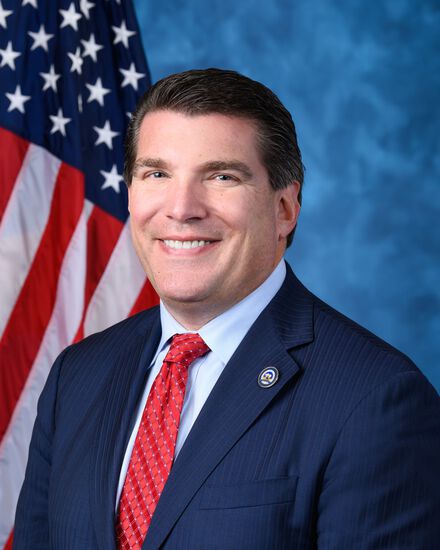
Rep. Jay Obernolte
Sponsored bills
Maddy summaryThis bill establishes a 2-year pilot program to create or strengthen state-based nursing workforce centers, funded with $1.5 million annually for 2026-2027. It requires states to match federal funds at a 1:4 ratio (e.g., $1 state funding for every $4 federal) and directs centers to analyze nursing data, address shortages, and develop retention strategies for nurses across all practice settings. Centers must report annually on initiatives like workforce planning, scholarship programs, and efforts to improve rural recruitment, with the goal of reducing nursing shortages and improving geographic distribution. The program targets state agencies, nursing boards, schools of nursing, and community organizations working directly with nursing workforce data and education.
Maddy summaryHR 1766, the NTIA Policy and Cybersecurity Coordination Act, creates a new Office of Policy Development and Cybersecurity within the National Telecommunications and Information Administration (NTIA). The office, led by an Associate Administrator, will coordinate cybersecurity and privacy policies, promote innovation in communications technologies, and develop market-based strategies for internet access, digital inclusion, and network security. It will conduct studies on public internet usage, foster collaboration between security researchers and service providers, and advise the NTIA on cybersecurity policy matters. This procedural bill establishes a dedicated unit to streamline policy development but does not directly change laws affecting specific groups.
Maddy summaryHR 4382 authorizes the U.S. Mint to produce commemorative coins for the 2028 Los Angeles Olympics/Paralympics and 2034 Salt Lake City Winter Olympics/Paralympics. It specifies gold, silver, and half-dollar coin designs with defined mintage limits (e.g., up to 100,000 $5 gold coins for each event), all bearing inscriptions like "2028" or "2034" and standard coin features. A surcharge ($5-$50 per coin) is added to sales, with all funds directed to the respective Olympic committees to support event hosting and legacy programs like youth sports. The bill ensures no net cost to the government by requiring surcharge revenues to cover all design, production, and marketing expenses before funds are disbursed.
Maddy summaryThe Improving Atmospheric River Forecasts Act aims to enhance forecasts of atmospheric rivers - narrow bands of moisture that cause heavy rain, snow, and flooding, particularly in the western U.S. - to reduce damage to communities and infrastructure. It authorizes a five-year pilot project (2026-2030) with $15 million annually to improve forecast models for mountainous terrain and atmospheric rivers, requiring coordination with NOAA, academic partners, and the National Weather Service. The bill also establishes a long-term program mandating NOAA to develop new forecast tools, incorporate social science for clearer public communication, and create annual budget plans for research and partnerships. These changes directly affect NOAA’s operations and water management efforts in the western U.S., without altering existing laws or imposing new regulations on the public.
Maddy summaryHRES 516 is a formal resolution condemning the violent riots that occurred in Los Angeles, California, on June 6, 2025. It specifically addresses acts of arson, looting, property destruction, and attacks on law enforcement officers during protests related to federal immigration enforcement actions. The resolution does not create new laws or policies but expresses the House’s condemnation of the violence, calls on local and state leadership to collaborate with federal authorities to restore order, and thanks law enforcement agencies for their response. This is a symbolic statement with no direct impact on affected individuals or new legislative mechanisms.
Maddy summaryThe CONNECT for Health Act of 2025 expands Medicare telehealth coverage by removing geographic restrictions that limited where patients could receive care, expanding the types of health care providers who can offer telehealth services, and eliminating the requirement for an in-person visit before receiving telemental health services. The bill includes specific provisions to support telehealth use for Native American health facilities, rural health clinics, and Federally Qualified Health Centers. It requires the Centers for Medicare & Medicaid Services to collect and publish data on telehealth usage and impacts, and to develop resources to improve accessibility for people with disabilities and limited English proficiency. Program integrity measures are added to monitor telehealth billing practices and prevent fraud while maintaining coverage for telehealth services during public health emergencies.
Maddy summaryHR 4194 would shield manufacturers of critical infrastructure equipment from lawsuits related to wildfires caused by their products, unless they intentionally caused harm through willful misconduct. This law applies to companies defined as critical infrastructure manufacturers under existing federal law (per the Cyber Incident Reporting Act of 2022). It creates legal immunity for these manufacturers against both federal and state lawsuits regarding wildfire-related losses, but requires proof of intentional wrongdoing to override the protection. The bill directly affects companies producing essential infrastructure equipment like power grid components and communication systems.
Maddy summaryThe WILTR Act of 2025 provides tax relief for landowners conducting wildfire prevention work. It excludes from taxable income grants or services received for hazardous fuel reduction activities (like creating firebreaks or prescribed burns) and allows a new deduction for expenses related to these activities. Landowners must have their work certified by a state, local, tribal, or federal fire agency to qualify. This directly affects property owners in wildfire-prone areas who undertake fuel reduction projects to reduce fire risk.
Maddy summaryHR 4132, the Prescription Information Modernization Act of 2025, allows drug manufacturers to provide FDA-approved prescribing information for prescription drugs exclusively through electronic means, while requiring them to offer paper copies at no additional cost upon request by prescribers or dispensers. The bill directly affects drug manufacturers, doctors, pharmacists, and other healthcare professionals who rely on prescribing information. Key provisions include mandating that manufacturers give prescribers/dispensers the choice to continue receiving paper copies or request them as needed, and requiring the HHS Secretary to issue implementing regulations within one year to support this transition. The law takes effect two years after enactment or when final regulations are issued, whichever comes first.