

Maddy summaryHR 3983, the Veterans Claims Quality Improvement Act of 2025, aims to reduce errors in processing veterans' benefit claims by implementing new oversight and training requirements. The bill requires the VA to notify employees who cause avoidable delays in claims processing, study inconsistent legal opinions from the VA's Office of General Counsel, and create a quality assurance program for the Board of Veterans' Appeals to track errors and improve decision quality. It mandates annual reports on claim remand reasons and establishes training for Board members on timely and accurate claim reviews. These changes directly affect VA employees handling claims and the Board of Veterans' Appeals, focusing on correcting administrative errors rather than altering benefit eligibility.
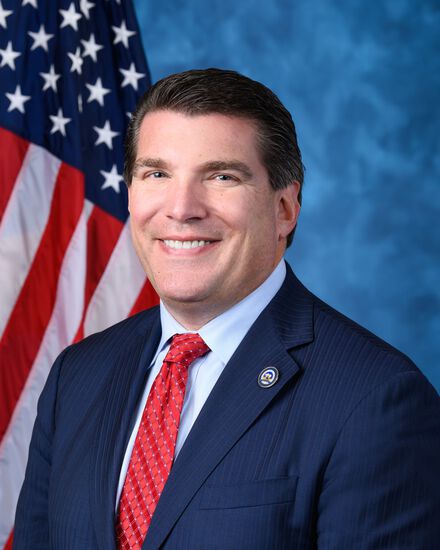
Rep. Jay Obernolte
Sponsored bills
Maddy summaryHR 4012, the National Airport Supersonic Readiness Act of 2025, directs the Federal Aviation Administration (FAA) to study whether major U.S. airports can safely accommodate supersonic and hypersonic commercial aircraft. The study will assess runway length, ground equipment, noise regulations, air traffic systems, and economic impacts at large hub airports. The FAA must report findings and recommendations to Congress within one year, including cost estimates and timelines for potential infrastructure upgrades. This bill does not fund changes or create new rules, but rather evaluates current airport capabilities for future high-speed air travel.
Maddy summaryH.J. Res. 87 (Public Law 119-15) is a congressional disapproval resolution that prevents an Environmental Protection Agency (EPA) rule from taking effect. The rule, submitted by the EPA on April 6, 2023 (88 Fed. Reg. 20688), related to California’s authority to enforce stricter vehicle emission standards, including for heavy-duty trucks, zero-emission airport shuttles, and advanced clean truck requirements. By disapproving this rule, Congress blocks California from implementing these specific pollution controls under its existing waiver authority. This directly affects California’s ability to regulate motor vehicle emissions independently, as the rule would have allowed the state to enforce its own standards beyond federal requirements.
Maddy summaryH.J.Res. 88 disapproves an Environmental Protection Agency (EPA) rule that would have allowed California to enforce its "Advanced Clean Cars II" vehicle emission standards. This rule, submitted by the EPA on January 6, 2025, sought to grant California a waiver to override federal preemption for its stricter vehicle pollution controls. The resolution, passed by Congress and signed into law on June 12, 2025, formally nullifies the EPA rule, preventing California from implementing its Advanced Clean Cars II program under this specific waiver. The bill directly affects California's ability to set its own vehicle emission standards for passenger cars and light trucks.
Maddy summaryHJRES 89 is a congressional disapproval resolution that blocks an Environmental Protection Agency (EPA) rule concerning California's vehicle and engine pollution standards. The resolution specifically targets the EPA's "Omnibus Low NOX Regulation" and waiver of preemption, which would have allowed California to enforce stricter emissions rules. By disapproving this rule under Chapter 8 of Title 5 U.S. Code, Congress has nullified the EPA's action, meaning the regulation will have no legal effect. This directly affects the EPA's authority to approve California's state-level pollution control standards for motor vehicles.
Maddy summaryThis bill allows military departments to reconsider awards of decorations (like medals) that weren't given on time because service records were classified or restricted for national security reasons. It directly affects service members (in the Army, Navy, Marines, Air Force, or Space Force) who served on active duty from 1940 onward and whose records were withheld due to classification. The bill requires military departments to begin reviewing such requests within 30 days and complete the review within one year, waiving standard time limits for these specific cases. It also mandates detailed reports to Congress and the President (for Medal of Honor requests) on each review's findings and recommendations.
Maddy summaryHRES 496 is a non-binding House resolution condemning violent riots in Los Angeles that occurred on June 6, 2025. It specifically addresses protests that turned violent after immigration enforcement actions, including arson, vandalism, attacks on officers, and burning American flags. The resolution recognizes the right to peaceful protest while unequivocally condemning violence against law enforcement and urging local/state leaders to collaborate with federal authorities to restore order. It also expresses gratitude to law enforcement agencies for protecting communities during the unrest. As a symbolic statement, it does not create new laws or directly affect any individuals or entities.
Maddy summaryThe SKIM Act (HR 3810) increases penalties for fraud involving counterfeit access devices like credit cards. It requires the U.S. Sentencing Commission to raise fraud offense levels by 4 points (minimum level 14) and count all unauthorized charges from 10+ counterfeit devices toward total losses. The bill also mandates a 90-day report to Congress from the Attorney General and DHS, detailing law enforcement coordination, fraud technologies, assistance requests, and recommendations for combating such fraud. This directly affects federal courts (through sentencing changes), law enforcement agencies, and businesses vulnerable to access device fraud.
Maddy summaryHRES 461 is a symbolic resolution recognizing the economic contributions of independent workers (such as freelancers, app-based earners, and contractors). It highlights that 73 million Americans engaged in freelance work in 2024, contributing $1.5 trillion to the economy, and notes that many value the flexibility of independent work. The resolution does not create new laws or change policies - it simply acknowledges these workers’ role and the benefits of flexible work arrangements. It also references concerns about legislation that might reclassify independent workers as employees, potentially overriding state laws like California’s Prop 22. This resolution has no binding effect on existing laws or regulations.
Maddy summaryHRES 467 designates May 2025 as "National Wildfire Preparedness Month" to raise public awareness about wildfire risks and encourage existing community safety practices. It does not create new laws or allocate funding but urges federal, state, local, tribal, and community organizations to promote educational initiatives on wildfire prevention. Key focus areas include home hardening (using fire-resistant materials), community planning for firefighter access, evacuation strategies, and reducing human-caused ignitions like fireworks. The resolution emphasizes preparing for increasingly severe wildfire seasons, citing statistics on rising fire frequency and costs. This symbolic designation applies broadly to all U.S. communities facing wildfire threats.