

Maddy summaryThe CONNECT for Health Act of 2023 expands Medicare telehealth coverage by removing geographic restrictions, allowing services to be provided from home and other locations, and expanding who can offer telehealth services. The bill repeals the six-month in-person visit requirement for telemental health and allows telehealth use in hospice care recertification. It also includes program integrity measures to address inappropriate billing patterns and requires posting of telehealth service data to improve transparency. This legislation directly affects Medicare beneficiaries, healthcare providers, and telehealth technology vendors by making telehealth more accessible, particularly for rural and underserved populations, those with mobility challenges, and individuals in areas with healthcare workforce shortages.
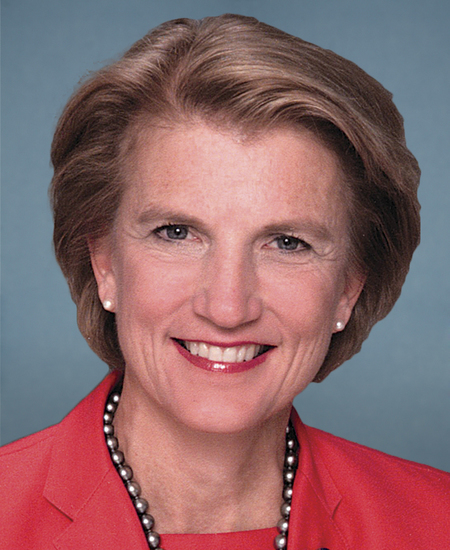
Sen. Shelley Moore Capito
Sponsored bills
Maddy summaryThe End Government Shutdowns Act (S 2041) would automatically continue federal funding for government programs at the previous fiscal year's level if Congress fails to pass a new budget on time. For the first 120 days, funding would remain at 100% of the prior year's level, then decrease by 1% every 90 days until a new budget is enacted. This prevents shutdowns for programs like national parks, food safety inspections, and federal agency operations by ensuring continuous funding without new legislation. The bill applies to all federal programs requiring annual appropriations, unless another law already specifies their funding.
Maddy summaryThis resolution designates June 16, 2023, as National Service and Conservation Corps Day to recognize the work of over 150 Service and Conservation Corps organizations across the U.S. These groups directly support approximately 22,000 young adults (ages 18-30) and post-9/11 veterans annually through conservation projects, workforce development, and educational opportunities. The resolution symbolically honors their contributions to community improvement, public land conservation, disaster response, and climate resilience without creating new policies or funding. It is a ceremonial designation, not a legislative act with binding requirements.
Maddy summaryThis bill requires colleges to provide student borrowers with clearer financial information before they accept federal loans. It mandates that students manually enter their desired loan amount each year (instead of automatically accepting full eligibility) and receive specific disclosures, including sample repayment costs based on median debt and earnings data from the College Scorecard. Institutions must also explain that borrowers aren't required to take the full loan amount offered and provide details on completion rates, repayment statistics, and the loan's annual percentage rate. These changes apply to all undergraduate and graduate students receiving Federal Direct Loans, as well as parent borrowers for PLUS Loans.
Maddy summaryThe CREATE Act of 2023 establishes a federal interagency group within the National Science and Technology Council to coordinate research and development on carbon dioxide removal (CDR) technologies, including direct air capture, forest restoration, and ocean-based methods. It mandates four specialized working groups - focusing on oceans, terrestrial systems, geological storage, and technology - with agency representatives from departments like Energy, Agriculture, and EPA to develop strategic plans, identify cost-effective CDR approaches, and set monitoring protocols. The bill requires annual budget coordination across federal agencies to integrate funding for CDR research and development, ensuring holistic planning for projects like soil carbon management and enhanced mineralization. It directly affects participating federal agencies by creating new structural requirements for collaboration and reporting, without authorizing new funding or mandating specific CDR deployments.
Maddy summaryThis bill creates housing benefits for volunteer firefighters and emergency medical responders. It allows qualified volunteers to deduct $18,000 annually from their income when applying for USDA single-family home loans, and qualifies them for HUD’s discounted home programs reserved for first responders. To qualify, volunteers must be certified in their state or tribe, have served at least 200 hours per year for two consecutive years, and provide verification from their volunteer organization. The bill directly affects local volunteer first responders seeking affordable homeownership through federal housing programs.
Maddy summaryS 305 authorizes the U.S. Mint to produce and sell commemorative coins (gold, silver, and half-dollar denominations) to mark the U.S. Marine Corps' 250th anniversary in 2025. Each coin sale includes a surcharge ($5 to $35 per coin) that will fund the Marine Corps Heritage Center's educational programs, with proceeds paid directly to the Marine Corps Heritage Foundation. The coins will be sold from January 1 to December 31, 2025, and the surcharge structure ensures no net cost to taxpayers by covering production expenses through sales. This bill directly affects the U.S. Mint (in coin production), the Marine Corps Heritage Foundation (as recipient of funds), and the public (as potential buyers).
This resolution designates June 2023 as Great Outdoors Month. The resolution encourages all individuals in the United States to responsibly participate in recreation activities in the great outdoors.
Maddy summaryThis Senate resolution designates June 6, 2023, as National Naloxone Awareness Day to highlight naloxone's role in reversing opioid overdoses. It recognizes that opioid overdoses caused over 79,770 U.S. deaths in 2022 and emphasizes naloxone as a life-saving medication that can prevent fatalities when administered promptly. The resolution encourages public education about naloxone use and urges federal, state, and local entities to expand access and distribution efforts. As a symbolic resolution, it does not create new laws or funding but aims to raise awareness about overdose prevention.
Maddy summaryThis Senate resolution condemns Russia's deportation and forcible transfer of Ukrainian children from occupied territories, calling these actions violations of the Genocide Convention and Fourth Geneva Convention. It specifically references Russia's breaches of international law, including the unlawful transfer of children to Russia and efforts to erase Ukrainian identity through forced adoptions. The resolution declares these acts constitute genocide, targeting Ukrainian children to undermine Ukraine's future cultural and national identity. It directly addresses the Russian government's actions, which have affected thousands of children separated from their families since Russia's 2022 invasion.