

Accountability Through Electronic Verification Act This bill expands the E-Verify program by requiring all employers to use it and permanently reauthorizes the program. Currently, E-Verify use is voluntary for most employers, although some states mandate its use. All employers shall use E-Verify to confirm the identity and employment eligibility of all recruited, referred, or hired individuals, including current employees who were never verified under the program. Failure to use E-Verify shall create a rebuttable presumption that the employer is violating immigration law. U.S. Citizenship and Immigration Services shall generate weekly reports about individuals who have received a final nonconfirmation of employment eligibility. The Department of Homeland Security (DHS) shall use the report to enforce immigration laws. DHS shall establish a program to help certain small businesses verify employee eligibility. DHS shall also update E-Verify's design to help prevent and detect fraud and identity theft. The bill increases civil and criminal penalties for hiring unauthorized aliens. DHS shall debar repeat offenders and those criminally convicted from holding federal contracts, grants, or cooperative agreements. The Social Security Administration, Internal Revenue Service, Department of the Treasury, and DHS shall jointly establish a program to share information to help identify unauthorized aliens. The bill establishes the Employer Compliance Inspection Center within Homeland Security Investigations of U.S. Immigration and Customs Enforcement. The center's duties include processing I-9 employment eligibility verification forms and ensuring compliance with employment eligibility laws. DHS shall report to Congress on ways to simplify procedures relating to I-9 forms and on whether the I-9 process should be eliminated.
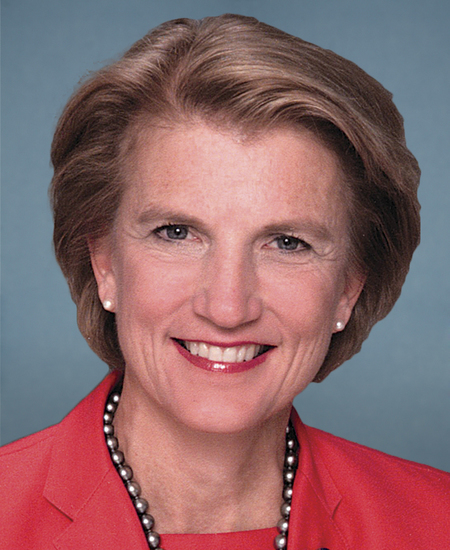
Sen. Shelley Moore Capito
Sponsored bills
Alzheimer's Caregiver Support Act This bill authorizes the Department of Health and Human Services to award grants to public and nonprofit private health care providers to expand training and support services for families and caregivers of individuals living with Alzheimer's disease or a related dementia.
Ally's Act This bill requires private health insurance plans to cover certain hearing devices and systems (e.g., bone-anchored auditory implants) and related items and services. The bill also imposes limits on cost sharing.
This concurrent resolution authorizes the use of the rotunda of the Capitol for the lying in state, upon death, of the last surviving Medal of Honor recipient for acts performed during World War II, if the individual or their next of kin so elects.
This joint resolution proposes an amendment to the Constitution requiring the Supreme Court to be composed of not more than nine Justices.
Drug-Free Communities Pandemic Relief Act This bill authorizes the Drug-Free Communities Support Program, subject to certain limitations, to waive matching funds requirements applicable to certain grants for reducing substance use among youth. Before waiving these requirements, the program must determine that a grantee is unable to raise funds because of the COVID-19 (i.e. coronavirus disease 2019) emergency. Currently, the Office of National Drug Control Policy administers this program, and community coalitions that receive the grants must match a specified percentage of the federal award amount with nonfederal funds, including in-kind contributions.
This resolution honors the memory of U.S. Capitol Police Officer Brian D. Sicknick for sacrificing his life in the line of duty on January 6, 2021, and it calls for justice to be brought to those responsible for the attack on the Capitol and the death of Officer Sicknick.
This bill establishes a bipartisan advisory committee within the Election Assistance Commission (EAC) to study the integrity and administration of the November 2020 general election. The committee must also make recommendations to the EAC, state legislatures, and Congress on best practices for administering federal elections, including best practices to prevent improper voting and increase the security of vote-by-mail ballots.