

Maddy summarySRES 208 is a Senate resolution designating November 12, 2023, as "National Warrior Call Day." It encourages U.S. citizens, particularly those connected to military service, to reach out to veterans through peer-to-peer conversations to support their mental health and transition from military life. The resolution highlights veteran suicide statistics (6,146 deaths in 2020) and emphasizes that isolation - exacerbated by the pandemic - increases risks for conditions like PTSD. It does not create new programs but urges public engagement to connect veterans with support systems. This is a symbolic, awareness-raising measure with no binding policy changes.
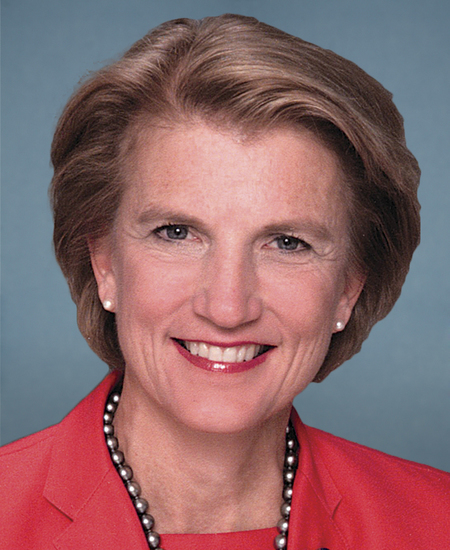
Sen. Shelley Moore Capito
Sponsored bills
Maddy summaryS 2895, the Adoption Tax Credit Refundability Act of 2023, makes the federal adoption tax credit refundable. This change directly affects low-income adoptive parents who previously could not claim the credit if they owed no federal income tax. The bill restructures the credit in the tax code to allow families to receive it as a direct payment, even if their tax liability was zero. It applies to taxable years beginning after December 31, 2022, and includes a transitional rule for credits carried forward from prior years. The law does not alter the credit amount or eligibility criteria, only its refundability.
Maddy summaryThis bill requires colleges and universities receiving federal financial aid to include hazing incidents in their annual security reports and publish detailed public transparency reports. It defines hazing as intentional acts causing physical or mental harm during group initiation or membership, and mandates institutions to create annual Campus Hazing Transparency Reports. These reports must list verified hazing incidents, organizational involvement, investigation timelines, and sanctions - while protecting student privacy - starting 12 months after enactment. Reports must be updated twice yearly and remain publicly available for seven years. The law applies to all U.S. institutions participating in federal higher education programs.
Maddy summaryThe Protecting Access to Recreation with Cash Act (PARC Act) requires all National Park System units that charge entrance fees to accept cash payments. This ensures visitors can pay with cash at every park entrance where a fee is collected, not just through electronic methods. The bill amends existing law to explicitly mandate cash acceptance at all such fee locations. The policy change applies to all national parks, monuments, and other units currently charging entrance fees under federal regulations.
Maddy summaryThis non-binding resolution expresses Congress's support for Israel by declaring it is not a racist or apartheid state, rejecting antisemitism and xenophobia, and affirming the U.S. as a steadfast partner. It serves as a symbolic statement of bipartisan backing without creating new laws, funding, or obligations. Introduced by Senators Cotton, Cruz, and others in July 2023, it reflects congressional sentiment rather than policy change.
Maddy summaryThis resolution designates September 2023 as "National Childhood Cancer Awareness Month" in the U.S. Senate. It requests federal, state, local governments, and nonprofits to observe the month with programs aimed at increasing public awareness about childhood cancer risks. The resolution also encourages ongoing health monitoring for childhood cancer survivors and honors children facing cancer, while acknowledging the disease's significant impact (over 15,500 annual diagnoses and 1,700 deaths in children under 19). As a symbolic measure with no legal force, it does not change policies or allocate funding but seeks to raise national attention on childhood cancer.
Maddy summaryThis bill clarifies that federal education funds can support school programs teaching archery, hunting, or other shooting sports as part of educational instruction or enrichment activities. It directly affects schools receiving federal education funding under the Elementary and Secondary Education Act by modifying a prior restriction. The key change adds an explicit exception to the prohibition, allowing funds to cover these specific educational activities when otherwise permissible under school programs. The amendment ensures schools can offer such instruction without violating existing funding rules.
Maddy summaryThis Senate resolution (SRES 345) designates September 15, 2023, as "National Concussion Awareness Day" to highlight the health impact of concussions. It cites CDC data showing millions of annual sports-related concussions, particularly among youth, and emphasizes the need for better diagnosis, management, and awareness. The resolution encourages federal, state, and local policymakers to collaborate on raising public awareness and improving concussion care protocols. It does not create new laws or allocate funds but serves as a symbolic effort to promote education and prevention. The resolution was introduced by Senators Hassan, Capito, and Casey and unanimously adopted on September 14, 2023.
Maddy summaryS 2806, the Homeowner Energy Freedom Act, repeals three specific provisions from the Inflation Reduction Act that provided federal funding for home energy programs. It eliminates the high-efficiency electric home rebate program, state grants for contractor training, and assistance for adopting modern building energy codes. The bill also rescinds unobligated funds from these repealed programs and amends a related section to remove references to the repealed rebate program. This directly affects homeowners who would have accessed these energy efficiency programs and contractors who relied on the training grants. The bill makes no new program provisions but formally removes existing federal support for these specific home energy initiatives.
Maddy summaryS 2821, the PSA Screening for HIM Act, requires group health plans and individual health insurance issuers to cover prostate-specific antigen (PSA) screenings for high-risk men without out-of-pocket costs. It directly affects men aged 40+ who are at high risk due to being African-American or having a family history of prostate cancer (e.g., a father or brother diagnosed with the disease). The bill amends health coverage rules to mandate this specific screening coverage, effective for plan years starting January 1, 2024. This policy change aims to improve early detection rates, which have near 100% survival when caught early, addressing disparities in prostate cancer outcomes.