

Gabriella Miller Kids First Research Act 2.0 This bill modifies funding for a pediatric disease research initiative within the National Institutes of Health (NIH). Currently, this initiative receives funding through FY2023 from the 10-Year Pediatric Research Initiative Fund. This bill directs certain penalties assessed by the Securities and Exchange Commission against pharmaceutical companies for specified violations to that fund. In making allocations from the fund, the NIH must prioritize pediatric research that does not duplicate existing research activities.
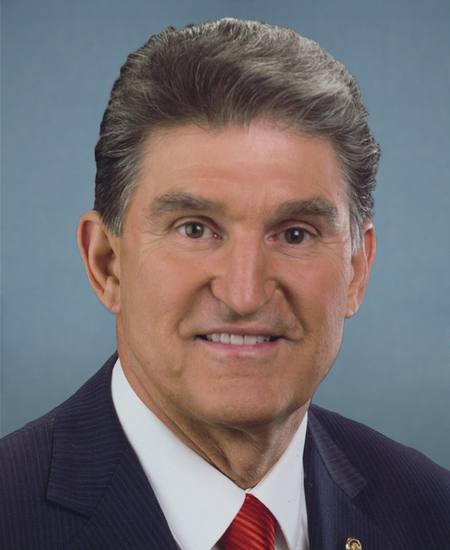
Sen. Joe Manchin, III
Sponsored bills
USTR Inspector General Act of 2021 This bill requires the President to appoint an Inspector General of the Office of the U.S. Trade Representative (USTR). Among other responsibilities, the Inspector General shall (1) conduct and supervise audits and investigations relating to the programs and operations of the USTR, (2) recommend policies for preventing and detecting fraud and abuse in those programs, and (3) provide a means for keeping the USTR and Congress informed about problems and deficiencies in those programs and operations.
Student Loan Disclosure Modernization Act This bill requires loan disclosure forms for federal student loans to be written in plain language, thus enabling borrowers to understand loan terms, total costs of loans, and estimated monthly repayments. Borrowers must acknowledge in writing that they have read the form before the loans are issued.
Abandoned Mine Land Reclamation Fee Extension Act This bill extends through FY2036 the reclamation fee that each operator of a coal mining operation must pay to the Department of the Interior for the Abandoned Mine Reclamation Fund. Under the existing Abandoned Mine Land Reclamation Program, Interior collects a fee from coal mining companies for each ton of coal produced. The fees are deposited into the fund, which may be used to address hazards to public health, safety, and the environment from coal mining sites that were abandoned or unreclaimed as of August 3, 1977. Interior's authority to collect the fee expires on September 30, 2021.
Changing the Culture of the FDA Act This bill requires the Food and Drug Administration to amend its mission statement to state that it is responsible for protecting the public health by considering the danger of addiction and overdose death when approving and regulating prescription opioid medications. (Opioid medications are drugs with effects similar to opium, such as certain pain medications.)
Protecting Americans from Dangerous Opioids Act This bill requires the Food and Drug Administration (FDA) to revoke approval for an opioid drug for every new opioid drug approved. (Opioids are drugs with effects similar to opium, such as certain pain medications.) In determining the drug for which to revoke approval, the FDA must prioritize revoking approval for drugs that are not abuse deterrent and consider the public health impact of drugs on the market.
This bill provides for the award of Congressional Gold Medals posthumously to Glen Doherty, Tyrone Woods, J. Christopher Stevens, and Sean Smith (four Americans who were killed in the September 11, 2012, attack on the U.S. consulate in Benghazi, Libya) in recognition of their contributions to the nation.
Protecting Resources On The Electric grid with Cybersecurity Technology Act of 2021 or the PROTECT Act of 2021 This bill provides incentives for electric utilities to invest in cybersecurity. Specifically, the bill directs the Federal Energy Regulatory Commission (FERC) to provide incentives to electric utilities for investing in advanced cybersecurity technology. In addition, it establishes a grant and technical assistance program at the Department of Energy for electric utilities that are not regulated by FERC to deploy advanced cybersecurity technology.
FDA Accountability for Public Safety Act This bill establishes additional procedures related to the market approval process for opioids. Under the bill, a Food and Drug Administration (FDA) advisory committee must make recommendations regarding supplemental applications for opioids. Current law requires only that an FDA committee make recommendations on new drug applications. The bill specifies that only the Commissioner of Food and Drugs may approve an opioid-related application against the recommendation of the committee. If the Commissioner approves such an application against a committee recommendation, the Commissioner must submit a report to Congress that includes (1) the evidence regarding patient safety that supports the Commissioner's decision, and (2) a disclosure of any potential conflicts of interest of FDA officials involved in the decision. The Commissioner must also testify before Congress regarding the decision, upon request. The drug in question may not be sold until the Commissioner has submitted the required report.
Fair Care for Vietnam Veterans Act of 2021 This bill provides a presumption of service-connection for hypertension and monoclonal gammopathy of undetermined significance (MGUS) for veterans who served in Vietnam between January 9, 1962, and May 7, 1975. Under a presumption of service-connection, specific conditions diagnosed in certain veterans are presumed to have been caused by the circumstances of their military service. Health care benefits and disability compensation may then be awarded.