

Maddy summaryThis bill (S 607, the EFFECTIVE Act) requires the FDA to deny approval for new opioid painkiller drugs unless they demonstrate a significant safety or effectiveness advantage over existing comparable drugs. It directly affects pharmaceutical companies seeking to market new opioid analgesics by adding a new standard to the drug approval process. The key provision amends the Federal Food, Drug, and Cosmetic Act to give the FDA Secretary authority to reject opioid drug applications that don't meet this "significant advantage" threshold. This policy change aims to ensure new opioid medications offer meaningful benefits before reaching patients.
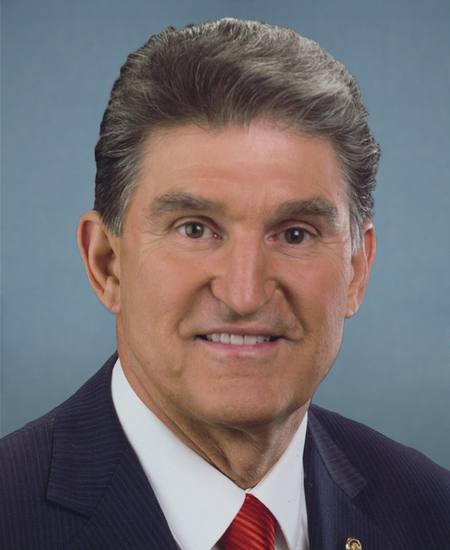
Sen. Joe Manchin, III
Sponsored bills
Maddy summaryS 603 requires the FDA Commissioner to personally approve opioid drugs against an advisory committee's recommendation (instead of delegating the decision), directly affecting opioid drug approvals. It mandates detailed reports to Congress explaining the safety evidence supporting such approvals and disclosing any potential conflicts of interest involving FDA officials. The bill also prohibits marketing the drug until these reports are submitted to Congress. These provisions aim to increase transparency and accountability in FDA decisions on opioid medications.
Maddy summarySJRES 15 is a joint resolution disapproving a rule issued by the Department of Commerce. The rule established procedures for suspending import duties under Presidential Proclamation 10414, which relates to trade measures affecting goods entering the U.S. This resolution, if enacted, would nullify the Commerce Department's rule (published at 87 Fed. Reg. 56868), meaning the suspended duty procedures would no longer apply to importers and customs operations. The bill directly affects businesses and importers subject to these customs procedures.
Maddy summarySRES 72 is a non-binding Senate resolution passed on February 16, 2023, declaring that Russia’s actions in Ukraine meet the legal definition of genocide under the 1948 Genocide Convention. It cites specific atrocities, including mass killings of civilians, deliberate destruction of infrastructure (like hospitals and farmland), forced displacement of Ukrainians, and systematic sexual violence, as evidence of intent to destroy the Ukrainian people. The resolution calls on the U.S. government to support Ukraine, back international accountability efforts, and urges the President to impose sanctions under the Global Magnitsky Act on those responsible. As a symbolic resolution, it does not create new laws but formally recognizes the Senate’s position on Russia’s conduct.
Maddy summarySRES 66 is a Senate resolution condemning China's use of a high-altitude surveillance balloon over U.S. territory as a violation of U.S. sovereignty. It specifically denounces China's false claims that the balloon was a weather device that drifted off course. The resolution requires the President to provide Congress with detailed briefings on the incident, including the balloon's timeline, intelligence gathered, and plans to prevent future violations of U.S. airspace. It calls for decisive U.S. action to deter foreign surveillance activities and holds the Chinese government accountable for such actions.
Maddy summaryThis bill requires student loan lenders to disclose the total interest cost over a standard 10-year repayment plan to borrowers. It amends the Higher Education Act by adding a new requirement (paragraph (18)) for lenders to clearly state this total interest amount. The policy directly affects borrowers of federal student loans by providing upfront transparency about the full cost of repayment. The change is a disclosure requirement only, not altering loan terms or interest rates.
Maddy summaryThe DISCLOSE Act of 2023 requires organizations making campaign-related disbursements over $10,000 to disclose detailed information about their funding sources, including the names and addresses of major donors and the top 5 or 2 funders for political communications. It closes loopholes allowing foreign nationals to influence U.S. elections by prohibiting foreign contributions to ballot initiatives and requiring disclosure of foreign money in campaigns. The bill also mandates "stand by every ad" requirements, requiring political communications to include disclaimers identifying who paid for them and listing major funders. These provisions apply to corporations, labor organizations, and other groups making political expenditures, with the goal of increasing transparency in campaign finance.
Maddy summarySRES 67 is a symbolic Senate resolution designating February 2023 as "Career and Technical Education (CTE) Month" to recognize CTE's role in preparing students for high-demand careers. It does not create new policies or funding but expresses Senate support for CTE programs that connect students with workforce skills in fields like healthcare, technology, and construction. The resolution encourages educators and parents to promote CTE as a valuable educational pathway, referencing the 106th anniversary of the foundational Smith-Hughes Vocational Education Act. As a procedural resolution, it has no direct impact on legislation or affected individuals.
Maddy summaryThis bill provides tax relief to new car dealers who sold inventory due to supply chain disruptions between March 2020 and January 2022. It allows dealers using the LIFO tax accounting method to avoid recognizing income from those sales in the year they occurred, instead deferring tax consequences until they replace the sold vehicles. Dealers have until 2026 to repurchase similar vehicles; if they fail to fully replace the inventory within this window, they must pay back the tax plus interest. The relief directly affects new car dealers who held LIFO inventory during the specified period and are subject to IRS tax rules.
Maddy summaryThis bill establishes a U.S. program to reduce reliance on Russian energy and mineral resources by developing alternative supply chains with allied nations. It authorizes the Secretaries of Energy and Interior to provide financial assistance, technical support, and domestic manufacturing resources to partner countries, with priority given to U.S. projects and those benefiting lower-income nations. The legislation creates a North American energy cooperation program with Mexico and Canada to develop shared energy infrastructure, improve supply chains, and enhance regional energy security through joint ventures and regulatory alignment. It includes $500 million for the program in fiscal year 2024 and requires annual reports on implementation and domestic energy security assessments.