

Maddy summaryS 411, the EAGLES Act of 2023, reauthorizes and expands the National Threat Assessment Center (NTAC) within the U.S. Secret Service to prevent targeted violence, particularly in schools. The bill requires the NTAC to provide training, research, and consultation on threat assessment to schools, law enforcement, and mental health professionals, with specific mandates to hire staff specializing in child psychology and school threat assessment. It directs the Center to develop evidence-based programs, track training participation by state, and report annually to Congress on implementation. The bill uses unobligated DHS coronavirus funds for this purpose and explicitly prohibits using these funds for firearm training.
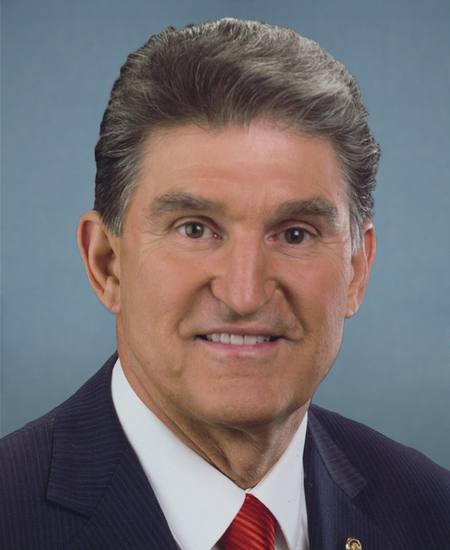
Sen. Joe Manchin, III
Sponsored bills
Maddy summaryThis joint resolution (SJRES 7) seeks congressional disapproval of a 2023 rule defining "Waters of the United States" (WOTUS), which would have changed how federal agencies regulate wetlands and waterways. It targets a rule jointly issued by the Army Corps of Engineers, EPA, and other agencies (88 Fed. Reg. 3004, Jan. 18, 2023), directly affecting landowners, developers, and environmental regulators by altering jurisdiction over water resources. If passed, the resolution would nullify the rule under a specific disapproval process in Title 5 of U.S. Code, preventing it from taking effect. The resolution does not create new regulations but aims to block an existing federal rule. This is a procedural step, not a new law.
Maddy summaryThis resolution authorizes the Senate Committee on Energy and Natural Resources to spend up to $14 million from the Senate's operating fund over two years (March 2023-February 2025) for its internal operations. It sets specific spending limits for staff salaries, consultant services (with annual caps of $30,000), and staff training (capped at $15,000 annually), covering activities like hearings and investigations. The resolution does not create new laws or affect external entities - it solely provides budgetary authority for the committee’s administrative functions.
Maddy summaryThis bill excludes certain federal broadband grants from recipients' taxable income, directly affecting internet service providers, local governments, tribes, and other entities receiving qualifying grants under specific programs. Key provisions clarify that grant money from programs like the Infrastructure Investment and Jobs Act's Broadband Equity, Access, and Deployment Program (Section 60102) or State Digital Equity Grants (Section 60304) is not counted as income. It also prevents double tax benefits by disallowing deductions for expenses covered by these grants and reducing the adjusted basis of related property. The rule applies to grants received after March 11, 2021, and covers grants funded through federal broadband initiatives or state/local programs using specific federal funds.
Maddy summaryThis bill, S 317 (Reproductive Freedom for All Act), guarantees Americans the right to make reproductive decisions - including access to contraceptives and abortion care - without undue government interference, directly affecting all individuals and state governments. It prohibits states from banning contraceptives or imposing barriers to abortion before fetal viability (when a fetus can survive outside the womb), while allowing reasonable health-related regulations and permitting post-viability abortions when medically necessary to protect a patient’s life or health. The law explicitly bases these protections on established Supreme Court precedents (like *Griswold* and *Roe*) and responds to the *Dobbs* decision by creating federal safeguards. States violating these provisions could face legal challenges seeking court-enforced remedies.
Maddy summaryThis joint resolution seeks congressional disapproval of a Department of Labor rule published in the Federal Register on December 1, 2022 (87 Fed. Reg. 73822), which addressed "Prudence and Loyalty in Selecting Plan Investments and Exercising Shareholder Rights." If enacted, it would block the rule from taking effect, directly affecting retirement plan fiduciaries (such as those managing 401(k) plans) who must follow these standards. The resolution uses a specific disapproval process under Chapter 8 of Title 5, U.S. Code, to nullify the rule without altering its content. This is a procedural action targeting the rule's implementation, not a new policy.
Maddy summaryThis bill amends federal law to ensure veterans' benefits paid to a deceased beneficiary are redirected to their estate or rightful heirs, rather than to a fiduciary who misused those funds. It requires the VA to pay benefits first to the veteran's estate, then to a successor fiduciary managing the estate, and finally to a court-determined inheritor. Crucially, the VA cannot pay any benefits under this process to a fiduciary found to have misused the veteran's funds. The policy directly affects veterans' estates, heirs, and fiduciaries managing veterans' benefits, preventing misappropriation of funds after a veteran's death.
Maddy summaryS 240, the Gas Stove Protection and Freedom Act, prohibits the Consumer Product Safety Commission (CPSA) from using federal funds to regulate gas stoves as banned hazardous products or to impose safety standards that would ban gas stoves or substantially increase their average price. The bill directly affects the CPSA by blocking its ability to take specific regulatory actions under the Consumer Product Safety Act. Its key mechanism is a funding restriction preventing the agency from enforcing rules that could lead to a ban on gas stoves or significantly raise consumer costs. The bill does not change existing stove safety standards but limits future regulatory options for the CPSA.
Maddy summaryThe No Budget, No Pay Act requires Congress to pass a budget resolution and all regular spending bills by October 1 each fiscal year. If Congress misses this deadline, Members of Congress (including Senators and Representatives) will not receive pay for the period after October 1 until the budget is approved, and they will not receive retroactive pay for that time. The chairs of the budget and appropriations committees in each chamber will determine compliance and certify the pay suspension period. The law takes effect on September 29, 2025.
Maddy summaryThis bill prohibits the U.S. Department of Energy from selling petroleum products from the Strategic Petroleum Reserve to any entity owned or controlled by China, or to entities that might later export those products to China. It directly affects the Department of Energy’s management of the reserve and Chinese entities seeking to purchase U.S. oil. The key mechanism requires the Secretary of Energy to block sales to China-linked entities and to ensure any sale does not result in the petroleum being exported to China. This is a direct restriction on existing reserve operations, not a new policy. The bill applies to all current and future sales from the reserve.