

Maddy summaryS 722, the Freedom To Invest in Tomorrow's Workforce Act, allows individuals to use funds from 529 college savings accounts to cover career training and credentialing expenses. It expands the definition of "qualified higher education expenses" to include tuition, fees, and exam costs for recognized postsecondary credential programs (like industry certifications) that meet specific standards under the Workforce Innovation and Opportunity Act. This directly affects workers seeking job-focused training or certifications instead of traditional college degrees, enabling them to use existing 529 savings for these expenses. The bill takes effect for expenses paid after its enactment date.
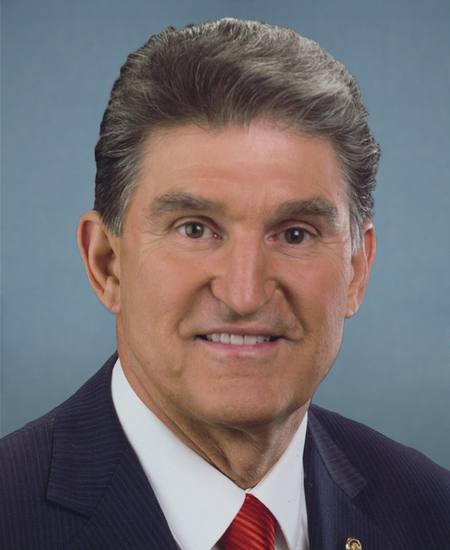
Sen. Joe Manchin, III
Sponsored bills
Maddy summaryThis bill requires the President to assess and report on the inflationary impact of major executive orders before they are issued. Specifically, it mandates that for any executive order projected to cause at least $1 million in annual economic impact (excluding emergencies or national security actions), the President must prepare a statement estimating its effect on inflation, including disaggregated data by consumer price index categories like Food and Energy. Agencies must provide necessary data to support these assessments, and the President must publish annual reports on these evaluations. The bill focuses on procedural accountability for inflation impacts within the executive branch, not direct policy changes affecting citizens or businesses.
Maddy summaryThis bill authorizes the U.S. Mint to produce and sell commemorative coins honoring the 1865 Sultana steamboat disaster, the worst maritime tragedy in U.S. history. It specifies three coin types ($5 gold, $1 silver, and half-dollar) with surcharges ($35, $10, and $5 per coin, respectively) that will fund the Sultana Historical Preservation Society. The funds must be used to build, operate, and maintain a museum in Marion, Arkansas, to preserve the disaster’s history through exhibits, artifacts, and educational programs. The coins, sold only in 2023, are legal tender but will not circulate; the surcharge revenue directly supports the museum’s development and operations.
Maddy summaryThe RESTRICT Act (S 686) gives the Secretary of Commerce authority to identify and address information and communications technology (ICTS) products or services that pose undue national security risks, particularly those involving foreign adversaries like China, Russia, Iran, and others. It targets transactions or holdings by entities from designated foreign adversary countries or their controlled entities, with special focus on technology used by over 1 million U.S. users, including telecommunications, data services, and critical infrastructure systems. The Secretary can refer "covered holdings" to the President, who may then compel divestment or other mitigation measures to protect U.S. critical infrastructure, election security, and sensitive data. The bill establishes specific review procedures while limiting judicial review of these national security decisions.
Maddy summarySRES 57 is a Senate resolution honoring David Ferdinand Durenberger, a former U.S. Senator from Minnesota (served 1978-1989). It commemorates his life and career, highlighting his role as the lead Republican sponsor of the Americans with Disabilities Act and his work protecting Minnesota's natural resources like the Boundary Waters Canoe Area Wilderness. The resolution directs the Senate to formally recognize his passing and transmit a copy to his family. This is a ceremonial resolution with no policy changes or direct impact on constituents.
Maddy summaryThis bill authorizes the presentation of a Congressional Gold Medal to honor Navy pilot Everett Alvarez, Jr., for his service as a Vietnam War POW and subsequent public service. It directs the Speaker of the House and Senate President pro tempore to arrange for the medal's presentation, specifying it must bear his name and image. Bronze duplicates may be sold to cover production costs, with proceeds deposited into the U.S. Mint fund. The bill is purely ceremonial, recognizing Alvarez's 8+ years as a prisoner of war and his post-military career. It does not create new policies or affect any government programs.
Maddy summaryThe Safe Step Act requires health insurance plans and employer-sponsored health coverage to create a transparent process for patients or their doctors to request exceptions to medication step therapy protocols. These protocols typically mandate trying a lower-cost drug first before covering a more expensive alternative. Exceptions must be approved if previous treatments failed, delaying coverage would cause severe harm, the required drug is unsafe, or the patient is stable on the requested drug. Health plans must respond to requests within 72 hours (or 24 hours in emergencies) and make the process details available online.
Maddy summaryS 604, the "Changing the Culture of the FDA Act," requires the FDA to update its mission statement to explicitly include protecting public health by "strongly considering the danger of addiction and overdose death" when approving or regulating opioid medications. This bill directly affects the FDA's decision-making process for opioid-related drugs, mandating that addiction and overdose risks be a central factor in its reviews. The key provision is the formal amendment to the agency's mission statement, which would reshape how the FDA prioritizes public health considerations in opioid policy. The bill does not create new regulations but changes the foundational guidance for the agency's work on opioids.
Maddy summaryS 606, the "Protecting Americans from Dangerous Opioids Act," requires the Health Secretary to revoke approval of an existing opioid drug whenever a new opioid is approved. Specifically, the Secretary must prioritize revoking non-abuse deterrent opioid formulations and consider public health impact when choosing which drug to remove. This directly affects opioid manufacturers and prescribers by reducing the number of less-safe opioid options available on the market. The bill targets the opioid crisis by linking new drug approvals to the removal of existing high-risk medications, based on data showing overdose deaths have quadrupled since 1999.
Maddy summaryThis bill directs the Secretaries of the Interior and Agriculture to identify at least 10 existing long-distance bike trails (minimum 80 miles on federal lands) and 10 potential development areas for such trails. It requires avoiding conflicts with existing uses like horseback riding, ensuring geographic representation, and creating maps/signage for identified trails. The bill mandates a report listing all identified trails within two years of enactment. It directly affects federal land managers (National Park Service, Forest Service) and bike trail users, focusing on planning and coordination rather than funding or construction.