

Maddy summaryThis bill creates a federal program providing child care assistance to working families with children under age 6 through direct child care certificates that parents can use to pay for high-quality child care services. States must develop plans with payment rates covering provider costs and wages, sliding fee scales based on family income (with no copayment for families earning under 85% of state median income), and policies prioritizing vulnerable children including those with disabilities, experiencing homelessness, or from low-income families. The program requires providers to meet quality standards, prohibit suspensions/expulsions, and implement quality improvement activities while ensuring accessibility for underserved populations. It is funded through significant federal appropriations for fiscal years 2026-2031.
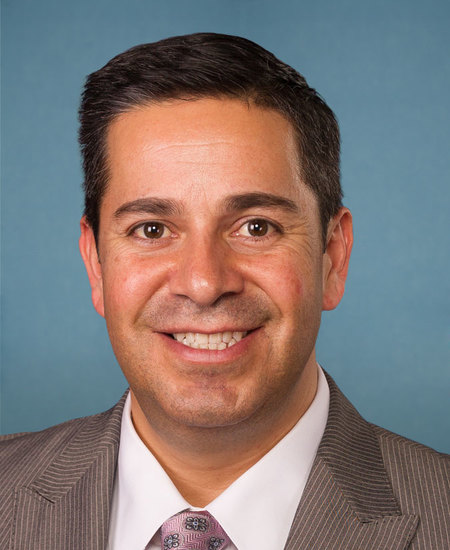
Sen. Ben Ray Luján
Sponsored bills
Maddy summaryThis bill clarifies that existing vehicle safety standards (Standard 108) already permit "pulsating light systems" - brake lights that briefly flash rapidly (up to 4 times for ≤1.2 seconds) before switching to steady illumination - on vehicles covered by the standard. It requires the Transportation Secretary to update Standard 108 within 180 days to formally include performance-based rules for these systems. The change directly affects vehicle manufacturers and safety regulators by explicitly allowing and standardizing this specific braking light technology. The bill does not alter current safety requirements but updates regulations to reflect permitted technology.
Maddy summaryThis bill (S 2266) requires businesses selling online services with automatic renewals or free trials to clearly disclose renewal terms and make cancellation simple for consumers. It mandates 7-day advance notice before charging for renewals, requires express consent for each renewal (not just initial sign-up), and prohibits deceptive "dark patterns" that hide cancellation options. Violations make renewals void and require full refunds for affected charges. The law directly affects subscription services (like streaming or software) and protects consumers from unexpected fees or hidden billing practices.
Maddy summaryThis bill authorizes the minting of commemorative coins for the 2028 Los Angeles Olympic and Paralympic Games and the 2034 Salt Lake City Olympic and Paralympic Winter Games. It specifies four coin types ($5 gold, $1 silver, half-dollar, and proof silver $1) with defined quantities and designs reflecting U.S. athletic participation. A surcharge on each coin sale (e.g., $35 for $5 coins) funds the respective Olympic committees' legacy programs, including youth sports initiatives. The coins are legal tender but intended solely for commemoration, with surcharges directed to the organizing committees after covering minting costs.
Maddy summaryThis symbolic resolution (SCONRES 16) recognizes the persistent wage gap affecting Black women in the U.S., specifically noting they earn just 66 cents for every dollar paid to White, non-Hispanic men for full-time work. It highlights that Black women face compounded racial and gender-based pay discrimination, with data showing the gap would take over 200 years to close at current rates. The resolution does not create new laws but formally acknowledges the economic impact on Black women - such as lost lifetime earnings and reduced family financial security - and reaffirms congressional support for equal pay principles. It was introduced to coincide with Black Women’s Equal Pay Day (July 10, 2025), using Census and EEOC data to underscore the disparity.
Maddy summarySRES 312 is a non-binding Senate resolution designating June 2025 as "LGBTQ Pride Month" to honor the LGBTQ community's historical struggles and contributions to U.S. society. The resolution expresses symbolic support for LGBTQ rights and highlights ongoing challenges like discrimination in housing, employment, and healthcare, without creating new laws or policies. It serves as a formal acknowledgment by the Senate to promote awareness of LGBTQ history and advocacy, but has no legal effect on government actions or individual rights. The resolution was introduced by multiple senators and includes a preamble detailing key milestones in LGBTQ equality efforts.
Maddy summaryS 2225, the Prevent Interruptions in Physical Therapy Act of 2025, allows physical therapists to use temporary replacement therapists (locum tenens) under Medicare for outpatient physical therapy services. The bill amends Medicare rules to apply the same provisions currently used for physicians' services to physical therapy services, meaning therapists can now fill in gaps during staff shortages without disrupting patient care. This directly affects physical therapists providing Medicare-covered outpatient therapy and Medicare beneficiaries receiving those services. The change takes effect after the bill is enacted, ensuring continuity of care when therapists are unavailable.
Maddy summaryThis bill reauthorizes two existing federal diabetes programs through 2027. It provides $160 million annually for fiscal years 2026 and 2027 for the Special Diabetes Program for Type I Diabetes (serving people with Type I diabetes) and the Special Diabetes Program for Indians (serving Native American communities through Indian Health Services). A final $40 million is allocated for October-December 2027 for both programs, with all funds remaining available until expended. The bill extends current funding levels without changing program eligibility or structure.
Maddy summaryThe Senate resolution SRES 306 supports designating June 26 as "LGBTQI+ Equality Day" to commemorate three landmark Supreme Court rulings on that date: *Lawrence v. Texas* (2003, ending criminalization of same-sex intimacy), *United States v. Windsor* (2013, striking down DOMA), and *Obergefell v. Hodges* (2015, guaranteeing same-sex marriage). It encourages public celebrations to educate about ongoing LGBTQI+ discrimination while acknowledging these court victories were not enough to eliminate barriers. The resolution is symbolic - non-binding and non-enforceable - focusing on raising awareness rather than creating new laws. It explicitly calls for future legislation to address discrimination in areas like employment, housing, and public accommodations.
Maddy summaryThe Community Solar Consumer Choice Act of 2025 establishes a federal program to expand access to community solar energy for low- and moderate-income individuals, businesses, nonprofits, and state/local governments, requiring most electric utilities to offer community solar programs with equitable access for all customers. It amends existing law to mandate that non-Tribal utilities provide community solar options allowing all ratepayers - including low-income households - to participate, while Tribal utilities may choose to adopt the program and leverage federal resources. The Department of Energy will provide technical assistance and use National Laboratories to collect data and develop affordable financing models for community solar projects. States must begin reviewing utility programs within one year of enactment and complete implementation within two years to meet these requirements.