

Maddy summaryThe Stop the Scammers Act establishes a whistleblower reward program for individuals reporting violations of federal consumer financial law (e.g., scams, fraud). Whistleblowers who provide original information leading to successful enforcement actions by the Consumer Financial Protection Bureau (CFPB) may receive 10-30% of recovered civil penalties (minimum $50,000 if penalties are under $1 million). The bill mandates strong confidentiality protections for whistleblowers, prohibits employers from waiving these rights via contracts, and requires the CFPB to report annually on the program. It directly affects whistleblowers in consumer finance cases and the CFPB’s enforcement process, not the general public.
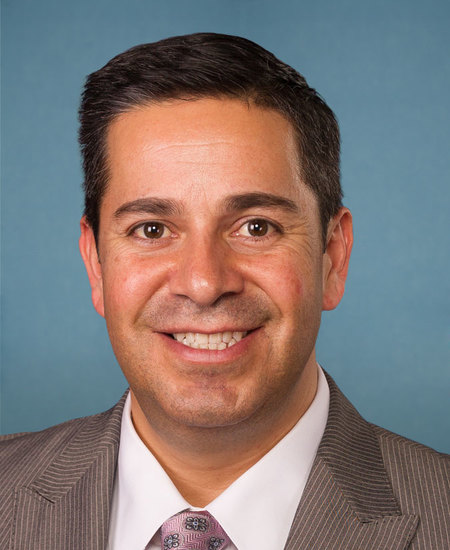
Sen. Ben Ray Luján
Sponsored bills
Maddy summarySRES 334 is a symbolic Senate resolution designating the week of August 25-29, 2025, as "National Community Health Worker Awareness Week." It recognizes community health workers - frontline professionals who connect underserved communities to health services through culturally appropriate outreach, education, and advocacy - as vital to improving public health. The resolution encourages collaboration across local, state, and federal levels to raise awareness of their role but does not create new laws, funding, or requirements. It is a non-binding gesture supporting existing efforts to highlight this workforce, which serves communities through roles like health education, care coordination, and community advocacy.
Maddy summaryThis bill creates a refundable tax credit of up to $15,000 (10% of purchase price) for first-time homebuyers in the U.S. To qualify, buyers must be at least 18 years old, have no recent home ownership, and purchase with a federally-backed mortgage. The credit is reduced for higher-income households relative to local median income and home prices. Homeowners who sell within 4 years must repay the credit, though exceptions exist for military service or job changes. The credit can also be transferred to the mortgage lender at the time of purchase.
Maddy summaryS 2377, the EACH Act of 2025, requires all federal health programs - including Medicaid, Medicare, the Children’s Health Insurance Program (CHIP), and the Indian Health Service - to cover abortion services without restrictions based on income or insurance type. It repeals the Hyde Amendment (Section 1303 of the ACA), which previously barred federal funds from covering most abortions, and prohibits state or private insurance plans from restricting abortion coverage. This directly affects millions enrolled in federal health programs, particularly low-income individuals, women of color, and young people, who face barriers to abortion access under current laws. The bill mandates that all federally funded health programs provide comprehensive abortion coverage as a standard benefit.
Maddy summaryThis bill requires the Department of Homeland Security (DHS) to keep all personal information from DACA applications confidential. It prohibits sharing this data with U.S. Immigration and Customs Enforcement (ICE), U.S. Customs and Border Protection (CBP), or state/local law enforcement for any purpose other than administering the DACA program. Limited exceptions allow sharing only to prevent fraud, address specific national security threats, or investigate felonies unrelated to immigration status. The law directly protects DACA applicants and recipients by preventing their personal details from being used against them by law enforcement.
Maddy summaryThis bill prohibits Medicare from paying for orthotics and prosthetics delivered via "drop shipment" (direct shipping to patients without proper training from a qualified provider) starting after its enactment. It expands the list of healthcare professionals who can order these devices to include physical therapists, occupational therapists, orthotists, and prosthetists. The bill also ensures Medicare beneficiaries can get covered replacements for custom-fitted orthotics and custom-fabricated orthotic devices. These changes aim to improve patient safety and access to appropriate care by requiring in-person training and clarifying coverage rules. The Secretary of Health and Human Services must issue implementing regulations within one year of the bill's enactment.
Maddy summaryThis bill authorizes $5 billion annually (2026-2030) for the Secretary of Energy to fund deferred maintenance, critical infrastructure upgrades, and modernization projects at U.S. national laboratories. It directly affects Department of Energy national laboratories, including facilities for research, computing, utilities, and administrative buildings. Key provisions require the Secretary to submit annual project lists to Congress and develop a 10-year strategy report detailing facility priorities, funding needs, and operational plans. The funding must allocate at least one-third yearly to the Office of Science. The bill mandates specific reporting to congressional committees on project descriptions and funding profiles.
Maddy summaryThis bill creates a federal grant program to help schools recruit and retain paraprofessionals - school support staff like teaching assistants - who work directly with students but lack full teaching credentials. It allocates funds to states based on prior Title I education funding, requiring states to prioritize schools serving high numbers of low-income students or designated "high-need" schools. Funds can be used for mentoring programs, professional development, credentialing (like special education or English learner certificates), and wage increases or bonuses for paraprofessionals. The program mandates annual reporting on wage baselines, paraprofessional numbers, and how funds were used to address shortages.
Maddy summarySRES 324 is a non-binding Senate resolution expressing concern over actions taken by the Trump Administration. It criticizes policies that drastically reduced federal agency staff, froze critical funding, and dismantled agencies, stating these actions harm communities and raise costs for families. The resolution specifically highlights impacts on programs serving 32 million patients through health centers, Social Security/Medicare access, veterans' services, small business support, and medical research. It does not create new policy but formally states the Senate’s view that these actions are destructive and harmful. The resolution lists 12 specific areas affected, including housing assistance, disability education programs, and foreign aid reductions.
Maddy summaryS 2298, the Asunción Valdivia Heat Illness, Injury, and Fatality Prevention Act of 2025, requires employers to prevent heat-related harm to workers. It mandates the Secretary of Labor to create binding standards within one year of enactment, including requirements for employers to provide cool water, scheduled rest breaks, shade, heat illness training, and engineering controls (like ventilation) to reduce heat exposure. These standards directly affect workers in high-heat occupations (e.g., construction, agriculture) and their employers, who must implement specific protective measures like hydration plans, cooling equipment, and supervisor training on recognizing heat illness symptoms. The bill also includes whistleblower protections for workers reporting safety violations and requires ongoing data collection to assess the standards' effectiveness.