

Maddy summaryThe New York-New Jersey Watershed Protection Act establishes a federal grant program to fund local restoration projects protecting water quality and wildlife habitats across the New York-New Jersey Harbor watershed. It provides competitive matching grants (up to 90% federal funding for small/rural/disadvantaged communities) to state/local governments, nonprofits, and tribal entities for activities like habitat restoration, stormwater management, and climate resilience projects. The program requires coordination with existing regional plans (such as the Hudson River Estuary Program) and prioritizes projects benefiting communities facing environmental injustice. Funding is authorized at $20 million annually (2024-2029), with at least 75% dedicated to grants, and mandates annual progress reports to Congress.
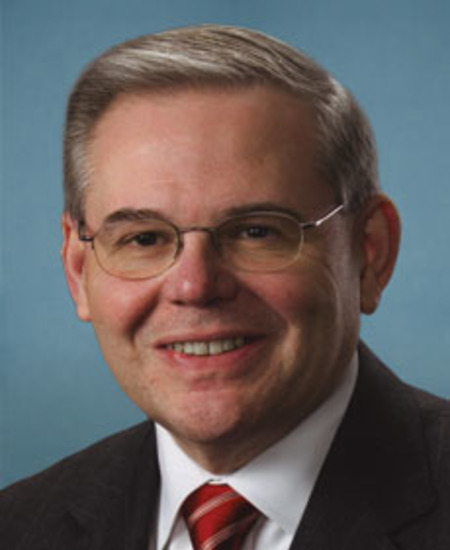
Sen. Robert Menendez
Sponsored bills
Maddy summaryThe Child Care for Working Families Act establishes a new federal program to provide affordable, high-quality child care for working families with children under age 6. It requires states to implement a sliding fee scale (with no copayment for families earning up to 85% of state median income) and develop a tiered quality system for child care providers, with payment rates that support staff wages comparable to elementary educators. The bill prioritizes access for underserved populations including children with disabilities, children experiencing homelessness, children in foster care, and children from low-income families, while requiring states to improve child care quality and supply through dedicated funding streams. States must submit detailed plans demonstrating how they will meet these requirements to receive federal funding, which will be provided through a combination of direct child care assistance and quality improvement activities.
Maddy summaryThe Forced Arbitration Injustice Repeal Act (S 1376) would prohibit businesses from requiring customers, employees, or small businesses to agree to private arbitration for future employment, consumer, antitrust, or civil rights disputes. It also bans agreements that prevent people from joining class or collective lawsuits in these areas. The bill makes such forced arbitration clauses unenforceable and ensures courts - not arbitrators - decide if the law applies. This directly affects individuals and small businesses in disputes involving workplace discrimination, product issues, unfair competition, or civil rights violations, allowing them to seek justice collectively in court.
Maddy summaryThe CLAIM Act protects insurance companies from federal penalties when providing coverage to cannabis businesses operating legally under state laws. It prohibits federal agencies from banning, penalizing, or forcing insurers to cancel policies solely because a business is cannabis-related, or because an owner, operator, or employee works in the cannabis industry. The bill also shields insurers from federal liability for offering such coverage or investing income from it, as long as the business complies with state or tribal cannabis regulations. It does not require insurers to cover cannabis businesses but ensures they can do so without federal interference. This primarily affects insurers and cannabis businesses operating within legal state frameworks, addressing a key barrier to accessing insurance.
Maddy summaryS 1329, the Armenian Genocide Education Act, establishes a program through the Librarian of Congress to support K-12 education about the 1915-1923 Armenian Genocide. The program develops and distributes educational resources (including digital tools and print materials), provides teacher training through workshops and fellowships, and maintains an online resource hub on the Library of Congress website. It directly affects local school districts, independent schools, and educational organizations that adopt the program’s materials into their curricula. The program is funded with $2 million annually for five years, requiring the Librarian to submit annual reports on its implementation.
Maddy summaryS 1333, the Autism Family Caregivers Act of 2023, creates a federal pilot program to fund free or low-cost, evidence-based skills training for family caregivers of children (ages 0-9) with autism or developmental disabilities. The program awards grants to eligible organizations (like nonprofits, health centers, or community coalitions) to provide training focused on communication, social engagement, daily living skills, and behavior strategies. Key requirements include forming local community committees with caregivers, providers, and cultural representatives, and ensuring programs complement existing Medicaid or school services without replacing them. The bill authorizes $10 million annually (2024-2028) to support at least 25 grantees across 15 states, with annual evaluations to assess impacts on caregiver and child well-being.
Maddy summaryS 1383 restricts the possession of firearm silencers and mufflers for most individuals, making it unlawful to import, sell, manufacture, transfer, or possess them except for specific exemptions. These exemptions include use by federal, state, or campus law enforcement officers (defined as officers employed by eligible private colleges with arrest powers), nuclear facility security personnel, and licensed manufacturers testing under Attorney General authorization. The bill also establishes a federal buy-back program using Byrne grant funds, allowing individuals to voluntarily surrender silencers/mufflers for compensation, with the Attorney General required to implement this program within 90 days of enactment. The law takes effect 90 days after enactment.
This resolution recognizes the 70th anniversary of the signing of the Mutual Defense Treaty between the United States and South Korea. Affirming the importance of the U.S.-South Korean alliance as the linchpin to safeguarding peace, security, and prosperity on the Korean peninsula, the resolution welcomes President Yoon Suk Yeol to the United States. It also supports ongoing defense and security ties, calls for continued promotion of human rights, and encourages close cooperation between the United States, South Korea, and Japan.
Maddy summaryThe Election Worker Protection Act of 2023 provides federal grants to states for recruiting and training election workers (including poll workers and election volunteers) with specific requirements for cultural competence and diversity in recruitment efforts. It also funds physical security services and social media threat monitoring for election workers to protect them from threats. The bill establishes new criminal penalties for intimidating, threatening, or harassing election workers while they perform their duties, and creates a grant program to help protect election workers' personally identifiable information from public disclosure. These provisions apply to workers involved in federal elections and require states to submit reports on how the funds are used.
Maddy summaryThis bill prohibits states from restricting or interfering with lawful reproductive health care services (including abortion, contraception, and related care) provided by health care providers like doctors, nurses, and pharmacists in states where such services are legal. It creates federal enforcement mechanisms, allowing the Attorney General, providers, or affected individuals to sue states or officials enforcing violating laws and seek court orders to stop such restrictions. The bill also blocks federal funding for states pursuing legal actions against providers offering lawful reproductive care and allocates $40 million for legal defense grants to providers and $40 million for security grants to protect facilities and patients. It explicitly prevents health insurance companies from denying coverage or suing providers solely for offering lawful reproductive services.