

Maddy summaryThis bill, S 682 (PARTNER with ASEAN Act), establishes U.S. policy to strengthen the 2022 U.S.-ASEAN Comprehensive Strategic Partnership. It directs the U.S. to enhance cooperation with ASEAN through regular high-level engagement, support ASEAN’s inclusion of Timor-Leste as an observer, and encourages establishing an ASEAN delegation in the U.S. The bill also proposes extending existing diplomatic immunity protections to ASEAN under U.S. law. As a policy resolution, it does not create new programs or funding but sets direction for U.S. diplomatic engagement with ASEAN.
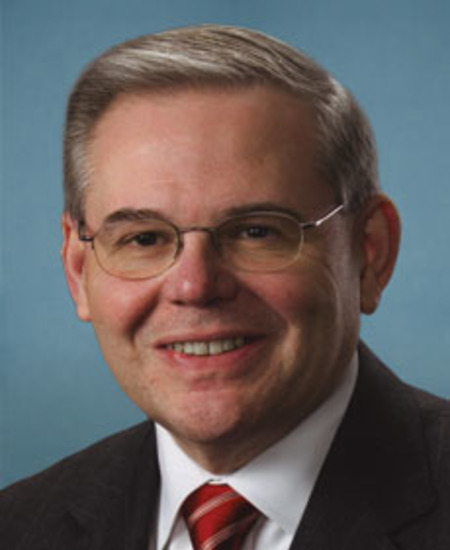
Sen. Robert Menendez
Sponsored bills
Maddy summaryThe Haiti Criminal Collusion Transparency Act of 2023 requires the U.S. government to produce an annual report for five years detailing connections between Haitian criminal gangs and Haitian political and economic leaders. The report must identify specific gangs, their activities, and leaders linked to them, including how these ties threaten Haitian civilians and U.S. interests in Haiti. It also mandates that the U.S. identify individuals for potential visa restrictions and sanctions under existing laws, impose those sanctions within 30 days of the report, and publish the list publicly. The law expires five years after enactment.
Maddy summaryThis is a commemorative Senate resolution (SRES 192), not a law. It formally recognizes April 30, 2023, as "El Día de los Niños-Celebrating Young Americans" to honor children and adolescents, with specific emphasis on the Hispanic youth population (which the resolution notes represents a significant portion of U.S. youth). The resolution encourages communities to observe the day through free, inclusive activities that promote intergenerational connection, cultural exchange among children, and family-centered reflection on children's futures - without creating new legal requirements or funding. It has no binding effect but serves as a symbolic call to action for public recognition.
Maddy summaryThis Senate resolution (SRES 191) recognizes global threats to press freedom and reaffirms the importance of a free press in combating authoritarianism, misinformation, and disinformation. It commemorates World Press Freedom Day on May 3, 2023, and expresses concern about journalists being imprisoned, harassed, or killed worldwide. The resolution is a non-binding statement of principle, not a policy change, calling for the immediate release of detained journalists and urging the U.S. government to prioritize press freedom in promoting democracy and human rights globally.
Maddy summaryThis bill creates federal criminal penalties for assaulting journalists during newsgathering activities. It defines a "journalist" as someone working for news organizations (like newspapers, TV, or digital outlets) who gathers information for public interest, and prohibits assaults causing bodily injury (up to 3 years in prison) or serious bodily injury (up to 6 years) when the attacker knew the victim was a journalist and the assault occurred during newsgathering or to intimidate them from reporting. The law applies to attacks affecting interstate or foreign commerce. It directly affects journalists performing their work and individuals who assault them under these specific conditions.
Maddy summarySRES 188 is a symbolic Senate resolution celebrating the 75th anniversary of Israel's founding on May 14, 2023. It formally recognizes Israel's establishment, reaffirms the U.S.-Israel partnership, and highlights shared democratic values, security cooperation, and diplomatic achievements like the Abraham Accords. The resolution has no policy impact or direct effect on individuals or legislation - it serves solely as a ceremonial expression of support. It was introduced by a bipartisan group of senators and passed without implementing new laws or funding.
Maddy summaryThis bill, the Ending Forced Arbitration of Race Discrimination Act of 2023, prohibits employers from requiring employees to resolve claims of race discrimination through private arbitration. It invalidates any pre-dispute arbitration agreement or waiver for disputes involving discrimination, harassment, or retaliation based on race, color, or national origin under federal, tribal, state, or local law. Employees can now choose to file such claims in court instead of forced arbitration, and courts - not arbitrators - will determine if an arbitration clause applies. The law applies to claims arising after the bill's enactment date.
Maddy summaryThe Vieques Recovery and Redevelopment Act provides monetary compensation to Vieques, Puerto Rico residents who developed specific health conditions (cancer, hypertension, cirrhosis, kidney disease, diabetes, or heavy metal poisoning) linked to 60+ years of U.S. military activity on the island. It establishes a Special Master to process claims and award $50,000-$110,000 based on the number of qualifying diseases, while funding construction of a level three trauma center with cancer and renal care services. The bill also mandates interim health services including air transport to mainland hospitals, medical screening, and telemedicine for residents awaiting the new facility. This legislation addresses health impacts from military contamination and Hurricane Maria's destruction of Vieques' medical infrastructure.
Maddy summarySJRES 4 is a joint resolution that removes the 1972 deadline for states to ratify the Equal Rights Amendment (ERA), which was originally proposed in House Joint Resolution 208. It declares that the ERA is valid as part of the U.S. Constitution if ratified by three-fourths of states (38), regardless of the expired deadline. The resolution directly affects the ERA ratification process, making it possible for states to complete ratification without time constraints. As of 2023, 38 states had already ratified the ERA, and this resolution would finalize its inclusion in the Constitution if enacted.
Maddy summaryThis bill expands eligibility for student loan forgiveness under the Higher Education Act by adding specific criteria for adjunct faculty. It directly affects part-time teachers at colleges, vocational schools, or Tribal Colleges who teach at least 9 credit hours per semester (or equivalent weekly hours) and are not full-time employees elsewhere. The key provision modifies existing law to include these teaching hour requirements as a qualifying standard for loan forgiveness. It does not create new programs but adjusts who qualifies under current federal loan forgiveness rules for educators.