

Maddy summaryThis Senate resolution (SRES 200) expresses support for designating April 30-May 6, 2023, as "National Small Business Week" to honor small businesses and entrepreneurs across the United States. It recognizes that small businesses (over 33 million nationwide supporting 62 million jobs) are vital to the U.S. economy and highlights their resilience. The resolution specifically calls for celebrating their contributions, acknowledging challenges they face, and supporting efforts to improve access for underserved small businesses. As a symbolic gesture - not a law - it does not create new policies or funding but formally recognizes small business impact.
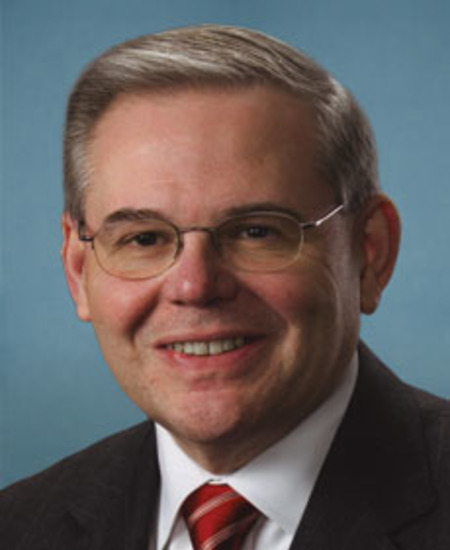
Sen. Robert Menendez
Sponsored bills
Maddy summarySRES 196 is a symbolic Senate resolution recognizing the cultural and historical significance of Cinco de Mayo. It acknowledges the 1862 Mexican victory at the Battle of Puebla against French forces as a symbol of Mexican independence and resilience. The resolution encourages the U.S. public to observe Cinco de Mayo with ceremonies and activities, emphasizing its meaning as a celebration of shared heritage and freedom. This is a non-binding resolution that does not create new laws or affect any specific group.
Maddy summarySenate Resolution 119 recognizes the 202nd anniversary of Greece's independence (celebrated March 25, 2023) and celebrates the shared democratic values between Greece and the United States. The resolution highlights historical ties, including U.S. support during Greece's 1821 independence struggle, Greece's role in World War II, and its current status as a U.S. NATO ally. It also commends Greece's contributions to global security and its support for Ukraine's sovereignty following Russia's invasion. This procedural resolution serves as a symbolic gesture to strengthen bilateral relations without enacting new laws.
Maddy summarySRES 106 is a 2023 U.S. Senate resolution condemning China's implementation of the Hong Kong national security law and related actions. It specifically criticizes the law's use to suppress dissent, target figures like pro-democracy advocate Jimmy Lai and Cardinal Zen, and undermine Hong Kong's autonomy under the "one country, two systems" framework. The resolution urges governments to hold China accountable, supports Hong Kong residents' fundamental freedoms, and calls for dropping all national security law charges against detainees. It does not create new laws or impose direct consequences but serves as a symbolic expression of congressional concern about Hong Kong's political rights and rule of law.
Maddy summaryThis bill removes firearms from an existing exclusion in the Consumer Product Safety Act, meaning firearms would now be classified as consumer products under federal safety regulations. This change directly affects firearm manufacturers and sellers, who would then be subject to the same safety standards enforced by the Consumer Product Safety Commission (CPSC) as other consumer goods. The key mechanism is amending Section 3(a)(5) of the Consumer Product Safety Act to eliminate the specific exemption that previously prevented firearms from being regulated under this law.
Lifting Our Communities through Advance Liquidity for Infrastructure Act or the LOCAL Infrastructure Act This bill reinstates tax provisions relating to advance refunding bonds. An advance refunding bond is a tax-exempt bond issued by a state or municipality to refinance or consolidate existing bond obligations.
Maddy summaryThis bill establishes U.S. policy to strengthen economic, security, and democratic partnerships across the Western Hemisphere with democratic nations (excluding Cuba, Nicaragua, and Venezuela). It directs the State Department to support collaborative efforts including security training for law enforcement, cybersecurity partnerships, reducing trade barriers, and anti-corruption initiatives. Key provisions require improving border security, disrupting transnational crime networks, expanding digital connectivity, and promoting transparent energy markets. The bill focuses on concrete policy actions like enhancing regional cybersecurity cooperation, streamlining customs processes, and strengthening democratic institutions through technical assistance.
Maddy summaryThis bill reforms the eligibility rules for countries seeking U.S. development aid through the Millennium Challenge Corporation (MCC). It updates the income threshold requirement to align with World Bank graduation criteria and clarifies that presidential waivers of aid restrictions (like those under the Foreign Assistance Act) do not disqualify a country from becoming a "candidate country." The Board of the MCC will now determine eligibility based on these revised rules. This directly affects low-income countries aiming to receive U.S. economic assistance via the MCC program.
Maddy summaryThis bill allows the Federal Deposit Insurance Corporation (FDIC) to recover compensation from bank executives and directors who contributed to a bank's failure. It permits the FDIC to seek repayment of payments received in the two years prior to the bank's collapse (with no time limit for fraud), and to ban individuals from future financial roles for at least two years if they violated laws, breached fiduciary duties, or engaged in unsafe practices that caused the failure. The bill also requires liability insurance for these executives to exclude coverage for such recoupments. It directly affects senior bank leaders and their insurers, focusing on accountability for failures that required government intervention.
Maddy summaryThis bill would require the U.S. government to develop a comprehensive strategy to combat illicit gold mining in the Western Hemisphere, particularly focusing on Latin America where significant portions of gold production are linked to criminal organizations. The strategy would aim to disrupt connections between artisanal mining operations and illicit actors, promote responsible sourcing practices, and support formalization of mining activities through environmental protections and financial assistance. Key provisions include building international cooperation to counter money laundering, reducing mercury use in mining, and helping miners transition to legal, sustainable practices. The strategy must be developed by the Secretary of State within 180 days of enactment, with $10 million authorized for implementation.