

Maddy summaryS 817, the SVB Act, repeals Title IV of the 2018 Economic Growth, Regulatory Relief, and Consumer Protection Act (Public Law 115-174). This bill restores the banking regulations that existed before Title IV was enacted, effectively undoing the 2018 changes to financial oversight. It directly affects banking regulations governing financial institutions by reverting to the prior regulatory framework. The key mechanism is the explicit repeal of Title IV and the restoration of pre-2018 provisions as if the 2018 law had never applied.
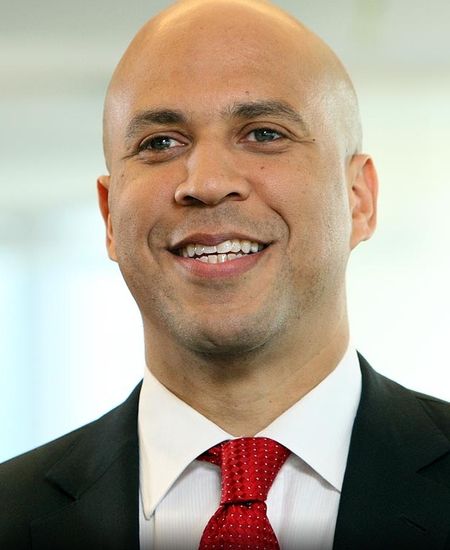
Sen. Cory A. Booker
Sponsored bills
Maddy summarySRES 105 is a non-binding Senate resolution designating March 6-10, 2023, as "National Social and Emotional Learning Week." It recognizes the role of social and emotional learning (SEL) in supporting students' academic success, mental wellness, and long-term well-being, as well as educators' and families' health. The resolution encourages expanding access to SEL programs and urges federal agencies to advance SEL initiatives to benefit students, parents, and communities. It does not create new laws or funding but symbolically highlights SEL's proven benefits, such as improved academic performance and stress management, based on research cited in the resolution's preamble.
Maddy summaryThis bill authorizes the minting of commemorative coins to mark the 100th anniversary of the U.S. Foreign Service. It specifies three coin types: up to 50,000 $5 gold coins (90% gold), 400,000 $1 silver coins (90% silver), and 750,000 half-dollar clad coins, all to be issued in 2025. A surcharge ($35 for gold, $10 for silver, $5 for half-dollars) will be added to each coin's sale price, with all funds going directly to the Association for Diplomatic Studies and Training to support its diplomatic history preservation work. The bill ensures no net cost to the government by requiring all design, production, and marketing expenses to be recovered through coin sales.
Maddy summaryThis resolution expresses congressional support for designating March 10, 2023, as "Abortion Provider Appreciation Day" to honor abortion providers and clinic staff. It recognizes their critical role in providing essential reproductive care amid heightened challenges following the Dobbs decision, which overturned Roe v. Wade. The resolution affirms Congress's commitment to protecting providers' safety and ensuring access to abortion care, while condemning the Dobbs ruling's impact on providers and patients. (Note: This is a symbolic resolution with no binding policy changes.)
Maddy summarySRES 104 is a symbolic Senate resolution recognizing the heritage, culture, and contributions of Latinas in the United States. It highlights that nearly 30 million Latinas live in the U.S. (1 in 6 women), emphasizing their roles across diverse fields like business (over 2 million Latina-owned businesses), military service (45,710 active-duty Latinas), arts (Selena, Rita Moreno), and essential work during the pandemic. The resolution notes ongoing challenges, including Latinas earning only 57 cents for every dollar earned by White, non-Hispanic men. It formally celebrates Latinas' achievements while acknowledging the need for further progress toward equality. As a non-binding resolution, it does not create new laws or allocate funds.
Maddy summaryThe Data Care Act of 2023 requires online service providers (like social media apps, streaming platforms, and websites) to protect users' personal data. It mandates that companies securely store data, promptly notify users of breaches involving sensitive information, and avoid using data in ways that harm users or cause financial/physical harm. The law also restricts selling or sharing user data without strict contracts ensuring third parties follow the same security and privacy rules. These requirements apply to most major digital services collecting personal data, with enforcement by the Federal Trade Commission and state attorneys general. The law does not override existing privacy laws but adds new standards for data handling.
Maddy summaryS 737, the No Tax Breaks for Union Busting (NTBUB) Act, denies tax deductions for employers who spend money to influence employees about union activities or collective bargaining. It amends the tax code to make non-deductible expenses related to swaying union elections, labor disputes, or collective actions - such as anti-union consulting fees, captive audience meetings, or legal settlements over unfair labor practices. Employers must report such spending on tax returns (using new Form 6720D) and face penalties for non-compliance, including fines up to $100,000. The bill directly affects businesses that engage in union-avoidance tactics, aiming to remove tax incentives for undermining workers’ rights under labor laws.
Maddy summaryThe MINDS Act establishes a dedicated Mental Health and Psychosocial Support (MHPSS) Coordinator at USAID to oversee the integration of mental health services across all U.S. international development and humanitarian assistance programs. It mandates that all such programs must be evidence-based, culturally competent, trauma-informed, and prioritize vulnerable groups like conflict-affected children, displaced populations, and those impacted by diseases like Ebola or COVID-19. The bill requires annual reports to Congress detailing funding, program integration progress, and barriers to implementation, with a 5-year sunset provision. This legislation directly affects USAID and State Department programming worldwide, aiming to systematically address mental health needs in global aid efforts.
Maddy summaryThe Stop Forced Organ Harvesting Act of 2023 requires the U.S. government to address forced organ harvesting by mandating annual reports on the issue in foreign countries and allowing passport denial or revocation for individuals convicted of organ trafficking. It directs the President to impose sanctions - including asset blocking and visa bans - on individuals or entities involved in forced organ harvesting, with exceptions for humanitarian aid. The bill defines "forced organ harvesting" as organ removal by coercion, deception, or abuse of power, and "trafficking" as recruiting or transporting people for organ removal through similar means. These provisions aim to hold accountable those exploiting vulnerable individuals for organ removal.
Maddy summaryThis bill modifies tax rules to help communities replace lead pipes in drinking water systems. It clarifies that using tax-exempt bonds to replace privately-owned lead service lines connected to public water systems does not count as "private business use" under federal tax law. This change specifically affects public water systems seeking to comply with federal lead regulations by making financing these replacements easier through tax-exempt bonds. The policy change applies to bonds issued after December 31, 2023, directly enabling more efficient funding for lead pipe removal projects.