

Maddy summaryS 753, the "Good Jobs for Good Airports Act," requires airports receiving federal funding to pay covered airport service workers a minimum wage of $15 per hour or higher (based on local standards, the Service Contract Act, or state/local laws), plus minimum fringe benefits. It directly affects workers in roles like baggage handling, security, concessions, cleaning, and ticketing at airports classified as "small," "medium," or "large hub" airports. Key mechanisms include annual certification by airport operators that all covered workers meet these standards, with compliance tied to eligibility for federal airport grants. The law does not override stricter state or local wage laws but sets a baseline for federally funded airport projects.
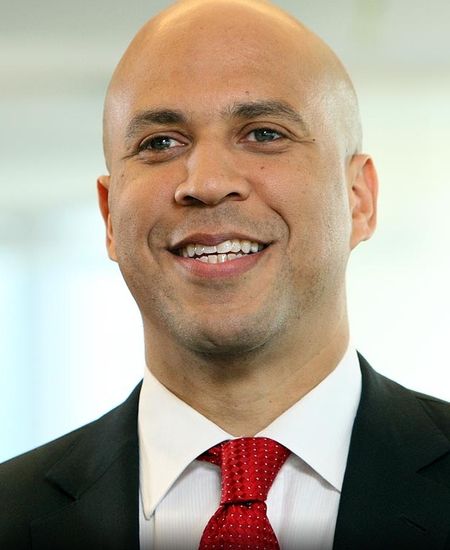
Sen. Cory A. Booker
Sponsored bills
Maddy summaryS 701, the Women’s Health Protection Act of 2023, prohibits states from imposing restrictions on abortion that are more burdensome than those for comparable medical procedures. It protects access to abortion before fetal viability (when a fetus could survive outside the womb) by banning requirements like unnecessary in-person visits, medically inaccurate counseling, or facility restrictions not applied to similar care. Post-viability abortions remain protected when medically necessary to safeguard a patient’s life or health. The bill preempts conflicting state laws and ensures enforcement through federal courts to uphold these access protections for patients and health care providers.
Maddy summaryThis bill authorizes the U.S. Mint to produce commemorative coins honoring working dogs, including $5 gold, $1 silver, and half-dollar coins, to be sold starting January 1, 2025. A surcharge of $35 per gold coin, $10 per silver coin, and $5 per half-dollar coin will be added to the sale price, with all surcharge funds directed to America’s VetDogs to support its service dog programs for veterans and people with disabilities. The coins are legal tender but will only be issued for one year (2025), with production limited to specified quantities (50,000 gold, 500,000 silver, 750,000 half-dollars). The bill does not create new government programs but uses commemorative coin sales to fund existing service dog initiatives.
Maddy summaryThe Vote at Home Act of 2023 would require states to mail ballots to all registered voters for federal elections at least two weeks before election day, eliminate unnecessary barriers to voting by mail (like notary requirements), and provide free postage for mailed ballots. It also establishes automatic voter registration through state motor vehicle departments, where individuals applying for driver's licenses would be automatically registered to vote unless they opt out within 21 days. These provisions aim to increase voting accessibility for all voters, particularly people with disabilities, rural voters, and those with scheduling conflicts. The bill would take effect for federal elections beginning in 2024, with automatic voter registration taking effect 180 days after enactment. The legislation focuses on expanding voting options through mail-in voting and simplified registration processes.
Maddy summaryThe AFTER Act of 2023 requires U.S. federal research facilities to develop adoption programs for animals no longer needed for research and deemed suitable for retirement (excluding rats and mice). It mandates these facilities to create regulations within 90 days of enactment, prioritizing placement with animal rescue organizations, sanctuaries, or shelters that meet specific non-commercial, non-breeding standards. The bill explicitly preserves stricter state animal welfare laws and ensures chimpanzees used in federal research can still access existing sanctuary programs. This directly affects federally funded research institutions and the animals they have used in studies, shifting policy toward adoption over euthanasia or indefinite holding.
Maddy summaryS 723, the Access to Prescription Digital Therapeutics Act of 2023, requires Medicare and Medicaid to cover "prescription digital therapeutics" (PDTs) starting in 2024. PDTs are defined as FDA-cleared software-based treatments for medical conditions, such as apps for diabetes management or mental health therapy. The bill establishes new payment rules for these digital treatments, including setting payment rates based on actual market pricing and requiring manufacturers to report private payor pricing and usage data annually. This directly affects Medicare/Medicaid beneficiaries seeking digital health tools and manufacturers of PDTs, who must comply with reporting requirements and face penalties for noncompliance. The law aims to integrate evidence-based digital health solutions into mainstream coverage under federal health programs.
Maddy summaryS 681, the Facial Recognition and Biometric Technology Moratorium Act of 2023, prohibits U.S. federal agencies and officials from acquiring, possessing, or using facial recognition or similar biometric surveillance systems (like voice analysis or gait tracking) within the United States, except for specific congressional authorizations meeting strict criteria. It bans federal funding for such systems, makes illegally obtained data inadmissible in court, and allows affected individuals to sue the government for violations. The bill also ties federal law enforcement funding (via Byrne grants) to state/local governments adopting similar bans on biometric surveillance. It explicitly excludes NIST research and does not override stricter state/local laws.
Maddy summaryThe American Dream Employment Act of 2023 (S 672) amends a federal appropriations law to allow House and Senate employees with specific immigration protections to receive pay for their work. It explicitly includes individuals holding deferred action (like DACA), deferred enforced departure, or temporary protected status (TPS) who have a current work authorization document. This change removes a prior exclusion that may have prevented these employees from being compensated while working for Congress. The bill directly affects federal workers in Congress who are in these immigration status categories and possess valid work permits under the referenced programs.
Maddy summaryThis bill creates a new definition for "currently accepted medical use with severe restrictions" under the Controlled Substances Act, applying only to specific drugs. It covers drugs designated as FDA breakthrough therapies or authorized for expanded patient access under strict conditions for serious diseases with no alternative treatments. The definition excludes FDA-approved drugs and drugs under clinical hold. The bill requires the Health Secretary to notify the Attorney General when such drugs qualify, triggering specific scheduling procedures and mandating reclassification within 90 days if the drug no longer meets the criteria.
Maddy summaryThe EQIP Improvement Act of 2023 modifies payment rules for the Environmental Quality Incentives Program (EQIP), which helps farmers adopt conservation practices. It sets different payment limits: 75% of costs for most practices, 40% for specific infrastructure like irrigation systems or animal mortality facilities, and 100% for income lost by producers. The bill also reduces the annual payment cap from $450,000 to $150,000 per producer and requires the Secretary to submit annual reports to Congress detailing fund allocation by practice type, state, and farm size. These changes directly affect farmers and ranchers participating in EQIP who implement conservation measures.