

Maddy summaryS 956, the Health Care Fairness for Military Families Act of 2023, eliminates a separate premium for young adult dependents under the TRICARE Young Adult Program. It directly affects military service members' children aged 21-26 who previously paid an additional fee to remain covered after turning 21. The bill amends Title 10, U.S. Code, to remove the separate premium requirement (by striking subsection (c) of section 1110b) and adjusts related eligibility rules, simplifying coverage continuity without additional cost for these dependents.
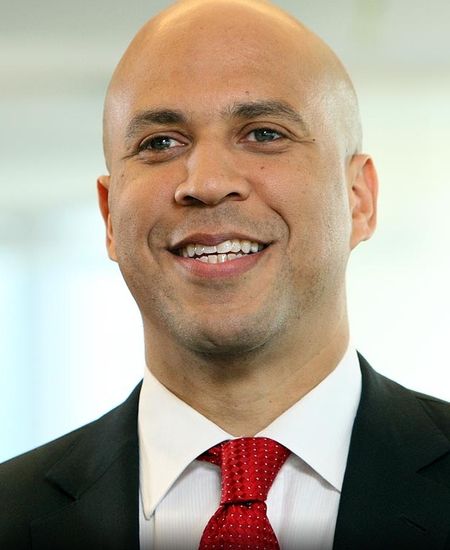
Sen. Cory A. Booker
Sponsored bills
Maddy summaryThis bill amends the federal Food and Nutrition Act to allow Puerto Rico to transition from its current nutrition assistance system to the Supplemental Nutrition Assistance Program (SNAP), which provides federal benefits to low-income households. It requires Puerto Rico to submit a transition plan to the U.S. Department of Agriculture within 60 days, with the agency having 180 days to approve it. Puerto Rico would operate under a 5-year transition period from its existing block grant system, during which the federal government must provide technical assistance and annual reporting. The bill directly affects Puerto Rico residents eligible for nutrition assistance and modifies federal funding formulas to support this transition.
Maddy summaryThe A. Donald McEachin Environmental Justice For All Act requires all federal agencies to address disproportionate environmental burdens faced by communities of color, low-income communities, Tribal and Indigenous communities, and other vulnerable populations. Key provisions include mandating federal agencies to develop environmental justice strategies, consider cumulative impacts in permitting decisions, establish an Environmental Justice Clearinghouse, and create grant programs for environmental justice communities. The bill also creates a White House Environmental Justice Interagency Council to coordinate federal efforts and requires federal employees to complete environmental justice training. It strengthens community protections under the National Environmental Policy Act by requiring agencies to assess potential impacts on environmental justice communities before approving projects. The legislation directly affects federal agencies, environmental justice communities, and communities disproportionately burdened by pollution and environmental hazards.
Maddy summaryThis bill amends U.S. foreign aid law to remove restrictions preventing federal funds from supporting abortion services as part of comprehensive reproductive health care. It directly affects U.S. international health programs and people in low- and middle-income countries who rely on U.S.-funded reproductive health services. The key provision explicitly allows foreign assistance funds to cover abortion services, training, and equipment for safe abortion care, alongside other reproductive health services. This changes how U.S. aid is allocated globally, aiming to increase access to safe abortion care in countries where it is legal.
Maddy summaryThe Sickle Cell Disease Comprehensive Care Act establishes a 5-year Medicaid demonstration project to improve outpatient care for people with sickle cell disease, with a specific focus on young adults and pregnant women. It provides states with funding to create multi-disciplinary care teams, assess barriers to care, and coordinate comprehensive services including pain management, mental health, specialized treatments, and support services. Participating states will receive enhanced federal funding (100% FMAP) for sickle cell disease treatment after the first 18 months of the project. States must report on outcomes including reductions in emergency department visits and inpatient hospital stays to measure the program's impact on care quality and costs.
Maddy summaryThe Quality Defense Act of 2023 establishes federal grant programs to improve public defense services by supporting data collection and staffing. It provides data grants to help public defenders track caseloads and outcomes, and hiring grants to increase attorney compensation and hire additional staff. The bill requires grantees to collect detailed data on case types, attorney hours, client demographics, and case resolutions to inform evidence-based reforms. It also mandates studies on caseload limits and compensation to ensure constitutional standards for effective legal representation. This legislation directly affects public defenders, panel attorneys, and state and local governments administering public defense systems.
Maddy summaryThis bill adds a second nonvoting seat for federal defenders on the U.S. Sentencing Commission. Specifically, it amends the law to require two nonvoting federal defender representatives (either Federal public defenders or community defenders designated by the court system) alongside the existing ex-officio members. The bill also adjusts the total membership count from nine to ten members to reflect this change. These modifications directly affect the Commission's structure and the federal defender community, ensuring their input is formally included in sentencing policy discussions.
Maddy summaryThe MONARCH Act of 2023 establishes a $12.5 million annual fund to support habitat restoration for the western monarch butterfly, which has declined by over 99% in 30 years and faces imminent extinction. It provides grants to local governments, tribal agencies, and nonprofits for projects like planting native milkweed, protecting overwintering sites, and restoring breeding habitats across seven Western states (California, Arizona, Nevada, Oregon, Washington, Idaho, Utah). Projects must include tribal consultation, demonstrate conservation potential, and avoid conflicts with food safety practices, with the Secretary of the Interior approving proposals based on their likelihood to aid recovery. The bill requires annual public reports on project outcomes and monarch population status, ensuring transparency in conservation efforts.
Maddy summaryThe PROSPECT Act (S 848) creates grants to improve infant and toddler child care access for student parents at community colleges and minority-serving institutions, authorizing $9 billion over five years. It funds four types of grants: planning grants to assess needs, access grants to provide free child care for up to 500,000 children under age 3 whose parents are students, impact grants to expand community child care supply through training and startup funding, and pipeline grants to grow the early childhood educator workforce. The bill requires on-campus child care centers to meet quality standards, prioritize low-income student parents, provide flexible hours, and ensure staff wages are competitive with elementary educators. It also mandates detailed reporting on demographics, usage patterns, and outcomes to ensure accountability. The goal is to reduce barriers preventing student parents from completing their education while addressing shortages of quality child care for infants and toddlers in underserved communities.
Maddy summaryThis is a ceremonial Senate resolution (SRES 110) honoring the late James George Abourezk, the first Arab American to serve in the U.S. Senate (1973-1979) from South Dakota. It commemorates his legacy, including his work re-establishing the Senate Committee on Indian Affairs and co-authoring key Native American rights legislation like the Indian Child Welfare Act. The resolution directs the Senate to adjourn in his memory and send a copy to his family, acknowledging his service as a representative and advocate for Native American communities. As a procedural resolution, it has no legislative effect beyond commemoration.