

Maddy summaryThe Livestock Consolidation Research Act of 2023 requires the USDA's Economic Research Service to publish a report on consolidation trends in the livestock industry within one year of the latest Census of Agriculture release. The report must analyze changes in farm/facility size and location, and assess impacts on farmers, ranchers, and consumers - including financial effects, market access, resource availability, and dietary impacts - specifically for beef, dairy, pork, and poultry (including broilers, eggs, and turkeys). It mandates using existing USDA data sources like the Census of Agriculture, Food Safety Inspection Service records, and Packers and Stockyards data, while separating beef cattle data by cow-calf and fed operations and excluding confidential business information. This research will inform stakeholders about industry consolidation patterns but does not create new regulations or alter existing policies.
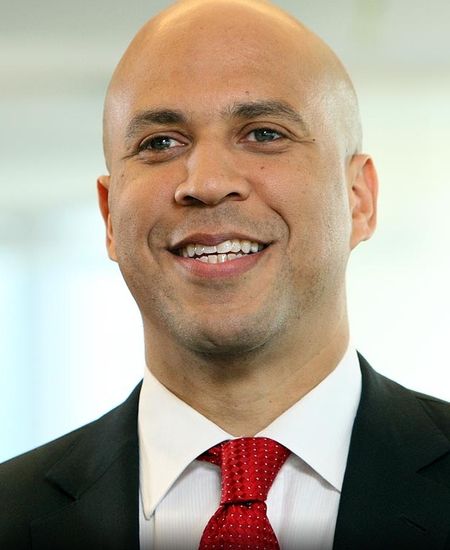
Sen. Cory A. Booker
Sponsored bills
Maddy summaryThe EACH Act of 2023 requires federal health programs - including Medicaid, Medicare, the Indian Health Service, and others - to cover abortion services regardless of income or insurance type. It directly affects millions of low-income individuals, women of color (who are disproportionately enrolled in Medicaid), LGBTQ+ people, and people in states that currently restrict abortion coverage. Key provisions mandate that all federally funded health programs provide abortion coverage (Section 4), repeal a prior law restricting abortion coverage in private insurance (Section 5), and prohibit federal interference with private insurance coverage of abortion services. The bill aims to remove financial barriers to abortion care by ensuring coverage through federal programs and private plans.
Maddy summaryThe Access to AEDs Act (S 1024) provides $25 million in federal funding over five years (2024-2028) to help public elementary and secondary schools improve access to automated external defibrillators (AEDs) and CPR training. It authorizes grants for schools to purchase AEDs, train students and staff, develop emergency response plans, and partner with health organizations - such as local hospitals or fire departments - to implement these programs. The bill also requires the creation of a national database to track school AED access and share best practices, aiming to support immediate response during cardiac emergencies. This directly affects schools, students, and school staff by enhancing preparedness for sudden cardiac arrest, which the bill cites as a leading cause of death among young athletes and children.
Maddy summaryThis bill establishes a federal "National Parkinson’s Project" under the Department of Health and Human Services to coordinate efforts across agencies in preventing, treating, and curing Parkinson’s disease and related conditions. It requires an integrated national plan, annual progress assessments, and a public Advisory Council - including patient advocates, researchers, and healthcare providers - to guide strategy and recommend actions. The project mandates data sharing among federal agencies and biannual reports to Congress evaluating federally funded Parkinson’s programs, aiming to improve care coordination, reduce financial burdens on Medicare and families, and advance research on environmental triggers. The law directly affects people living with Parkinson’s, their caregivers, and federal health agencies involved in research and patient services. The initiative is scheduled to sunset in 2035.
This resolution designates March 2023 as National Women's History Month. The resolution also recognizes the celebration of such month as a time to reflect on the contributions that women have made to the United States.
Maddy summaryThe International Human Rights Defense Act of 2023 establishes a permanent Special Envoy for LGBTQI+ human rights at the Department of State to lead U.S. foreign policy efforts addressing discrimination and violence against LGBTQI+ people globally. The bill requires the Special Envoy to develop an annual global strategy to prevent and respond to criminalization, discrimination, and violence against LGBTQI+ individuals, with mandatory reporting on countries that criminalize same-sex relationships or discriminate based on sexual orientation, gender identity, or sex characteristics. It directs U.S. foreign assistance to support programs that protect LGBTQI+ rights, including health initiatives addressing HIV/AIDS in LGBTQI+ communities, and requires training for U.S. personnel and foreign officials on LGBTQI+ rights issues. The bill also mandates regular congressional briefings on the status of LGBTQI+ rights worldwide and U.S. government efforts to address abuses.
Maddy summary# Summary of the Agriculture Resilience Act of 2023 This comprehensive agricultural legislation contains multiple titles addressing conservation, renewable energy, and food waste reduction: **Conservation Programs:** - Expands Conservation Reserve Program to 32 million acres by 2028 - Creates "Grassland 30" pilot program for 30-year conservation contracts - Establishes new Private Grazing Land Conservation program with focus on advanced grazing management - Creates Alternative Manure Management Program with $1.5 billion funding (2024-2028) to reduce methane emissions from livestock operations - Makes composting a recognized conservation practice **Renewable Energy:** - Amends Rural Energy for America Program to include greenhouse gas reduction criteria - Requires carbon accounting assessments for renewable energy systems - Establishes agrivoltaic systems research and demonstration program ($15 million annually) **Food Waste Reduction:** - Standardizes "quality date" (BEST If Used By) and "discard date" (USE By) labeling - Requires federal contractors to report on food waste disposal - Creates School Food Waste Reduction Grant Program - Establishes grants for composting and anaerobic digestion food waste-to-energy projects ($100 million annually) **Additional Provisions:** - Amends Federal Food Donation Act to require food donation - Creates Food Waste Research Program with 5 regional partner institutions - Includes $20 million for Processing Resilience Grants to increase meat processing capacity - Requires technical assistance for conservation programs with specific funding allocations The legislation emphasizes climate resilience, greenhouse gas reduction, and sustainable agricultural practices while providing significant funding for conservation programs and food waste reduction initiatives.
Maddy summaryThe Sickle Cell Disease Comprehensive Care Act establishes a 5-year Medicaid demonstration project to improve outpatient care for people with sickle cell disease, with a focus on young adults and pregnant women. It authorizes $25 million for planning grants to at least 10 states and up to $50 million for implementation, providing participating states with 100% federal funding for sickle cell disease treatment costs. Key provisions include creating multi-disciplinary care teams, addressing barriers to care through assessments, developing individualized care plans, and expanding access to specialized services including pain management, mental health, and specialist care. States must report on outcomes including reduced emergency department visits, hospital stays, and overall cost savings compared to pre-project levels.
Maddy summaryThis bill repeals upfront origination fees for new Federal Direct student loans. It directly affects borrowers who take out these loans after March 27, 2022, by eliminating the initial fee charged when the loan is issued. The key provision removes section 455(c) of the Higher Education Act, which previously required these fees for loans under part D of title IV. The change applies to all new direct loans disbursed or consolidation applications received on or after the effective date, meaning borrowers no longer pay this specific fee.
Maddy summaryThis bill creates a student loan forgiveness program for educators who work in designated high-need schools or early childhood education programs. After completing 5 years of qualifying service (which can be non-consecutive), educators will have 100% of their outstanding student loan debt forgiven, including interest and fees. The program also provides monthly loan forgiveness during service, with payments counted toward future forgiveness. It applies to teachers, school leaders, early childhood educators, and program directors working in these settings, including those in Bureau of Indian Education schools and Tribal programs. Service completed before the bill's enactment can count toward the 5-year requirement.