

Maddy summaryThe Food for Thought Act of 2023 creates a federal grant program to provide free on-campus meals to low-income college students. Eligible colleges and university consortia can apply for 5-year grants to offer 1-10 free meals weekly per qualifying student, prioritizing those with the greatest financial need or experiencing food insecurity. The bill requires institutions to identify eligible students, remove barriers to meal plan access, and report on student outcomes (like retention rates) disaggregated by factors like race and Pell Grant status. It also mandates that meals meet nutritional guidelines and accommodate dietary needs, while allowing limited funding for SNAP enrollment support and campus food pantries.
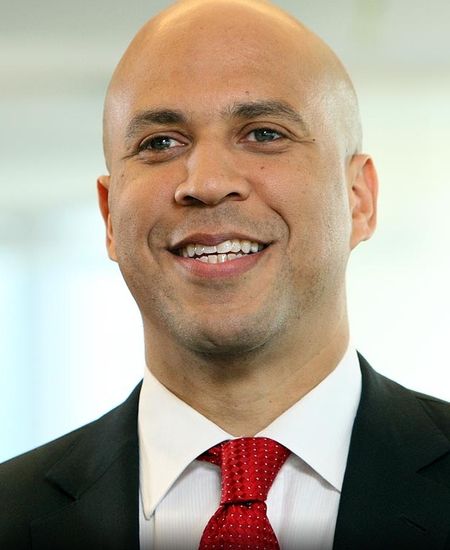
Sen. Cory A. Booker
Sponsored bills
Maddy summaryThe PATHS to Tutor Act of 2023 establishes a federal grant program to fund high-quality tutoring in high-need schools, primarily benefiting students in schools struggling with teacher retention or high new-teacher turnover. It provides $500 million in grants to local partnerships (including schools, educator programs, and community groups) to hire and train tutors - such as college students in teacher prep programs or certified educators - to deliver small-group tutoring aligned with school curriculum. Grants cover tutor stipends, materials, transportation, meals, and professional development, with 85% of funds required to directly support students. The program prioritizes schools serving underserved communities and requires tutors to supplement, not replace, existing teaching staff.
Maddy summaryThis bill changes how judges are appointed to District of Columbia courts. It requires the President to appoint judges from a list recommended by the District of Columbia Judicial Nomination Commission (replacing the previous nomination process requiring Senate confirmation). Congress gains the power to block an appointment within 60 days by passing a resolution disapproving the specific judge and court, using a streamlined process similar to how Congress handles District Council actions. The bill directly affects the President, the Judicial Nomination Commission, Congress, and the District of Columbia courts by altering the appointment timeline and Congressional oversight.
Maddy summaryThe Exploitative Workplace Surveillance and Technologies Task Force Act of 2023 establishes a White House Task Force to study workplace surveillance practices and their impact on workers. The Task Force will examine how employers collect and use workplace data, including the effects on worker compensation, safety, health, and vulnerable populations such as workers with disabilities, low-wage workers, and workers of color. The Task Force will produce three reports over time, including an initial report within one year of enactment and a final report with recommendations for addressing workplace surveillance. This bill affects employers who employ 11 or more workers (called "covered employers") and federal agencies participating in the Task Force, though it does not directly regulate workplace surveillance.
Maddy summaryThe Bridging the SNAP Gap Act of 2023 raises the age for excluding income from SNAP eligibility calculations from 17 to 21, potentially expanding access for young adults aged 18-21. It revises the standard medical expense deduction to base the amount on the Medicare Part B premium rate (set annually by the Social Security Act), removing the previous requirement that deductions only applied to households with elderly or disabled members. The deduction amount for each fiscal year will align with the Medicare Part B premium effective October 1 of that year. States may establish a higher deduction if it meets cost neutrality standards without increasing federal costs.
Maddy summaryThe Insuring Fairness for Family Farmers Act of 2023 modifies how crop insurance agents are compensated by adjusting A&O subsidies (administrative/operating expense payments). It sets fixed minimum and maximum subsidy amounts per policyholder (with the max no more than 400% above the min) and ties subsidies to policy complexity (e.g., number of crops, policy types) rather than premium size. The bill adds 10% bonuses for small farms (<180 acres), specialty crops, or first-time insurance buyers. It requires public data reporting on subsidies by state, crop, and policy type, and mandates a GAO report on federal crop insurance program structure. This directly affects crop insurance agents and farmers, particularly small family farms, by reshaping subsidy distribution.
Maddy summaryThis bill would require most health insurance plans to cover infertility treatment and fertility preservation services. It mandates coverage for infertility treatment (including IVF and other assisted reproductive technology) if a plan covers obstetrical services, and requires fertility preservation coverage for people undergoing medical treatments that may cause infertility (like cancer therapy). The bill applies to private insurance, federal employee health plans, TRICARE, VA benefits, and Medicaid programs, prohibiting cost-sharing that exceeds what's applied to similar services. It also requires clear notice to plan participants about these coverage requirements. The bill aims to address current gaps in coverage, as many employers and states currently do not cover these medically necessary services.
Maddy summaryThe Medicare Audiology Access Improvement Act of 2023 would expand Medicare coverage to include audiology services provided directly by qualified audiologists without requiring a physician referral, supervision, or that the patient be under a physician's care. Starting January 1, 2025, Medicare would cover hearing and balance assessments and treatments that audiologists are legally permitted to perform under state law, with payment set at 80% of the cost. This change would improve access to hearing care for Medicare beneficiaries and allow audiologists to practice more independently under Medicare. The bill does not alter the existing scope of covered services beyond what was available as of December 31, 2024.
Maddy summaryThis bill requires the National Instant Criminal Background Check System (NICS) to retain records related to firearm background checks for as long as needed to determine if a person is barred from gun ownership under federal or state law. It mandates that if NICS hasn't resolved a check within 30 days, it must notify the person in writing and allow them to submit corrections to their records. The bill also specifies that NICS must search key databases - including the NICS Index, National Data Exchange, and crime databases - to verify eligibility. These changes directly affect individuals seeking to purchase firearms and the federal system managing background checks.
Maddy summaryS 2372, the Accelerating Kids’ Access to Care Act, streamlines enrollment for out-of-state healthcare providers who treat Medicaid-eligible children under 21 with medically complex conditions. It requires states to adopt a process allowing these providers to join state Medicaid/CHIP programs without extra state-level screening, provided they already meet federal Medicare or home-state program requirements and pose low fraud risk. The bill establishes a 5-year enrollment period for eligible providers, directly affecting children needing specialized care across state lines and the providers serving them. Key provisions remove barriers to interstate care coordination while maintaining federal oversight standards.