

Maddy summary# Summary of Proposed Election Reform Legislation This comprehensive legislative document outlines a wide-ranging election reform bill with multiple titles addressing various aspects of voting rights, election administration, and election integrity. Key provisions include: 1. **Democracy Restoration** (Title I): - Restores voting rights for citizens with criminal convictions (except those serving felony sentences in correctional institutions) - Requires states to notify individuals of restored voting rights upon completion of sentence or release from custody - Includes enforcement mechanisms for states to comply with the restoration provisions 2. **Voter Identification Requirements** (Title II): - Establishes a standardized system for voter identification requirements - Specifies acceptable forms of identification (including many government-issued documents) - Requires states to provide free identification documents to eligible voters - Includes funding ($5 million annually for 5 years) to cover costs 3. **Voter List Maintenance** (Title III): - Prohibits "voter caging" (using undeliverable mail to challenge voter eligibility) - Requires states to verify voter ineligibility using objective and reliable evidence - Limits removal of voters from registration lists to specific circumstances (death, permanent move) - Mandates notice requirements for voters removed from lists 4. **Election Integrity** (Title IV): - Prohibits interference with voter registration (Section 612) - Restricts removal of local election administrators to cases of inefficiency, neglect, or malfeasance - Prohibits harassment and intimidation of election workers - Bans deceptive practices in elections (false information about voting procedures, qualifications, or endorsements) The legislation aims to expand voting access while maintaining election integrity, with specific focus on eliminating barriers for people with criminal convictions, ensuring fair voter list maintenance, and protecting election workers from harassment and intimidation. It also includes provisions for enforcement through civil actions, criminal penalties, and reporting requirements.
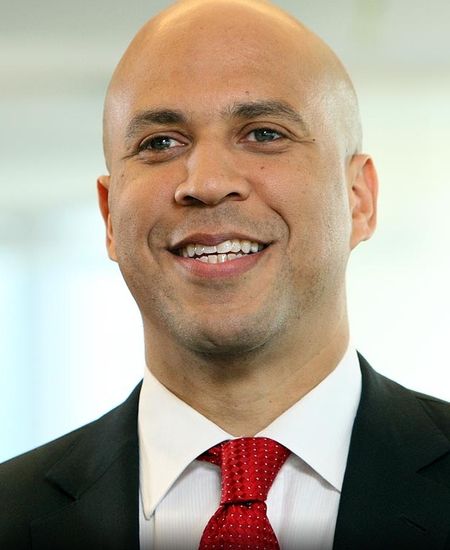
Sen. Cory A. Booker
Sponsored bills
Maddy summaryThe 504 Modernization and Small Manufacturer Enhancement Act of 2023 modifies the Small Business Administration's 504 loan program to better support small manufacturers. It increases manufacturing loan amounts from $5.5 million to $6.5 million, establishes different contribution requirements (5-10% of project cost), and sets a $150,000 per job creation standard for manufacturers (compared to $75,000 for other businesses). The bill streamlines loan closing procedures with new flexibility for correcting details and reallocating costs, and requires small manufacturers to partner with resource centers like small business development centers. These changes aim to make the 504 loan program more accessible and beneficial for small manufacturing businesses.
Maddy summaryThe 504 Credit Risk Management Improvement Act of 2023 strengthens oversight of the SBA's 504 loan program by expanding the Office of Credit Risk Management's authority. It requires the Office to conduct random file reviews of 504 loan closings, report findings to certified development companies (CDCs) within 60 days, and mandate corrections for deficiencies that could cause losses to the SBA. The bill grants new enforcement tools, including fees based on CDCs' portfolio sizes (up to 1 basis point) and penalties of up to $250,000 for violations. Additionally, it directs the SBA to issue NEPA compliance rules for CDCs within 180 days, clarifying how they must meet environmental review requirements for projects.
Maddy summaryThis non-binding resolution urges all countries to ban the dog and cat meat trade and enforce existing laws against it, citing animal cruelty and public health risks like rabies and trichinellosis. It does not create new laws but calls for international action based on the World Health Organization's findings linking the trade to disease outbreaks. The resolution highlights that an estimated 30 million dogs and 10 million cats are killed annually worldwide, often involving stolen pets and inhumane transport conditions. It reflects U.S. support for global animal welfare without imposing direct policy changes.
Maddy summaryThis bill provides federal grants to states that prohibit charging juveniles or their families for court costs, probation fees, or child support related to juvenile justice involvement. It funds evidence-based mental health services and diversion programs for at-risk youth (under age 21) in detention or facing juvenile court, including those at risk of academic failure, substance use, or homelessness. States must certify compliance with fee prohibitions to receive grants, and the program is funded at $500 million annually for five years. Additionally, it requires a national report on fines and fees in the justice system, including demographic data and reincarceration rates.
Maddy summaryThis bill requires law enforcement to notify a minor's parent, guardian, or legal custodian when arresting a minor under 18 for a law violation. It mandates that minors must consult with legal counsel in person before waiving their right to remain silent or to have a lawyer during custodial interrogation. Any statement obtained without this consultation, or without in-person counsel present, is inadmissible in federal criminal prosecutions. The law directly affects minors under 18 subjected to police questioning after arrest, altering standard Miranda procedures for this age group.
Maddy summaryThis bill creates a new grant program under the Juvenile Justice and Delinquency Prevention Act to fund community-based nonprofit organizations that work directly with gang-involved youth and their families. It provides funding for specific services including street mediation to de-escalate violence, negotiating truces between rival gangs, 24/7 crisis intervention, mental health support, job training, and victim assistance. The program requires grantees to serve all communities without discrimination based on race, gender, or criminal history, and focuses on reducing gang-related violence through community engagement and rehabilitation. It directly affects gang-involved youth (under 18 or up to state juvenile justice age), their families, and neighborhoods experiencing gang violence.
Maddy summaryS 2427 requires group health plans and health insurance issuers (both group and individual plans) to cover a full year's supply (up to 365 days) of contraceptives that are already mandated to be covered under existing law. This means enrollees can obtain a one-time refill for a full year's supply without any additional cost-sharing (like copays or deductibles). The rule applies to all plans with coverage effective January 1, 2024, and requires federal agencies to inform providers and enrollees about the new requirement within 90 days of the law's enactment. The bill directly affects people with health insurance who use prescribed contraceptives, ensuring easier access without extra out-of-pocket costs for a full year's supply.
Maddy summaryThe Regional Integration and Normalization Act of 2023 (RINA) establishes a Special Presidential Envoy and creates a $105 million fund to support economic, security, and people-to-people initiatives among Israel, Abraham Accords countries (UAE, Bahrain, Morocco), and Negev Forum countries (including Egypt, Jordan, and others). The bill authorizes enhanced reporting on regional integration efforts, promotes educational exchanges, scientific collaboration, and cybersecurity cooperation, and supports projects addressing water security, energy, and agricultural challenges. It establishes mechanisms for economic partnership, including negotiating frameworks for trade, investment, and regulatory alignment, and aims to deepen cooperation through initiatives like the UAE-Israel CEPA. The legislation directly affects U.S. foreign policy toward the Middle East, focusing on regional stability and economic growth through normalization frameworks.
Maddy summaryThis bill expands Medicare coverage for obesity treatment. It allows more healthcare providers - including nurse practitioners, dietitians, and clinical psychologists - to offer intensive behavioral therapy for obesity, with requirements for coordination with primary care physicians. It also adds Medicare Part D coverage for FDA-approved medications used to treat obesity or manage weight in adults with related health conditions (like diabetes or high blood pressure). These changes directly affect Medicare beneficiaries with obesity, aiming to improve access to proven treatment options. The bill requires annual reports to Congress on implementation progress.