

Maddy summaryS 2337, the Plastic Pellet Free Waters Act, prohibits plastic pellets and pre-production plastic materials from being discharged into waterways through wastewater, spills, or runoff. It directly affects plastic production facilities, molding plants, and companies that package or transport plastic pellets. Within 60 days of enactment, the EPA must issue rules banning these discharges and updating all relevant wastewater, stormwater, and performance permits to reflect this requirement. The law applies to facilities regulated under existing EPA rules for plastic manufacturing and handling.
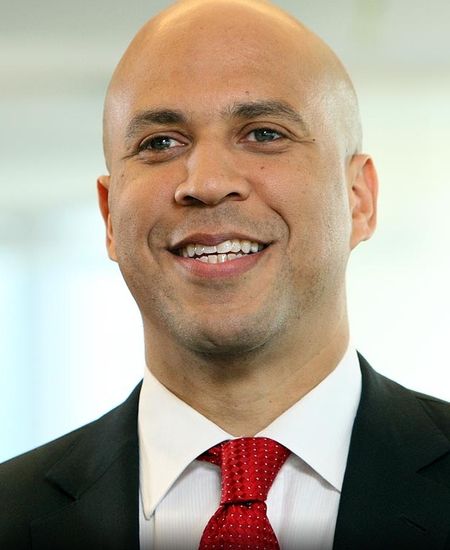
Sen. Cory A. Booker
Sponsored bills
Maddy summary# Summary of Comprehensive Election Reform Bill This document is a comprehensive voting rights and election reform bill containing multiple titles with various provisions designed to: 1. **Restore voting rights** for citizens with criminal convictions (Democracy Restoration Act) - Restores voting rights for citizens not serving felony sentences in correctional institutions - Requires states to notify individuals of restored voting rights upon release or probation - Establishes enforcement mechanisms through civil actions 2. **Strengthen voter identification requirements** - Establishes a broad list of acceptable identification documents - Requires states to provide government-issued identification at no cost - Allows for provisional ballots with sworn statements for those without ID - Includes provisions for electronic documents and copies 3. **Prohibit voter caging and improper voter list maintenance** - Bans the use of "voter caging" documents or lists as evidence for challenging voter eligibility - Establishes strict conditions for removing voters from registration lists - Requires objective and reliable evidence for removals - Mandates notification procedures for voters removed from lists 4. **Enhance election integrity protections** - Prohibits interference with voter registration (including hindering, interfering with, or preventing registration) - Restricts removal of local election administrators to cases of inefficiency, neglect, or malfeasance - Protects election workers from intimidation and harassment - Bans deceptive practices regarding election information within 60 days of an election - Establishes criminal penalties for deceptive election practices 5. **Provides enforcement mechanisms** - Establishes private rights of action for violations - Includes civil and criminal penalties for violations - Requires reports to the Department of Justice for removals of election administrators - Sets specific timeframes for notification and corrective actions The bill aims to expand voting access while maintaining election integrity, with provisions designed to protect voting rights, prevent discrimination, and ensure fair administration of elections for Federal office.
Maddy summaryThe Healthy Families Act requires most employers (with 15 or more employees) to provide workers with up to 56 hours of paid sick leave annually, earned at a rate of 1 hour for every 30 hours worked. Employees can use this leave for their own illness, medical care, caring for family members with health conditions, or addressing domestic violence, sexual assault, or stalking situations. The law prohibits employers from retaliating against workers who use this leave and mandates that employers post notices about the policy. Smaller employers (with fewer than 15 employees) may provide up to 56 hours of unpaid sick leave instead of paid leave. The Act includes enforcement mechanisms allowing employees to file complaints with the Department of Labor and seek damages for violations.
Maddy summaryThis bill creates a framework for qualifying news organizations to form groups to negotiate with large online platforms about fair payment for their content. It allows these groups to jointly deny platforms access to their content during negotiations and use binding arbitration to determine fair compensation based on the content's market value. The bill provides antitrust immunity for these negotiations, requires platforms to pay based on the value of news content rather than platform benefits, and includes transparency requirements for how funds support journalism. It defines specific eligibility criteria for news organizations and platforms, and sets a 6-year expiration for the law.
Maddy summaryThe Paycheck Fairness Act aims to reduce gender-based pay disparities by strengthening protections against wage discrimination. It modifies the "bona fide factor" defense to require employers to prove pay differences are based on job-related factors rather than sex, prohibits reliance on salary history when making hiring decisions, and requires employers with 100+ employees to collect and report pay data disaggregated by sex, race, and ethnicity. The bill enhances penalties for violations, including compensatory and punitive damages, and strengthens non-retaliation protections for employees discussing wages. These changes directly affect employers, employees, and prospective employees, with particular focus on addressing pay gaps that disproportionately impact women and women of color. The act also creates a National Award for Pay Equity in the Workplace to recognize employers making progress in eliminating pay discrimination.
Maddy summaryThe Richard L. Trumka Protecting the Right to Organize Act of 2023 strengthens workers' rights to organize and bargain collectively by amending key labor laws. It clarifies that multiple employers can be held accountable for labor practices (joint employer definition), makes it harder for employers to misclassify workers as independent contractors, and prohibits employers from permanently replacing workers who strike. The bill requires employers to provide detailed voter lists for union elections, strengthens protections against anti-union discrimination, and increases penalties for unfair labor practices (up to $100,000 for repeat violations). It directly affects workers seeking union representation, employers who must comply with new requirements, and labor organizations conducting organizing campaigns. The bill aims to make it easier for workers to form unions and negotiate better wages and working conditions.
Maddy summaryThis concurrent resolution recognizes that the climate crisis disproportionately harms children's health, economic opportunities, and fundamental rights. It expresses Congress's sense that the U.S. urgently needs to develop a national climate recovery plan to phase out fossil fuel emissions, protect natural carbon sinks, and reduce atmospheric carbon dioxide to below 350 parts per million by 2100. The resolution emphasizes the need for a science-based, equitable approach that addresses climate impacts on vulnerable communities, including children in environmental justice areas. While not a law, it urges federal agencies to prioritize climate action as a matter of protecting children's future.
Maddy summaryThe SNAP Nutrition Security Act of 2023 amends the Food and Nutrition Act to establish new definitions for "food security" (access to enough food for a healthy life) and "nutrition security" (equitable access to healthy, affordable foods). It requires the USDA to collect store-level data on specific food items purchased by SNAP participants using electronic systems, while exempting this data collection from standard paperwork rules. The bill mandates annual reports to Congress analyzing SNAP participants' food security, nutrition security, and diet quality, plus a detailed food sales report by 2025 using the collected data. These reports will assess program changes and recommend improvements to reduce food insecurity and diet-related health issues like obesity and diabetes. The law directly affects SNAP participants, the USDA, and Congress through enhanced data collection and reporting requirements.
Maddy summaryThis bill authorizes $30 million annually (2024-2028) for National Institutes of Health research on uterine fibroids, addressing a condition affecting 26 million U.S. women and disproportionately impacting Black women. It requires the creation of a Medicaid database to track treatment costs and coverage for fibroid care, and mandates the development of public education materials about fibroid symptoms, treatment options (including non-hysterectomy approaches), and racial disparities. The bill also directs the Department of Health and Human Services to promote evidence-based care for healthcare providers through partnerships with medical societies. These provisions aim to improve research, data collection, and patient education for a condition that causes significant health burdens, hospitalizations, and costs estimated at $5.9-34.4 billion annually.
Maddy summaryS 2299 prohibits the federal government from imposing or carrying out the death penalty for any violation of federal law after the bill's enactment date. It also requires that any person already sentenced to death for a federal offense before enactment be resentenced. The bill directly affects all individuals currently facing or convicted of federal crimes that carry the death penalty under current law. This legislation would eliminate the federal death penalty as a sentencing option and mandate new sentencing hearings for existing death row cases.