

Maddy summary# Government Surveillance Reform Act of 2023 - Summary This comprehensive legislation aims to reform U.S. surveillance practices by strengthening privacy protections, increasing transparency, and placing greater restrictions on certain surveillance technologies. Key provisions include: ## Major Focus Areas 1. **Cell Site Simulator Regulation** (Section 601) - Requires warrants for most cell site simulator use (with specific exceptions) - Mandates detailed disclosures about potential disruptions to emergency services - Requires minimization procedures for incidental collection - Establishes strict time limits (30 days maximum for initial authorization) - Prohibits use as evidence in most cases 2. **Vehicle Data Protections** (Section 701) - Creates new prohibitions on warrantless access to vehicle data - Defines "covered vehicle data" broadly to include telematics, diagnostics, and sensor data - Requires specific, written consent for access (with detailed requirements) - Establishes emergency exceptions with strict 48-hour warrant requirement 3. **Enhanced Transparency and Reporting** (Sections 801-807) - Requires detailed annual reporting on FISA court certifications and petitions - Mandates statistics on targets and identifiers under Section 702 - Requires reports on accuracy/completeness of applications - Establishes more granular reporting requirements for surveillance orders - Requires public estimates of communications collected under Section 702 4. **Amendments to Foreign Intelligence Surveillance Act** (FISA) - Adds new requirements for cell site simulator use under FISA - Strengthens reporting requirements for FISA activities - Requires annual assessments of compliance with emergency order requirements 5. **General Surveillance Reforms** - Establishes new prohibitions on certain warrantless searches - Strengthens minimization procedures for incidental collection - Requires specific disclosures about potential impacts on protected activities - Creates new civil remedies for unlawful surveillance The bill aims to balance national security needs with privacy rights by implementing strict procedural safeguards, requiring greater transparency about surveillance activities, and placing specific limits on the use of invasive surveillance technologies without proper judicial oversight. It represents a significant overhaul of existing surveillance frameworks with particular focus on modern technologies and data collection practices.
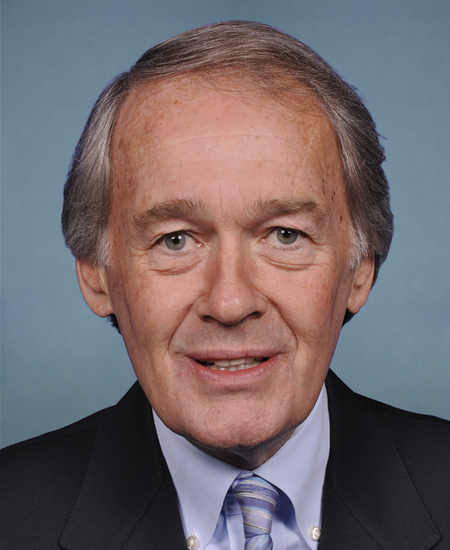
Sen. Edward J. Markey
Sponsored bills
Maddy summarySCONRES 7 is a Senate concurrent resolution condemning Russia’s detention of Vladimir Kara-Murza, a Russian opposition leader jailed for criticizing Vladimir Putin’s regime, the invasion of Ukraine, and advocating for democracy. It calls for his immediate release, urges Russia to free all political prisoners, and expresses solidarity with advocates for democratic values in Russia. The resolution specifically references Kara-Murza’s history of poisoning attempts, his arrest for "spreading false information" after speaking out, and his recent high treason charges. It does not create new laws or impose sanctions but formally expresses congressional opposition to his unjust detention.
Maddy summarySRES 450 is a non-binding Senate resolution introduced in November 2023 that expresses the Senate's position on fair treatment for paraprofessionals (like instructional assistants) and education support staff (such as clerical, transportation, and maintenance workers) in schools. It calls for these workers to receive livable wages, affordable healthcare, job security, paid leave for school closures, and opportunities for professional growth. The resolution specifically outlines 15 key provisions the Senate believes should be implemented, including safe working conditions, representation in policy decisions, and protections against workplace hazards. As a resolution, it does not create new law but aims to highlight the Senate's support for improving conditions for over 3 million essential school workers serving 49 million students.
Maddy summaryThe Puerto Rico Status Act (S 3231) establishes a process for Puerto Rico to determine its political status through a plebiscite on November 2, 2025, offering residents three options: independence, sovereignty in free association with the United States, or statehood. If no option receives a majority in the initial vote, a runoff election will be held on March 8, 2026. The bill outlines detailed transition mechanisms for each potential status, including constitutional conventions, changes to citizenship and immigration laws, and continued federal benefits during a transition period. It requires bilingual voter education materials, establishes oversight for the voting process, and specifies how federal laws would change under each status option. The bill directly affects Puerto Rico's residents, the U.S. federal government, and Puerto Rico's government as it would transition to a new political status.
Maddy summaryThis bill establishes a federal grant program to fund career training for jobs in the offshore wind industry and the broader U.S. maritime sector. The Department of Labor will award grants to eligible entities like community colleges, labor unions, and maritime training centers to develop programs that lead to recognized credentials, with priority given to serving dislocated workers (e.g., from oil/gas or fossil fuel industries), veterans, and individuals facing employment barriers. Grantees must track and report on job placement, wages, and demographic data for participants, and at least 25% of funds must support registered apprenticeships. The program is funded at $25 million annually from 2024 through 2028.
Maddy summaryThis bill reauthorizes the federal loan repayment program for healthcare professionals working in substance use disorder treatment. It directly affects clinicians and providers by making loan repayments tax-free under the Internal Revenue Code and increasing annual funding from $25 million to $50 million for fiscal years 2024-2028. Key provisions include adding a tax exemption for repayment amounts (amending Section 781(b)(3)) and extending the program with higher funding levels. The changes aim to support workforce retention in a critical healthcare sector by reducing financial barriers for treatment professionals.
Maddy summaryThe Flu Vaccine Act (S 3215) directs the National Institute of Allergy and Infectious Diseases (NIAID) to conduct or fund research aimed at developing a universal influenza vaccine or preventative. It authorizes $200 million annually for fiscal years 2024 through 2029 to support this research effort. The bill directly affects NIAID scientists and research institutions receiving federal funding for influenza vaccine development. It establishes a specific funding mechanism for long-term research, without creating immediate public health programs or altering existing vaccine distribution.
Maddy summaryThis bill prohibits federal funding for police officers in schools and creates a $5 billion grant program to help schools replace law enforcement with mental health professionals like counselors, social workers, and psychologists. It requires schools to eliminate police contracts before receiving funds and mandates that grant money be used for trauma-informed services, restorative practices, and evidence-based mental health support. The law specifically aims to address racial disparities in school discipline by reducing arrests and referrals to law enforcement, particularly for students of color, students with disabilities, and LGBTQI+ students. Over 10 million students attend schools with police but no social workers, and the bill directly affects these schools by providing funding to transition to supportive services instead of criminalization.
Maddy summaryThis bill prohibits the federal government from leasing or authorizing oil and gas exploration, development, or production in the Arctic Ocean's outer Continental Shelf. It directly affects the Department of the Interior (which manages offshore leasing) and companies seeking to drill in Arctic waters. The law amends existing federal law to ban new leases or permits for oil, natural gas, or mineral activities in designated Arctic areas. This creates a permanent restriction on new drilling projects in U.S. Arctic waters.
Maddy summaryThis bill requires Small Business Development Centers (SBDCs) to submit detailed annual reports on program outcomes, including metrics like jobs created, new businesses started, capital secured, and participant demographics. It establishes a Data Collection Working Group to improve how SBDC data is gathered and analyzed, with a report due within 180 days of enactment. SBDCs may now use up to 10% of their budget for marketing their services, and the bill clarifies that fees from private partnerships don’t imply SBA endorsement. These changes aim to enhance transparency, data quality, and outreach for SBDCs serving small businesses nationwide.