

Maddy summaryThe SCORE for Small Business Act of 2023 amends the Small Business Act to establish new requirements for the SCORE program, which provides free business counseling and mentoring to small business owners through a network of retired executives. The bill creates a formal cooperative agreement between the Small Business Administration and the SCORE Association, requiring specific financial oversight, detailed annual reporting on program effectiveness, and new standards for online services. It authorizes $18 million annually for the program (2024-2025) and mandates reporting on client demographics, program outcomes, and financial management. The bill directly affects the SCORE Association, the Small Business Administration, and small business owners who receive counseling services through the program.
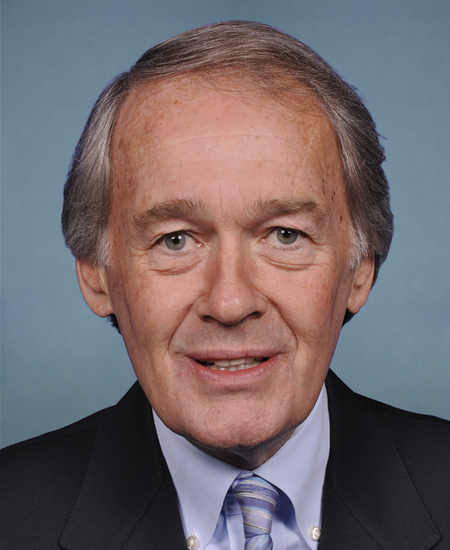
Sen. Edward J. Markey
Sponsored bills
Maddy summaryThe CHILD Labor Act strengthens protections against child labor by defining "oppressive child labor" to include specific dangerous occupations for children under 18, such as manufacturing, mining, trenching, and meat processing. It prohibits Federal contractors from employing children under 16 in any work and restricts 16-17 year olds from hazardous occupations, requiring contractors to implement training programs and establish labor-management committees to monitor compliance. The bill significantly increases penalties for violations, including civil fines up to $750,000 for violations causing death or serious injury, and adds criminal penalties for willful violations. It also requires the Department of Labor to issue "child labor tags" for goods produced with prohibited child labor and submit annual reports to Congress on work-related injuries and deaths.
Maddy summaryThis bill establishes a grant program to help local housing and health service providers better coordinate care for people experiencing homelessness with behavioral health needs, such as substance use disorder. Eligible entities - including local governments, tribes, nonprofits, and public housing agencies - can apply for up to $500,000 over five years to hire coordinators, improve technology for remote care, and build connections between housing and health services. Grants cannot fund healthcare or rent but can cover hiring, tech, and administrative costs to create smoother pathways to housing and treatment. The program requires culturally competent, trauma-informed services and prioritizes support for Black, Hispanic, and Indigenous communities disproportionately affected by homelessness and health disparities.
Maddy summaryThis bill requires schools and state education agencies to break down student performance data into specific ethnic subgroups (such as Cambodian, Hmong, Samoan, and Chamorro) instead of broad categories like "Asian" or "Pacific Islander" under federal reporting rules. It directly affects public schools collecting data under the Elementary and Secondary Education Act of 1965. The bill amends the law to mandate these detailed subgroup categories for reporting and requires the Secretary of Education to develop guidance on reliably collecting this data. The goal is to provide more precise data to address diverse educational needs within these communities.
This resolution recognizes October 2023 as National Women's Small Business Month, honoring the role of women small business owners and entrepreneurs and encouraging the support and creation of women-owned small businesses.
Maddy summary# Summary of the Protecting Communities from Plastics Act This comprehensive legislation aims to address the environmental and health impacts of plastic production and pollution through several key provisions: ## Core Focus Areas 1. **Environmental Justice Protections** - Requires environmental justice assessments for permits to new plastic facilities - Mandates consultation with fenceline communities (communities near plastic facilities) - Requires community benefit agreements for permitted facilities - Establishes requirements for real-time air and water quality monitoring 2. **Stricter Regulations for Plastic Facilities** - Prohibits new permits for covered plastic facilities during a temporary pause period - Requires new air and water pollution standards for plastic production facilities - Implements stricter emissions controls (including for benzene, VOCs, and flaring) - Requires continuous emissions monitoring for all combustion devices 3. **Toxic Substances Regulation** - Mandates an inventory of plastic manufacturing and distribution - Requires reporting on plastic chemicals and their health impacts - Prioritizes toxic chemicals like styrene and vinyl chloride for regulation 4. **Plastic Waste Management** - Prohibits exports of plastic waste to non-OECD countries - Requires hazardous waste designation for discarded polyvinyl chloride - Limits plastic pellet discharge into waterways 5. **Microplastics Research** - Mandates studies on microplastics in food and the environment - Establishes a pilot program to test microplastic removal technologies - Requires research on microplastics in human bodies 6. **Agricultural Plastic Reduction** - Promotes biodegradable alternatives to plastic weed barriers - Creates grants for reducing single-use plastics in agricultural packaging The legislation establishes a comprehensive framework to reduce plastic pollution at every stage of the plastic lifecycle, with particular emphasis on protecting vulnerable communities disproportionately impacted by plastic production and pollution. It represents a significant regulatory shift toward holding plastic producers accountable for the environmental and health impacts of their products.
Maddy summarySRES 426 is a Senate resolution designating November 4, 2023 (the first Saturday of November), as "National Bison Day." It directly recognizes the cultural, historical, and economic significance of bison to Native American tribes, rural communities, and the U.S. ecosystem. The resolution encourages the American public to observe the day with ceremonies and activities, but it does not create new laws, funding, or obligations. This is a symbolic gesture acknowledging bison's role as the national mammal and its importance to tribal heritage and conservation efforts.
Maddy summaryThis bill increases federal funding for Medicaid home and community-based services (HCBS) by raising the federal share (FMAP) by 10 percentage points for states during 2024-2025, capped at 95%. States must apply with plans to use these funds to increase wages and benefits for home care workers (like paid leave and hazard pay), reduce waiting lists for services, help people return from institutional settings, and cover related costs like equipment or training. Funds must supplement, not replace, existing state spending and be reported on by states by 2027. It directly affects states administering Medicaid HCBS programs, home care workers, and people receiving community-based care.
Maddy summaryThe PROTECT Act (S 3108) establishes a federal initiative to reduce youth and young adult e-cigarette use. It directs the CDC to conduct research on youth e-cigarette patterns, product characteristics, and access methods; develop health provider guidance; identify prevention strategies; and run public education campaigns about e-cigarette risks. The bill authorizes $100 million annually (2024-2028) to fund state health departments and tribal organizations implementing youth-focused prevention and cessation programs. This initiative affects youth and young adults directly by targeting e-cigarette access and use, while requiring CDC and health agencies to coordinate new research and outreach efforts.
Maddy summaryThe ABC Act requires Medicare, Medicaid, CHIP, and Social Security offices to review and simplify their application, eligibility, and communication processes. It directly affects family caregivers who help loved ones navigate these programs by targeting repeated paperwork, inconsistent information requests, and poor communication. Key mechanisms include mandating agencies to reduce duplicate forms, improve website accessibility (including ADA compliance), shorten call wait times, and provide multilingual support based on feedback from caregivers and advocacy groups. Agencies must submit detailed reports to Congress within one year outlining their findings and planned improvements.