

Maddy summaryThe Countering Corporate Corruption in China Act of 2023 amends U.S. anti-corruption laws to address non-monetary corporate actions that curry favor with the Chinese Communist Party. It expands the definition of "corruptly" to include actions that deny, obfuscate, or excuse human rights abuses (such as forced labor against Uyghurs in Xinjiang), support China's territorial claims, or make certain investments in Chinese entities. The bill requires companies to demonstrate reasonable business purposes for their actions (excluding marketing or market access), eliminates certain affirmative defenses, and increases penalties to at least three times the standard civil penalty for violations. This law directly affects U.S. companies doing business with China, particularly those making investments or engaging in activities that could be seen as politically supportive of the Chinese government.
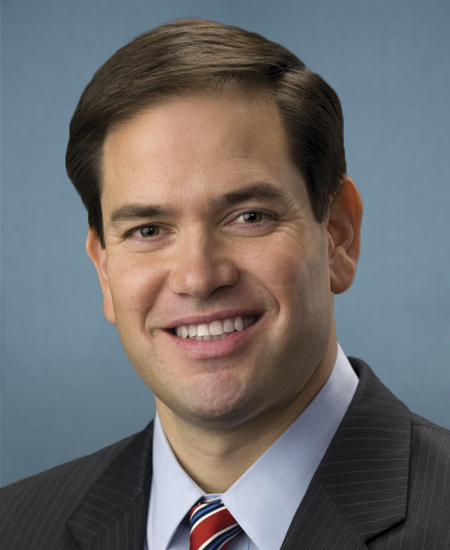
Sen. Marco Rubio
Sponsored bills
Maddy summaryThe Fair Trade with China Enforcement Act establishes a list of products supported by China's "Made in China 2025" industrial policy, targeting 10 critical sectors including semiconductors, robotics, artificial intelligence, and advanced medical equipment. It prohibits U.S. exports of national security-sensitive technology and intellectual property to China, limits Chinese investment in U.S. companies in strategic industries to 50% ownership, and bans the use of Chinese telecommunications equipment like Huawei and ZTE in U.S. government systems. The bill also imposes countervailing duties on Chinese goods related to the Made in China 2025 plan, repeals preferential tax rates for Chinese residents, and taxes U.S. obligations held by China's government. These provisions directly affect U.S. companies operating in targeted sectors, Chinese entities investing in the U.S., and U.S. government agencies procuring telecommunications equipment. The bill aims to reduce Chinese influence in U.S. economic and national security sectors while addressing trade imbalances.
Maddy summaryThis bill requires certain publicly traded companies (called "covered issuers") to disclose in their annual SEC filings whether they or their subsidiaries/joint ventures have Chinese Communist Party (CCP) organizations operating within them. It mandates specific disclosures about any CCP involvement in company operations and whether the board of directors owes fiduciary duties to shareholders under applicable law. The reporting obligation begins with the second annual report filed after the bill's enactment, applying to companies required to submit reports under the Securities Exchange Act of 1934. The bill does not ban CCP activities but imposes new transparency requirements for affected companies.
Maddy summaryThe ISA Student Protection Act of 2023 establishes consumer protections for educational income share agreements (ISAs), which are contracts where students pay a percentage of future income in exchange for education funding. The bill limits total payments to no more than 20% of a student's future income, requires clear disclosures about payment terms, and provides discharge protections for students with disabilities or who pass away. It also clarifies tax treatment for ISAs and prohibits practices like acceleration clauses that would increase payments upon default. The bill applies to educational ISAs used for postsecondary education expenses.
American Financial Markets Integrity and Security Act This bill generally prohibits investments in sanctioned entities, certain Chinese military companies, and entities reasonably believed to be involved in activities contrary to the national security or foreign policy interests of the United States. These entities may not sell securities to U.S. markets. Investment companies, insurance companies, and retirement plans are prohibited from investing in these entities. The bill also prohibits the use of federal funds to enter into or renew a contract with these entities. Furthermore, the Department of Commerce and the Office of the Director of National Intelligence—in addition to the Department of Defense as under current law—are allowed to add entities to the list of Chinese military companies. Additionally, the Office of Commercial and Economic Analysis of the Air Force must (1) report on the strategic importance to the Chinese government of inflows of U.S. dollars to China through capital markets, and (2) make recommendations to mitigate any related national security and economic risks.
Maddy summaryS 143, the "Turn OFF THE TAP Act," prohibits U.S. federal agencies from entering into contracts with or providing funds to entities listed on specific U.S. sanctions lists. It directly affects federal agencies (like departments or bureaus) and any businesses or organizations on the Office of Foreign Assets Control’s SDN list, Chinese military-industrial lists, or other designated national security risk lists. The bill blocks all federal funding - whether for direct contracts, purchases, investments, or indirect support - from flowing to these sanctioned entities. Key provisions include banning federal contracts with listed entities and preventing federal funds from being used to support them indirectly through third parties. This applies to entities owned by or linked to those on the restricted lists.
Maddy summaryS.140 updates federal theft laws to specifically address organized retail crime by raising the monetary threshold for prosecution to $5,000 in stolen goods over 12 months and expanding definitions to include coordinated theft operations. It creates a new Homeland Security Coordination Center within 90 days to unify federal, state, local, and tribal law enforcement efforts with retailers. The center will share threat intelligence, track crime trends, and produce annual public reports on organized retail crime patterns. These changes directly affect retailers facing financial losses, law enforcement agencies, and criminal organizations profiting from theft.
Maddy summarySRES 17 is a symbolic Senate resolution supporting National Catholic Schools Week 2023. It recognizes Catholic schools' contributions to U.S. education, highlighting their role in serving 1.7 million students - including 21.5% from racial minorities and 18.6% from Hispanic backgrounds - with a 98.9% graduation rate and 85.2% college attendance. The resolution formally endorses the week's theme "Faith. Excellence. Service" and applauds Catholic schools for providing affordable, values-based education. As a non-binding resolution, it does not create new policies or funding but publicly acknowledges these schools' impact on communities.
Maddy summaryThis bill establishes a new Interagency Committee within the Executive Office of the President to coordinate federal financing for national development. The Committee must create a public National Development Strategy every four years, identifying supply chain vulnerabilities, manufacturing gaps, and priority industries for investment. Federal agencies and the Federal Financing Bank must align their financing, research, and development activities with this strategy, prioritizing projects that strengthen U.S. industrial capabilities and supply chains. The strategy requires specific metrics to track investments, including ZIP codes and industry classifications, and prohibits funding projects involving entities from "countries of concern" like China. This affects federal agencies managing financing programs, manufacturers, and businesses seeking federal support for strategic projects.
Maddy summaryThe South Florida Ecosystem Enhancement Act of 2023 establishes a new Environmental Protection Agency program focused on monitoring and restoring water quality, wetlands, and marine habitats across South Florida, including the Everglades, coral reefs, and key water bodies like Lake Okeechobee. It creates two grant programs: one for ecosystem restoration projects (prioritizing nature-based features and limiting federal funding for projects already receiving state water infrastructure support) and another for environmental education initiatives targeting schools and public engagement. Eligible recipients include state/local governments, tribes, nonprofits, and schools, with specific funding allocations requiring at least 50% of restoration funds and 1% for education grants annually. The bill authorizes $50 million yearly from 2024-2028 to support these efforts, with strict rules on project locations and federal cost-sharing.