

Maddy summaryThis bill denies tax deductions for employers covering specific medical expenses: travel for employees seeking abortions, or gender transition care for minor children (under 18). It defines "gender transition procedure" broadly to include surgeries, puberty-blocking drugs, and cross-sex hormones, with limited exceptions for medically necessary treatments. Employers can no longer deduct costs related to these services on their federal tax returns. The law applies to taxable years after its enactment and does not affect deductions for other medical expenses or for gender transition care for adults.
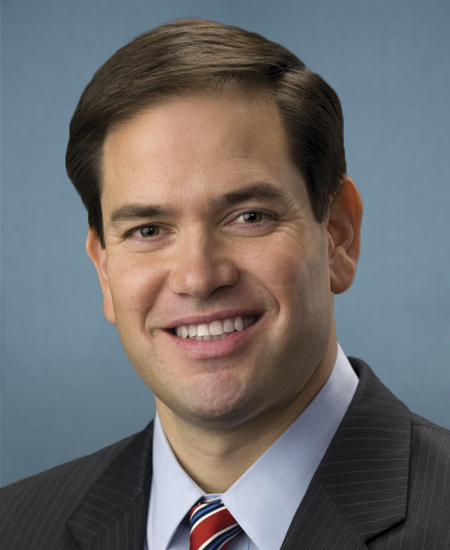
Sen. Marco Rubio
Sponsored bills
Maddy summaryS 192, the Safe Passage on Interstates Act of 2023, makes it a federal crime to intentionally obstruct interstate highways. It prohibits deliberately slowing traffic, standing near vehicles, or endangering vehicle movement on interstates with the intent to block normal use, affecting individuals who engage in such obstruction. The bill imposes fines up to $15,000 and prison terms up to 20 years for violations, with enhanced penalties for obstructing emergency vehicles or causing death. Lawful government activities (e.g., traffic control) are exempt from the law.
Maddy summaryThis bill prohibits the federal government from promoting, supporting, or contracting with organizations that provide abortions on federal lands or in federal facilities, including national parks, military bases, and courthouses. It directly affects federal agencies and contractors operating on public lands or in government buildings by banning any federal funding, promotion, or contractual relationships with abortion providers. Key provisions define "abortion entity" as any organization performing, referring for, or financially supporting abortions, and prohibit federal actions that expand access to abortion in these settings. The law creates a clear policy restriction on federal involvement in abortion services within government-controlled spaces.
Maddy summaryS 194, the "Protecting Our Democracy by Preventing Foreign Citizens from Voting Act of 2023," would withhold federal funds from any state or local government that permits non-citizens to vote in federal, state, or local elections. States and localities applying for federal funds must certify they do not allow non-citizen voting as a condition of receiving support. This restriction applies only to new funding agreements entered into after the bill's enactment. The bill directly affects jurisdictions currently permitting non-citizen voting by threatening their access to future federal financial assistance.
Maddy summaryThis bill permanently prohibits U.S. federal funds from being used for abortions or involuntary sterilizations in foreign aid programs and the Peace Corps. It amends the Foreign Assistance Act to ban funding for abortions as family planning, involuntary sterilizations, related biomedical research, abortion lobbying, or organizations supporting coercive programs. The Peace Corps Act is similarly amended to prevent using Peace Corps funds for abortions. These changes apply to all programs funded under these laws, directly affecting U.S. international aid recipients and Peace Corps operations. The policy change makes existing restrictions permanent, removing the need for annual congressional action to maintain them.
Maddy summaryThe Block Grant Assistance Act of 2023 amends the Disaster Relief Supplemental Appropriations Act, 2023 to allow the U.S. Department of Agriculture to provide agricultural disaster loss assistance to eligible states and territories through block grants. This change would give states and territories greater flexibility in using these funds for disaster recovery, rather than requiring specific project-based spending. The bill modifies existing disaster relief funding distribution without creating new money. It directly affects states and territories receiving agricultural disaster assistance under the amended law.
Maddy summaryThis bill eliminates the Chief Diversity Officer position within the Department of Defense (DoD) by repealing Section 147 of Title 10, U.S. Code, and removes a related Senior Advisor for Diversity and Inclusion role established in the 2021 National Defense Authorization Act. It directly affects the DoD by prohibiting the creation of any new position that mirrors these roles using federal funds. The key mechanism is a funding ban preventing the DoD from establishing or funding similar diversity-focused leadership positions. This policy change removes specific diversity-related roles from DoD leadership structure.
Maddy summaryThis bill prohibits the President from declaring federal emergencies under three key laws (the National Emergencies Act, Public Health Service Act, and Stafford Act) for purposes related to abortion. Specifically, it blocks emergency declarations meant to promote, support, or expand abortion access, or to take legal action against states that restrict abortion. The bill defines "abortion" as intentionally terminating a pregnancy (with limited exceptions for live birth or health) using instruments, medicine, or devices. It directly affects federal emergency powers, preventing their use to advance abortion policy or challenge state abortion laws. The law does not change existing abortion regulations but restricts how emergency declarations can be utilized.
Maddy summaryThis bill requires federal contractors to disclose any current or recent contracts (within the past three years) with entities tied to the Chinese government, military, or Communist Party. Contractors must report details like the entity name, relationship to China's government, contract terms, and dates, updating disclosures within 30 days of new ties. The government must create a public database of these disclosures within 180 days of the bill's passage. It directly affects companies seeking or holding federal contracts by mandating transparency about their commercial relationships with specified Chinese entities. The law aims to increase visibility into federal contracting ties with entities linked to China's government or military policies.
Maddy summaryThis bill requires the Federal Retirement Thrift Investment Board (which manages the TSP for federal employees) to ensure TSP investments and voting rights do not harm U.S. national security. It specifically prohibits investments in entities linked to certain countries (like China, Russia, or Iran) or activities that could undermine defense production, critical technology, or government contracts. The bill mandates annual reviews by the Labor Secretary (with Defense, Justice, and Treasury) to assess compliance, including a presumption against investments in listed entities or votes supporting restricted transactions. It also temporarily shields fiduciaries from liability for breaches until 2025, after which full accountability resumes. The policy directly affects TSP beneficiaries (federal retirees and uniformed service members) and the TSP investment board’s decision-making.