

Maddy summaryThis bill (S 2647, SHINE for Autumn Act of 2023) provides federal funding to improve stillbirth data collection, research, and education. It authorizes $5 million annually for states to collect stillbirth data using existing health records while protecting privacy, $1 million for developing standardized data collection guidelines and public educational materials, and $3 million for specialized training programs in perinatal pathology and stillbirth research. The bill directly affects state health departments, medical professionals (like obstetricians and pathologists), and families impacted by stillbirth through improved data systems and educational resources. Key provisions require standardized data reporting, consultation with affected families and healthcare providers, and mandatory reports on program progress within five years of enactment.
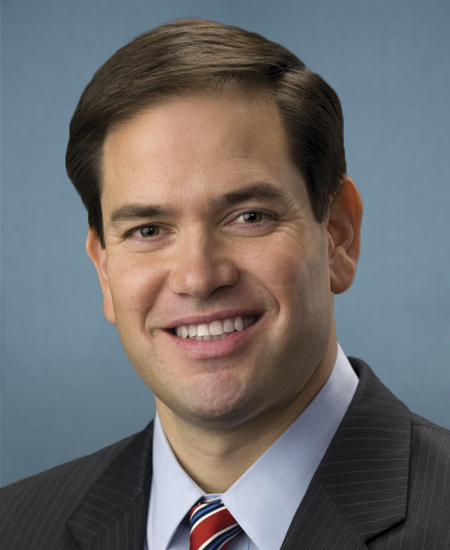
Sen. Marco Rubio
Sponsored bills
Maddy summaryThe INDEX Act requires investment advisers managing passively managed funds (like index funds) to follow voting instructions from the fund's actual investors for non-routine corporate proposals (e.g., major mergers, governance changes). It applies when an adviser controls over 1% of a company's voting shares through such funds, mandating they distribute voting materials and wait 5 business days for instructions. Advisers may still vote freely on routine matters (e.g., board elections) or use a "mirror voting" exception for majority-approved proposals. This directly affects retail investors in index funds and the advisers managing them, ensuring investor preferences shape votes on significant corporate issues.
Maddy summarySRES 166 is a symbolic Senate resolution honoring the U.S. Coast Guard for its maritime border security work. It recognizes the Coast Guard's 2022 achievements, including interdicting over 330,000 pounds of narcotics, intercepting 12,500 illegal immigrants, and patrolling over 95,000 miles of U.S. coastline. The resolution expresses the Senate's gratitude to Coast Guard personnel for their "exemplary service" in safeguarding borders. As a non-binding resolution, it does not create new laws, funding, or policy changes.
Maddy summaryThis bill restricts U.S. exports of genetic collection and analysis technology to certain countries designated as "covered countries" (including China, Russia, Iran, and others). It requires adding specified genetic technologies - like DNA sequencers, testing kits, and related software - to export control lists and denies licenses for their transfer to covered countries unless exporters prove the technology won’t enable human rights abuses. The bill imposes sanctions on foreign entities (including specific Chinese research institutes, companies like BGI Group, and universities) that provide such technology to covered countries in ways linked to human rights violations. These sanctions include blocking U.S. property, denying visas to corporate officers, and revoking existing visas for sanctioned individuals.
Maddy summaryThis bill amends the Public Health Service Act to prohibit the Secretary from requiring any State, clinic, or provider to counsel or refer for abortions as a condition for receiving Title X family planning funding. It directly affects Title X-funded clinics and health centers that provide reproductive health services. The key provision explicitly adds that no entity receiving Title X funds may be compelled to offer or facilitate abortion services. This changes existing requirements by removing mandatory abortion counseling or referral as a condition for federal funding under Title X. The bill focuses on clarifying funding rules without altering other Title X program requirements.
Maddy summaryThis bill prohibits federal agencies from providing any funding - such as grants, contracts, or cooperative agreements - for research conducted in China by the Chinese government, the Chinese Communist Party, or entities they control. It directly affects researchers, universities, and institutions receiving federal funding who might collaborate with Chinese entities. The law bans all federal support for such research, covering every federal agency listed (including the NSF, NIH, and Department of Defense) and applying to all funding tiers. This is a direct policy change restricting U.S. financial support for specific research activities in China.
Maddy summarySCONRES 2 is a symbolic congressional resolution commending Iranian protesters who risked their safety to demonstrate against the Iranian regime's human rights abuses, particularly following the death of Mahsa Amini after her arrest by morality police for alleged hijab violations. It specifically highlights protests in over 133 cities where demonstrators, including women removing headscarves, have faced violent crackdowns, with reports of over 500 deaths and 19,000 arrests. The resolution condemns the regime's brutality, supports internet freedom tools to bypass censorship, and urges the administration to impose human rights sanctions on officials responsible for repression. As a non-binding resolution, it expresses congressional support for protesters but does not enact new laws or policies.
Maddy summaryThis resolution commemorates the 31st anniversary of the 1992 bombing of Israel’s embassy in Buenos Aires (killing 29) and the 29th anniversary of the 1994 AMIA bombing (killing 85), honoring victims and their families still awaiting justice. It urges the U.S. government to offer technical assistance to Argentina’s investigations, calls for enforcing INTERPOL Red Notices against Iranian suspects linked to the attacks, and demands accountability for the 2015 death of prosecutor Alberto Nisman. The resolution emphasizes the U.S. stance against terrorism and supports Argentina’s designation of Hezbollah as a terrorist group and adoption of the IHRA antisemitism definition.
Maddy summaryThis bill amends the Elementary and Secondary Education Act to include "migrants from Puerto Rico" in the definition of students eligible for English Language Acquisition grants. It directly affects Puerto Rico by ensuring its migrants qualify for these federal funds, which previously excluded them. Key provisions update definitions across multiple sections of the law to replace "immigrant children and youth" with "immigrant children and youth and migrants from Puerto Rico" in grant eligibility criteria. The changes take effect on October 1 of the first or second fiscal year after enactment, depending on funding impacts.
Maddy summaryS 2468, the PEACE Act of 2023, restricts how federal funds can be used for American history and civics education programs under the Elementary and Secondary Education Act. It prohibits using these funds to support curriculum, teaching, or counseling that promotes or compels specific concepts related to race, including claims that the U.S. is fundamentally racist, that individuals bear inherent racism based on race, or that race determines moral character. The bill defines prohibited concepts as race stereotyping (assigning traits to a race), race scapegoating (blaming a race), or promoting ideas like inherent racial superiority. This directly affects schools and programs receiving federal funds for civics education, limiting what they can teach with those specific dollars. The policy change is a funding restriction, not a ban on teaching about race or history.