

Maddy summaryS 2806, the Homeowner Energy Freedom Act, repeals three specific provisions from the Inflation Reduction Act that provided federal funding for home energy programs. It eliminates the high-efficiency electric home rebate program, state grants for contractor training, and assistance for adopting modern building energy codes. The bill also rescinds unobligated funds from these repealed programs and amends a related section to remove references to the repealed rebate program. This directly affects homeowners who would have accessed these energy efficiency programs and contractors who relied on the training grants. The bill makes no new program provisions but formally removes existing federal support for these specific home energy initiatives.
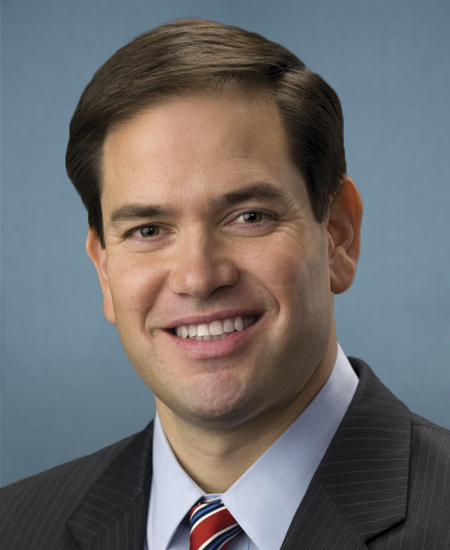
Sen. Marco Rubio
Sponsored bills
Maddy summaryThis bill prohibits healthcare entities receiving federal funds (like hospitals and clinics) from requiring employees to participate in activities promoting gender identity inconsistent with biological sex, use preferred pronouns against their beliefs, or sign statements supporting such identity. It defines "sex" biologically (based on genes, chromosomes, and physical anatomy at birth) and bars employers from forcing such actions as a condition of employment. Employees who face these requirements can sue for injunctive relief, attorney fees, and other remedies under civil rights law. The law directly affects healthcare workers and covered entities using federal funds, aiming to prevent compelled speech or action conflicting with religious or moral beliefs.
Maddy summaryThis bill authorizes a posthumous Congressional Gold Medal to honor college football coach Bobby Bowden, recognizing his coaching legacy at Florida State University (316-97-4 record, 2 national titles) and humanitarian work. The medal, designed by the Treasury Secretary, will be presented to Bowden's next of kin after his death. Bronze duplicates may be sold to cover production costs, with proceeds going to the U.S. Mint's enterprise fund. The bill has no policy impact - it is purely a ceremonial tribute with no effect on laws or public programs.
Maddy summaryThis bill, the SAVE Act (Safety From Violence for Healthcare Employees Act), makes it a federal crime to assault hospital staff while they're performing their duties, directly affecting healthcare workers at covered facilities like hospitals, long-term care centers, and emergency clinics. It imposes fines or up to 10 years in prison for basic assaults, with enhanced penalties (up to 20 years) for using weapons, causing injury, or during declared emergencies. The law also requires a government study to assess its impact on workplace violence and federal prosecutions in healthcare settings.
Maddy summaryThe SEVER Act of 2023 requires U.S. officials to deny visas to United Nations representatives who are subject to U.S. sanctions under Executive Order 13876 (relating to Iran-related sanctions) as of September 10, 2023. This bill directly affects UN officials personally sanctioned by the U.S. government for Iran-related activities. The key provision amends existing visa denial law to add this new category of individuals for whom visas must be denied. The bill does not create new sanctions but integrates existing Iran sanctions into visa enforcement procedures.
Maddy summaryThis bill appropriates $16.5 billion for disaster relief under the Robert T. Stafford Act, funding federal assistance for major disasters declared between 2021-2023. It provides tax relief to individuals in designated disaster areas who suffered property losses, modifying casualty loss rules to increase standard deductions and adjust thresholds for deductible losses. The tax provisions apply only to areas affected by disasters not solely tied to COVID-19 or covered by prior relief acts, and include special payments for U.S. territories with mirror tax systems. The bill also includes minor administrative adjustments for agricultural disaster assistance and requires a defense assessment report on Hurricane Idalia damage in Florida.
Maddy summaryThe American Security Drone Act of 2023 prohibits U.S. federal agencies from procuring or operating drones manufactured or assembled by "covered foreign entities," defined as entities from China, under foreign government control, or deemed national security risks. The law includes exemptions for national security research, counterterrorism, safety investigations, wildfire management, and specific agency missions like those of the Department of Homeland Security and Defense. Federal agencies must track existing drones from these entities within one year of enactment and the law requires a study on drone supply chains. The prohibition takes effect two years after enactment and will expire five years after enactment, with specific agencies having additional exemptions.
Maddy summaryThe TREAT Act (S 2617) prohibits the Secretary of Health and Human Services from implementing policies that restrict hospitals and healthcare facilities from directly ordering and receiving medical countermeasures - such as drugs, biological products, and medical devices - from manufacturers and distributors. This law directly affects hospitals and healthcare facilities by removing potential federal barriers to obtaining critical medical supplies during health emergencies. The bill uses the existing legal definition of "medical countermeasure" from the Public Health Service Act, ensuring consistency with current regulations. By banning restrictions on direct ordering, the legislation aims to streamline access to essential medical resources for providers.
Maddy summaryThe SMASH 2.0 Act reauthorizes the Mosquito Abatement for Safety and Health program through fiscal year 2028, providing $100 million annually for mosquito control efforts. It allows the Secretary of Health and Human Services to consider innovative technologies for mosquito prevention when awarding grants and permits recipients to use up to 5% of funds for staff training. The bill also requires coordination with the Strategic National Stockpile to develop emergency stockpiling plans for vector-borne disease control products and mandates incorporating this strategy into the national vector-borne disease plan. This directly affects state/local public health agencies receiving program grants for mosquito control and prevention activities.
Maddy summaryS 2664, the Strengthening Taxpayer Recoveries Act, extends oversight of pandemic relief funds by renewing the Special Inspector General for Pandemic Recovery's mandate until 2030 (from 2025) and requires the Administrator of the Small Business Administration to coordinate with this office. It establishes a 10-year window for prosecuting fraud related to specific relief programs, including Paycheck Protection Program loans, economic injury disaster loans, restaurant grants, and venue operator grants. The bill mandates monthly briefings to Congress on recovery efforts, annual reports on recovered funds by program type, and real-time public reporting of recovered amounts through the Pandemic Response Accountability Committee. These provisions directly affect businesses that received pandemic relief funds and aim to improve transparency and recovery of misused taxpayer dollars.