

Maddy summarySRES 353 is a symbolic Senate resolution designating the week of September 16-23, 2023, as "National Estuaries Week." It expresses the Senate’s support for raising public awareness about the ecological and economic importance of estuaries. The resolution highlights estuaries’ role in supporting jobs, economic output, and critical habitats, while acknowledging threats like pollution and habitat loss. This procedural resolution has no direct regulatory or funding impact - it serves solely as a formal acknowledgment of estuaries’ value.
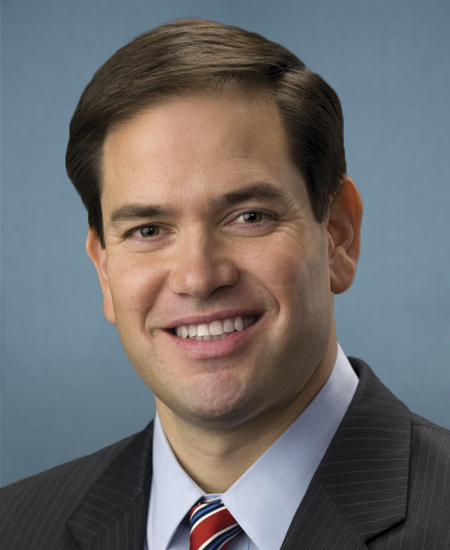
Sen. Marco Rubio
Sponsored bills
Maddy summaryThis bill amends the Endangered Species Act to create an exception for sturgeon farmed in the United States. It exempts legally held farmed sturgeon and their offspring from certain ESA requirements (like section 7(a)(2) protections) while they remain in captivity or controlled environments, until intentionally released into the wild. Farmers must be able to demonstrate their sturgeon qualify under this exception and maintain records for the Secretary's review, without duplicating existing regulatory requirements. The bill directly affects U.S. sturgeon aquaculture operations by providing regulatory clarity for their farmed stock.
Maddy summaryThis non-binding resolution expresses Congress's support for Israel by declaring it is not a racist or apartheid state, rejecting antisemitism and xenophobia, and affirming the U.S. as a steadfast partner. It serves as a symbolic statement of bipartisan backing without creating new laws, funding, or obligations. Introduced by Senators Cotton, Cruz, and others in July 2023, it reflects congressional sentiment rather than policy change.
Maddy summaryThis bill bans U.S. imports of certain agricultural products, raw materials, and food from Russia if Russia prohibits importing those same items from the U.S. It also prohibits using federal funds to purchase such Russian goods after enactment. The ban applies to products classified under U.S. tariff chapters 1-24 and ends only when Russia lifts its import ban on U.S. goods, withdraws forces from Ukraine, and commits to no future hostile actions against Ukraine. The law directly affects U.S. food producers by blocking Russian imports that mirror Russia's own restrictions on U.S. goods.
Maddy summaryThis bill prevents housing assistance programs from penalizing disaster victims who declined Small Business Administration (SBA) disaster loans. It stops housing officials from reducing or denying housing aid to people who previously applied for but turned down SBA loans for the same disaster. The law ensures that declining SBA assistance doesn't affect eligibility or amount for housing help under the Housing and Community Development Act. It directly affects disaster survivors seeking housing aid who had SBA loan options but chose not to accept them.
Maddy summaryThe HEROIAM SLAVA Act of 2023 requires the President to block all U.S. transactions involving assets of Russian government-owned entities 60 days after the bill becomes law, using existing sanctions authority under the International Emergency Economic Powers Act. It directly affects Russian state-owned entities operating within U.S. jurisdiction or involving U.S. persons. The bill explicitly excludes sanctions on the importation of physical goods (like manufactured products or supplies), clarifying that this exception covers tangible items but not other transactions. This policy change expands U.S. sanctions to target Russian state assets while maintaining access to physical goods imports.
Maddy summaryThis resolution designates the week beginning September 11, 2023, as "National Hispanic-Serving Institutions Week" to recognize institutions that enroll at least 25% Hispanic students. It directly affects Hispanic-Serving Institutions (HSIs), which serve over 5 million students across 28 states, the District of Columbia, and Puerto Rico. The resolution calls for public observance through ceremonies and activities during that week to honor HSIs' role in advancing educational access, economic mobility, and Hispanic Heritage Month. As a ceremonial resolution, it has no binding policy impact but formally acknowledges these institutions' contributions.
Maddy summaryThe Pay Our Military Act of 2023 ensures that military personnel, Defense Department civilians supporting them, and qualifying Defense contractors continue receiving pay during any funding gap in fiscal year 2024. It appropriates funds from the Treasury to cover military pay, allowances, and support staff salaries when regular budget legislation is delayed. The funding remains available until either a full budget is passed, a continuing resolution is enacted, or January 1, 2025, whichever occurs first. This bill directly affects active-duty service members, reserve components, Defense civilians, and contracted support staff by guaranteeing their compensation during fiscal uncertainty.
Maddy summaryThis bill, S 2823 (Securing America’s R&D Advantage Act), changes U.S. tax rules to boost business investment in research and development. It restores immediate deductibility for most R&D expenses (allowing businesses to deduct costs fully in the year incurred, rather than amortizing over 5 years) and adds restrictions on tax benefits for R&D conducted in "covered nations" (like China). It also increases the refundable R&D tax credit cap for small businesses from $250,000 to $750,000 over time, extends eligibility for startups from 5 to 8 years, and raises the gross receipts threshold for small business qualification from $5 million to $15 million. These changes apply to taxable years beginning after the bill's enactment date.
Maddy summaryThis bill, the Access to Donor Milk Act of 2023, provides federal support for nonprofit donor human milk banks that serve high-risk infants. It amends the Child Nutrition Act to allow states to use existing funds for collecting, storing, and transferring human milk to registered nonprofit milk banks, and creates $3 million in emergency funding for milk banks during disasters or public health emergencies to cover collection, processing, and staffing costs. The bill also requires the Health Resources and Services Administration to launch a public awareness campaign educating clinicians, new parents (especially those in WIC), and community groups about the safety and benefits of donor milk. Additionally, it mandates the FDA to develop new guidance on standards for processing and handling donor milk within 18 months.