

Maddy summaryThis bill requires states receiving Medicaid funds for family planning services to submit standardized abortion data to the CDC annually. Specifically, states must report 10 mandatory data points (including maternal age, gestational age, race, ethnicity, procedure type, and survival status) by December 31 of the prior year, starting two years after enactment. Failure to submit accurate data or submitting false information could result in loss of Medicaid funding for family planning services in the following fiscal year. The law aims to create uniform national abortion data collection, addressing current gaps where some states report no data at all. The CDC will maintain a standardized surveillance system and publish annual reports by the third year following the data year.
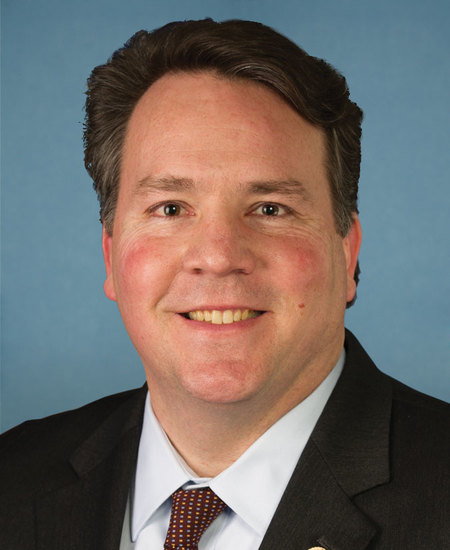
Rep. Alexander X. Mooney
Sponsored bills
Maddy summaryHR 889, the Broadband Grant Tax Treatment Act, excludes certain federal broadband grants from recipients' taxable income. It specifically applies to grants received under programs like the Infrastructure Investment and Jobs Act's Broadband Equity, Access, and Deployment Program and state digital equity grants. The bill prevents double tax benefits by disallowing deductions or credits for expenses covered by these excluded grants and reduces the adjusted basis of related property. This policy change directly affects broadband providers, local governments, and tribal entities receiving qualifying grants from federal or state sources for broadband infrastructure deployment.
Maddy summaryHR 932 repeals two key congressional authorizations for military force in Iraq: the 1991 resolution (Public Law 102-1) and the 2002 resolution (Public Law 107-243). This bill removes the legal foundation that has permitted U.S. military operations in Iraq for over two decades. It directly affects the executive branch’s authority to conduct military actions under these specific resolutions, requiring future operations to seek new congressional approval. The repeal is a procedural change that would end the statutory basis for ongoing military engagement in Iraq without altering other laws or policies.
Maddy summaryHCONRES 9 is a symbolic resolution passed by the U.S. House of Representatives that formally denounces socialism as incompatible with American values, citing historical examples of socialist regimes causing widespread suffering and authoritarian rule. It states Congress opposes the implementation of socialist policies in the United States. This resolution has no legal effect, does not change any laws, and serves solely as a non-binding statement of congressional opinion. It directly affects no individuals or policies, as it is purely a declarative position.
This resolution condemns Iranian state-sponsored terrorist attacks against U.S. citizens and officials and Iranian dissidents. The resolution also expresses support for the people of Iran who are legitimately defending their rights for freedom against repression and condemns the killing of Iranian protesters by the Iranian regime.
Maddy summaryHCONRES 13 is a concurrent resolution expressing Congress's support for maintaining the current policy that prohibits imposing new fees on local radio stations for playing music. It states that Congress should not impose any performance fee, tax, royalty, or charge on local radio stations for broadcasting sound recordings over the air, or on businesses like bars and restaurants that play music publicly. The resolution argues that such fees would harm local radio stations - critical sources for emergency information and community programming - and jeopardize the economic model that has supported both radio and the music industry for decades. This resolution does not create new law but formally opposes potential legislative changes to the existing fee structure.
Maddy summaryHRES 96, the "Transparency in Federal Spending Resolution," requires that any House bill, resolution, or amendment authorizing or making appropriations must include a machine-readable table detailing program-specific funding amounts, annual breakdowns, and estimated debt servicing costs. This procedural rule change applies to all appropriations-related legislation considered by the House, directly affecting how such bills are processed. The bill itself does not alter spending levels but mandates greater disclosure of fiscal details before debate can begin. It aims to improve transparency in federal budgeting by standardizing how spending information is presented. (Note: As a procedural rule change, this summary is concise per the bill's nature.)
Maddy summaryHR 780, the "Mobilizing Against Sanctuary Cities Act," blocks federal funding for state and local governments that refuse to share immigration information with federal authorities under existing law (8 U.S.C. 1373). It requires the Attorney General to annually identify non-compliant jurisdictions and report them to Congress, with affected areas losing all federal funding for at least one year until compliance is certified. The bill directly impacts local governments that do not cooperate with federal immigration enforcement, such as those with policies limiting information sharing. This policy change creates a direct financial penalty for non-compliance, replacing discretionary federal funding with a mandatory cutoff.
Build up Illegal Line Defenses with Assets Lawfully Lifted Act of 2023 This bill directs certain amounts from the Department of Justice (DOJ) Assets Forfeiture Fund to the deployment of additional border security measures. Specifically, DOJ must report annually on the amount of total deposits into the fund that are derived from Mexican cartels. The bill makes available 50% of that amount for the construction of additional physical barriers and roads near the border to deter illegal crossings into the United States. Additionally, the bill prohibits the release of seized currency or contraband that likely belongs to or supports a foreign illegal trafficking organization while a civil forfeiture action is pending.
Repealing Illegal Freedom and Liberty Excises Act or the RIFLE Act This bill repeals the excise tax on the transfer of firearms. The bill shall not be construed as placing any regulated firearms under the jurisdiction of the U.S. Consumer Product Safety Commission.