

Maddy summaryHR 1202, the REDI Act, amends the Higher Education Act to allow medical and dental residents to temporarily pause federal student loan payments without accruing interest during their internship or residency programs. This directly affects borrowers with federal student loans who are enrolled in qualifying medical or dental training programs. The key provision adds a new rule (paragraph 6) ensuring these borrowers qualify for a deferment period where they don't pay principal and interest accrues at 0%. The change modifies existing loan rules to explicitly include medical/dental residents under the "in-school" deferment category. This policy change provides immediate financial relief during a critical training phase for healthcare professionals.
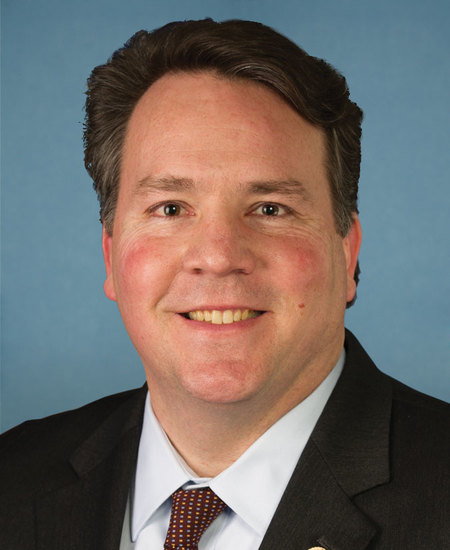
Rep. Alexander X. Mooney
Sponsored bills
Maddy summaryHR 1200, the National Right-to-Work Act, prohibits requiring workers to join a union or pay dues as a condition of employment in both private-sector workplaces (covered by the National Labor Relations Act) and railroad industries (covered by the Railway Labor Act). The bill amends key sections of these laws to eliminate provisions that allowed union security agreements, meaning workers in unionized settings would no longer be forced to pay dues to retain their jobs. This directly affects employees in unionized workplaces across the U.S., particularly those in industries with existing union contracts that included mandatory dues. The law changes the legal framework to ensure union membership and dues payment remain voluntary for all workers.
Women's Public Health and Safety Act This bill allows a state to exclude from participation in the state's Medicaid program a provider that performs an abortion, unless (1) the pregnancy is the result of rape or incest, or (2) the woman suffers from a physical issue that would place her in danger of death unless an abortion is performed. Under current law, a state plan for medical assistance must provide that any individual eligible for medical assistance may obtain required services from any provider qualified to perform them.
Maddy summaryThe DEMOCRACIA Act (HR 1120) imposes sanctions on foreign entities and individuals providing financial, material, or technological support to Cuba's military, security, or intelligence sectors, or who are responsible for human rights abuses in Cuba. It would block property of foreign persons engaging in these activities and deny visas to those determined to support Cuba's repressive sectors. The bill also requires the President to provide unrestricted internet service to Cuban citizens that is not censored by the Cuban government. These provisions target foreign entities supporting Cuba's authoritarian regime rather than directly affecting Cuban citizens. The bill aims to pressure the Cuban government to end human rights abuses and move toward democratic reforms.
Maddy summaryThis resolution (HRES 139) celebrates the 75th anniversary of NASCAR, marking its founding on February 21, 1948. It commends NASCAR's contributions to the U.S. economy and society, highlighting its role as a global motorsports leader that hosts over 1,200 races annually, supports community initiatives (like donating $43 million to children via the NASCAR Foundation), and drives tourism and entertainment. As a ceremonial resolution, it does not create new laws or affect any individuals or entities. The House formally recognizes NASCAR's historical significance and ongoing impact through this symbolic gesture.
Maddy summaryThe SAFE for America Act of 2023 eliminates the Diversity Immigrant Visa program, commonly known as the "visa lottery," which provided annual visas to individuals from countries with historically low U.S. immigration rates. This change directly affects applicants and participants in the diversity visa program, ending their eligibility for this specific immigration pathway. The bill amends key sections of immigration law (Sections 201, 203, and 204 of the Immigration and Nationality Act) to remove references to the diversity program and adjust visa allocation procedures. The changes take effect October 1, 2023, permanently ending this visa category.
Second Chance at Life Act of 2023 This bill requires abortion providers to disclose information about the possibility of reversing a medication abortion. This is a procedure that uses a medication regimen to terminate a pregnancy, typically with a two-drug protocol. Providers must inform patients that it may be possible to reverse the effects of a medication abortion after taking the first drug. They must also let patients know that more information and assistance is available on the Department of Health and Human Services (HHS) website. At least 24 hours before the procedure, the provider must share this information with the patient in person or by telephone. The provider must also include the information in written discharge instructions after the first drug is dispensed. The bill sets out an exception to these notification requirements when an abortion is necessary to resolve a physical injury or condition that threatens the life of the woman. The provider must document the circumstances giving rise to the exception in the patient's medical file. Furthermore, providers must post signs with this information in their offices or facilities, and HHS must maintain information about reversing medication abortions on its website.
Maddy summaryThis bill authorizes a single Congressional Gold Medal to honor all U.S. Army Dustoff crews who served during the Vietnam War (1962-1973). It recognizes their critical role in evacuating nearly 900,000 wounded personnel, including U.S., South Vietnamese, and allied forces, under extreme combat conditions. The medal, designed with input from the Secretary of Defense, will be presented to the U.S. Army Medical Department Museum for permanent display. Duplicate bronze medals may be sold to cover costs, but the primary action is the commemorative recognition of these crews' service.
Maddy summaryHR 987 authorizes the U.S. Mint to produce commemorative coins honoring Golda Meir, Israel's first female Prime Minister, and the 75th anniversary of U.S.-Israel relations. It specifies three coin types: $5 gold coins (max 50,000), $1 silver coins (max 400,000), and half-dollar clad coins (max 750,000), with detailed weight and composition requirements. All coins will include Golda Meir's image, her name, and commemorative inscriptions, and will be sold during 2026. A surcharge ($35 for $5 coins, $10 for $1 coins, $5 for half-dollars) will be paid to the American Friends of Kiryat Sanz Laniado Hospital Inc. to support its hospital operations.
Maddy summaryHR 976, the TCJA Permanency Act, makes permanent many tax provisions from the 2017 Tax Cuts and Jobs Act (TCJA) that were scheduled to expire after 2025. The bill affects individual taxpayers by keeping lower tax rates, higher standard deductions, increased child tax credits, and other key changes permanently. Key provisions include permanent modifications to income tax brackets, repeal of personal exemptions, limits on state and local tax deductions, and increased estate and gift tax exemptions. These changes would prevent the tax code from reverting to pre-TCJA rates and rules for millions of taxpayers.