

Maddy summaryThis bill designates the POW/MIA Memorial and Museum under construction in Jacksonville, Florida, as the "National POW/MIA Memorial and Museum." It requires the museum to submit a detailed report to Congress within 90 days, including its five-year budget, organizational structure, bylaws, and accreditation status. The designation may be withdrawn if the museum is not operational within five years of enactment or if the required report is submitted late. The bill formalizes an existing project honoring over 224,000 service members captured or unaccounted for since World War II, without creating new policies or affecting public programs.
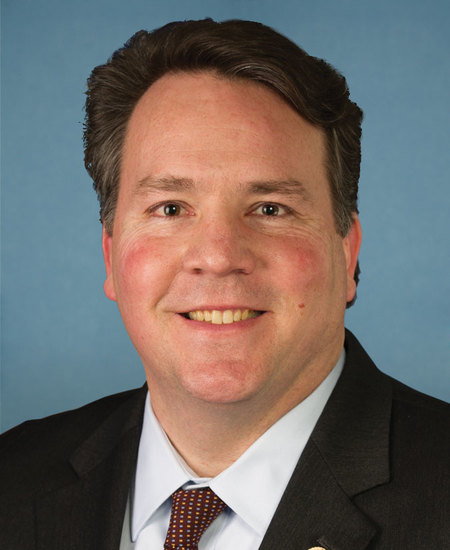
Rep. Alexander X. Mooney
Sponsored bills
This resolution declares that the life of each human person begins at fertilization and calls upon Congress to enact legislation to enforce the Fourteenth Amendment's guarantee of equal protection for unborn children nationwide.
Maddy summaryThis bill prohibits the use of Department of Defense funds for adult cabaret performances. It bans the Defense Department from hosting, advertising, or supporting such events, which are defined as performances featuring topless dancers, strippers, exotic dances, or male/female impersonators appealing to prurient interest. The restriction applies to all Defense Department funds and facilities, preventing their use for these specific types of entertainment.
Maddy summaryThis resolution recognizes the need for improved access to rural and agricultural media programming, such as agricultural weather reports, market news, and western lifestyle content, which directly affects farmers, ranchers, and rural communities. It highlights that media consolidation has reduced availability of this programming, which informs the public about food supply chains, agricultural research, and rural life. The resolution urges media companies to prioritize delivering such content but does not create new laws, funding, or mandates. As a non-binding recognition, it has no direct policy impact on legislative or regulatory changes.
Maddy summaryHR 3773, the Stop Anti-Semitism on College Campuses Act, requires colleges and universities receiving federal funding to prohibit any event promoting antisemitism on campus. This includes not hosting, facilitating, funding, or supporting such events. The bill adopts the International Holocaust Remembrance Alliance's 2016 definition of antisemitism - including contemporary examples - as the standard for determining prohibited conduct. The law directly affects all institutions covered by the Higher Education Act of 1965.
Maddy summaryHR 3212, the "Shall Not Be Infringed Act of 2023," repeals or prevents funding for numerous gun control measures across federal agencies. The bill eliminates funding for Bureau of Alcohol, Tobacco, Firearms and Explosives (ATF) modernization efforts, blocks Department of Veterans Affairs programs related to firearm storage, and prohibits CDC and NIH from funding research on firearm injury prevention. It also repeals specific provisions from the Bipartisan Safer Communities Act related to background checks and domestic violence restrictions, and prevents the use of federal funds for red flag laws or gun registries. The bill directly affects federal agencies and programs that implement gun control measures, including ATF, VA, HHS, CDC, NIH, and the Department of Education.
Maddy summaryThe HALT Fentanyl Act expands the definition of fentanyl-related substances in the Controlled Substances Act to include many structurally similar compounds, making it easier to regulate new fentanyl analogs without individual listing. It defines these substances based on specific chemical modifications to fentanyl, with limited exceptions for substances already controlled or listed elsewhere. The bill also streamlines research procedures for schedule I substances by creating expedited registration processes and allowing multiple studies under one registration, while requiring the Attorney General to publish a list of substances meeting the new definition.
Maddy summaryHR 3712, the Digital Dollar Pilot Prevention Act, prohibits the Federal Reserve from testing or implementing a digital dollar without new congressional approval. The bill amends the Federal Reserve Act to explicitly block the Fed and its banks from launching any pilot program for a central bank digital currency (a digital form of U.S. dollars issued directly by the Federal Reserve) or partnering with private entities for such testing. This directly affects the Federal Reserve System, preventing it from moving forward with any digital dollar initiatives until Congress passes a separate law authorizing them. The law aims to halt potential development of a Fed-issued digital currency until lawmakers address its implications through new legislation.
Beautifying Federal Civic Architecture Act This bill declares U.S. policy applicable to public buildings and establishes the President's Council on Improving Federal Civic Architecture. The policy includes that applicable federal public buildings should uplift and beautify public spaces, command respect from the general public, be visually identifiable as civic buildings, respect regional architectural heritage, and meet other specified criteria; in the District of Columbia, classical architecture is the preferred and default architecture for federal public buildings absent exceptional factors; buildings that do not meet specified criteria should be considered for redesign where feasible and economical, particularly with respect to the exterior of the applicable federal building; and the General Services Administration (GSA) should seek input from future users of the applicable federal public buildings and the general public in the community where such buildings will be located before selecting an architectural firm or design style and give the general public's input substantial consideration. The GSA must adhere to the policy. If the GSA proposes to approve a design for a new applicable federal public building that diverges from the preferred architecture, it must notify the Office of the Domestic Policy Advisor and Congress not later than 30 days before the date on which the GSA could reject the design without incurring substantial expenditures and describe the reasons for proposing to approve the design.
Maddy summaryThis bill requires that AM radio receivers be included as standard equipment in all new motor vehicles (such as cars and trucks) sold in the United States, with a rule to be issued by the Department of Transportation within one year. The rule must ensure AM radio is easily accessible on the dashboard and allows manufacturers to use digital AM radio technology instead of traditional AM. During the one-year period between the bill's enactment and the rule's effective date, manufacturers must clearly label vehicles without AM radio. The bill also directs a study to evaluate whether an alternative system could deliver emergency alerts as reliably as AM radio across the country, especially during crises.