

Maddy summaryHRES 546 is a symbolic House resolution commemorating the one-year anniversary of the Supreme Court's June 24, 2022, Dobbs v. Jackson Women's Health Organization decision, which overturned Roe v. Wade. The resolution expresses support for the Court's ruling that the Constitution does not guarantee a right to abortion and celebrates the decision's impact on returning abortion policy authority to state legislatures. As a ceremonial resolution, it does not create new laws or directly affect any individuals or policies. The resolution focuses solely on marking the anniversary and affirming the position that unborn life should be protected.
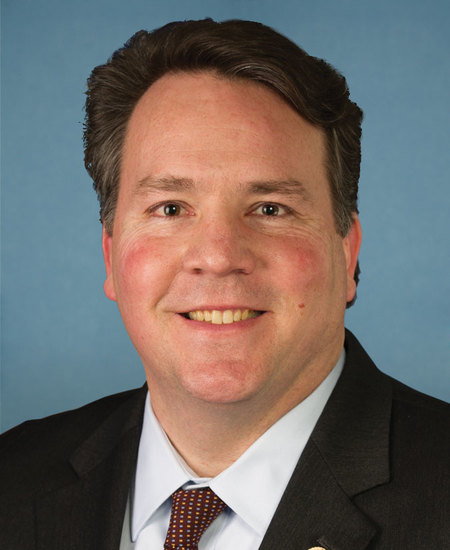
Rep. Alexander X. Mooney
Sponsored bills
Maddy summaryHR 4294 would require the President to annually designate one month as "Fidelity Month," focused on promoting values like faith, family, and patriotism. The bill directs the President to use this observance to encourage Americans to reaffirm these values, based on the bill's findings about their perceived decline. This is a procedural resolution with no new funding or regulations; it only mandates a presidential designation. The bill directly affects the President's authority and indirectly invites public participation in a national observance.
Maddy summaryHR 277 would require Congress to approve major federal regulations before they take effect. Major rules are defined as those with significant economic impact ($100 million+ annually), major cost increases for consumers or industries, or significant adverse effects on competition, employment, or innovation. Agencies must submit detailed information about these rules to Congress, including cost-benefit analyses, before they can take effect. Congress would have 70 session days to approve the rule with a joint resolution; if they don't act within that timeframe, the rule would not take effect. This would increase congressional oversight of federal regulations and require more detailed information about proposed rules before they become law.
Maddy summaryThis bill bans displaying any flag other than the U.S. flag on the exterior or in hallways of public buildings, including government offices, military installations, and embassies. Exceptions allow specific flags like POW/MIA memorials, visiting diplomats' national flags, a member of Congress's home state flag, military unit flags, tribal flags, or local jurisdiction flags. It directly affects how public buildings display flags, requiring exclusive use of the U.S. flag in designated areas. The bill applies to all public buildings under federal definition, with limited exceptions for historical, diplomatic, or local displays.
Maddy summaryHJRES 69 is a resolution seeking to disapprove an Environmental Protection Agency (EPA) rule published on June 5, 2023, which established a "Federal Good Neighbor Plan" for the 2015 ozone air quality standards. The rule aimed to address ozone pollution crossing state lines, particularly affecting southeastern states and industries subject to the 2015 ozone standards. This resolution would block the rule from taking effect by invoking the Congressional Review Act, preventing it from being enforced. If enacted, it would directly stop the EPA from implementing this specific plan, impacting states and businesses that would have had to comply with the rule.
Maddy summaryHR 4076 establishes a joint U.S.-Israel program to fund health technology development, authorizing $4 million annually (2024-2026) through the U.S. Health and Human Services Department. It requires Israel to match U.S. funding and focuses on collaborative projects in artificial intelligence, vaccines, telemedicine, diagnostic tests, and data-driven personalized medicine for emerging infectious diseases. The program can either build on an existing U.S.-Israel agreement or create a new one under a 2008 science cooperation framework. This bill directly affects U.S. federal health agencies and the Israeli government, with funds restricted to joint projects meeting specific technological and health priorities.
Maddy summaryHR 4038, the POPP Act, blocks the Environmental Protection Agency (EPA) from finalizing, implementing, or enforcing a specific proposed rule about greenhouse gas emissions from power plants. This rule, published in May 2023, aimed to set new standards for emissions from fossil fuel-fired power plants and replace an earlier rule. The bill prohibits the EPA from moving forward with this rule or any substantially similar rule, directly affecting the EPA's regulatory authority and power plant operators who would have been subject to the proposed standards. The bill bases this prohibition on arguments that the proposed rule violates the Clean Air Act by not demonstrating that required emission reduction technologies are commercially viable and cost-effective.
Maddy summaryThis bill requires medical providers to provide written parental notification (delivered personally or via certified mail) for abortions performed on unemancipated minors under 18, with a 96-hour waiting period after notification. Parents (including legal guardians) may seek a federal court injunction to block an abortion, which must be granted temporarily until the court rules. Exceptions exist for medical emergencies where immediate treatment is needed to prevent the minor’s death, with documentation required in medical records. Violations carry fines up to $100,000 or one year in prison per offense. The law does not override stricter state parental notification requirements.
Maddy summaryHR 3099 establishes a new Special Envoy for the Abraham Accords within the State Department, directly affecting U.S. diplomatic efforts and coordination. The envoy, appointed by the President with Senate confirmation, will coordinate U.S. government activities to expand diplomatic, economic, and security ties between Israel and Muslim-majority countries, including encouraging nations without formal relations with Israel to establish them. Key duties include strengthening existing Accords partnerships, fostering regional cooperation on issues like trade and water security, and providing diplomatic support for Israel’s regional engagement. The envoy must submit annual reports to Congress detailing specific diplomatic efforts and progress with partner countries.
Maddy summaryHR 3879, the Supporting Families through Addiction Act of 2023, provides federal grants to nonprofit organizations that support families with members struggling with substance use disorder. The bill authorizes $5 million annually (2024-2028) to fund community-based family support services, including education, stigma reduction, and connecting families to treatment resources. Grants cover up to 85% of costs and require organizations to be led by experts, including families with lived experience. This directly affects families navigating addiction in their households by expanding access to evidence-based support programs and improving provider knowledge about family impacts.