

Food Donation Improvement Act of 2021 This bill expands liability protections for the donation of food and grocery products. Specifically, the bill expands the liability protections to include donations of an apparently fit grocery product or apparently wholesome food for which the recipient is charged a good Samaritan reduced price that is no greater than the cost of handling, administering, and distributing the food or product; or that is donated directly to a needy individual by a retail grocer, wholesaler, agricultural producer, restaurant, caterer, school food authority, or institution of higher education. The Department of Agriculture must issue regulations that clarify the quality and labeling standards that food products donated under the Bill Emerson Good Samaritan Food Donation Act must meet to be eligible for liability protection.
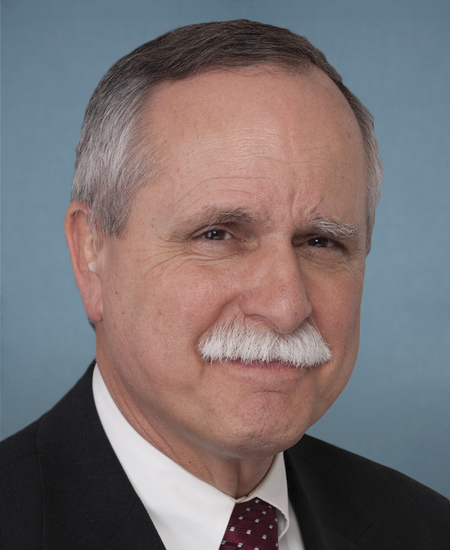
Rep. David B. McKinley
Sponsored bills
Preserving Rights Of Tenants by Ensuring Compliance To the Second Amendment Act or the PROTECT the Second Amendment Act This bill establishes a right for a resident of covered federally assisted rental housing to lawfully possess a firearm within the residential dwelling unit occupied by the resident and any common area of the federally assisted rental housing in which the resident resides in the course of entering or exiting the rental housing.
Strategic Production Response Act This bill limits the drawdown of petroleum in the Strategic Petroleum Reserve until the Department of Energy develops a plan to increase the percentage of federal lands leased for oil and gas production.
Telehealth Extension Act of 2021 This bill expands and otherwise modifies coverage of telehealth services under Medicare. Specifically, the bill permanently (1) removes geographic restrictions on originating sites (i.e., the location of the beneficiary), (2) allows the home of the beneficiary to serve as the originating site for all services, and (3) allows federally qualified health centers and rural health clinics to serve as the distant site (i.e., the location of the health care practitioner). The bill also extends any Medicare telehealth flexibilities that were granted during the COVID-19 public health emergency until two years after the emergency ends and generally allows such flexibilities to be granted during any public health emergency. In addition, the bill (1) allows for Medicare payment of outpatient critical access hospital services consisting of telehealth behavioral therapy until two years after the COVID-19 public health emergency ends; and (2) after the emergency ends, conditions payment for certain high-cost laboratory tests and durable medical equipment that are ordered via telehealth on at least one in-person visit during the preceding six-month period.
Border Agents Stay Employed Act or the BASE Act This bill prohibits using federal funds to require any U.S. Customs and Border Protection officer or employee to receive a COVID-19 vaccine.
Coal Council Certainty Act of 2021 This bill requires the Department of Energy (DOE) to maintain the National Coal Council under the charter that was in effect on November 19, 2021. Historically, this council provided DOE with advice and guidance about policies concerning coal. However, the council ceased operations in November 2021 when its charter was not renewed by DOE.
This bill prohibits the Department of Defense (DOD) from taking specified actions against a member of the National Guard based on whether the member has received a COVID-19 vaccine. Specifically, DOD may not (1) involuntarily discharge or discipline the member, (2) withhold pay or benefits from the member, or (3) prohibit the member from participating in training or using equipment.
Improving Care for Vulnerable Older Citizens and People with Disabilities through Workforce Advancement Act of 2021 This bill establishes demonstration projects to improve care and service delivery through the use of direct care workers (e.g., nursing assistants and home health aides) for older adults and individuals with disabilities who have chronic illness or are at risk of institutional placement. The Health Resources and Services Administration (HRSA) must award grants to partnerships of health care providers, long-term care facilities, and other organizations to carry out the projects. Specifically, HRSA must award grants for incorporating direct care workers into interdisciplinary care coordination teams to support transitions in care and prevent unnecessary hospital readmissions. HRSA must also award grants for (1) using the abilities of direct care workers to manage and improve the health of individuals with multiple chronic conditions and long-term care needs; or (2) training direct care workers to take on greater responsibilities in managing specific diseases, such as Alzheimer's disease and diabetes.
Critical Infrastructure Manufacturing Feasibility Act This bill requires the Department of Commerce to study and report on products that are in high demand across the critical infrastructure sectors. Critical infrastructure sectors are those whose assets, systems, and networks are vital to national security, the economy, public health or safety, or any combination of those matters. The study must (1) identify the products in high demand across those sectors that are being imported due to manufacturing, material, or supply chain constraints; and (2) analyze the costs, benefits, and feasibility of manufacturing those products in the United States.
No Tax Dollars for the United Nation's Immigration Invasion Act This bill prohibits the federal government from making contributions to the United Nations (U.N.) International Organization for Migration, the U.N. High Commissioner for Refugees, or the U.N. Relief and Works Agency for Palestine Refugees in the Near East.