Employee Retention Tax Credit Reinstatement Act This bill provides for a reinstatement of the employee retention tax credit through 2021. The credit was established to compensate employers whose businesses were negatively impacted by the COVID-19 pandemic for wages paid to their employees.
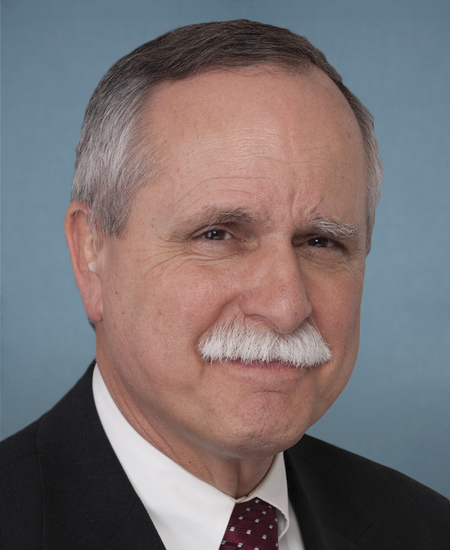
Rep. David B. McKinley
Sponsored bills
VA Canine Reporting Act of 2021 This bill requires the Department of Veterans Affairs to report on the average time it took to provide a veteran with a service or guide dog in the prior year and legislative recommendations to reduce such wait time.
Eliminating Global Market Distortions to Protect American Jobs Act of 2021 This bill addresses unfair trade practices by making various changes to U.S. antidumping and countervailing duty law. Antidumping provides relief to U.S industries and workers that are materially injured or threatened with injury due to imports of like products sold in the U.S. market at less than fair value, while countervailing duty provides such relief from imports of products subsidized by a foreign government or public entity. Specifically, the bill establishes a process for successive antidumping and countervailing duty investigations. Successive investigations may be concurrent (an ongoing investigation of the same product from different countries) or recently completed (not more than two years before the date of the initiation of the successive investigation). Further, the bill establishes a time line for the Department of Commerce to issue determinations in successive investigations. Among other provisions, the bill authorizes Commerce to apply countervailing duty law to subsidies provided by a foreign government or public entity to a company operating in a different country, use another method for calculating the cost of production in specific circumstances, and require importers to provide a certification that the imported merchandise is not subject to an antidumping or countervailing duty order. Additionally, the bill establishes procedures for Commerce to conduct circumvention inquiries, including by specifying the deadlines for preliminary and final determinations. The bill repeals the Softwood Lumber Act of 2008, which addresses the importation of softwood lumber and softwood lumber products.
Crucial Communism Teaching Act This bill directs the Victims of Communism Memorial Foundation to develop a civic education curriculum and oral history resources for high school students to promote understanding of certain political ideologies (e.g., communism and totalitarianism) that conflict with principles of U.S. democracy.
Exemptions for Critical Workers Act This bill exempts critical infrastructure workers from any federal mandate requiring federal employees or contractors to receive a COVID-19 vaccination. Critical infrastructure workers are identified in guidance from the Cybersecurity and Infrastructure Agency.
Immunization Infrastructure Modernization Act of 2021 This bill directs the Department of Health and Human Services (HHS) to take actions to improve data sharing and other aspects of immunization information systems. These are confidential, population-based databases that maintain a record of vaccine administrations. Specifically, HHS must develop a strategy and plan to improve these systems, including systems supported by the Centers for Disease Control and Prevention; designate data and technology standards for use in these systems; and award grants to health departments and other government agencies to improve their systems. As a condition of receiving the grants, recipients must use the designated standards. However, HHS may waive this condition in some circumstances. HHS must also report to Congress on these activities.
This bill requires the Department of Veterans Affairs (VA) to report on its policies and procedures relating to the usage and maintenance of video cameras for patient safety and law enforcement at VA medical facilities.
Conscience Protection Act of 2021 This bill provides statutory authority for certain protections for health care providers that refuse to participate in abortions based on religious beliefs or other convictions. Health care providers include individual professionals, medical facilities, health insurance organizations, and social services providers that refer clients to health care services. The federal government and entities that receive federal funding for health-related activities, including state and local governments, may not discriminate against a health care provider that refuses to be involved in, or provide coverage for, abortions. Currently, similar requirements apply to various related activities, including certain employment or personnel decisions (the Church Amendments), abortion services training (the Coats-Snowe Amendment), qualified health plans offered through health insurance exchanges, and annual appropriations bills for the Department of Health and Human Services (HHS) and other federal agencies (the Weldon Amendment). The HHS Office for Civil Rights must investigate complaints of this kind of discrimination. Furthermore, HHS may terminate or reduce HHS funding for health-related activities if a person or entity fails to comply with nondiscrimination requirements. Additionally, the Department of Justice or any entity adversely affected by such discrimination may bring a civil action to obtain appropriate relief. A plaintiff does not need to seek or exhaust administrative remedies before bringing the action. A plaintiff may also bring an action, including one for money damages, against a governmental entity. In many cases, principles of sovereign immunity shield states and some localities from these kinds of actions.

Maddy summaryHRES 815 is a symbolic resolution introduced in the U.S. House of Representatives on November 18, 2021. It expresses congressional support for National Rural Health Day, which recognizes the importance of rural health care and celebrates providers serving rural communities. The resolution highlights challenges like hospital closures and access barriers faced by rural health facilities but does not create new laws or funding. It simply affirms commitment to improving rural health care accessibility through policy, without specifying concrete changes. As a procedural resolution, it has no binding effect on legislation or funding.
Parents Bill of Rights Act This bill outlines various rights of parents and guardians regarding the elementary or secondary school education of their children. Among other requirements, the bill (1) directs local educational agencies to publicly post the curriculum for each elementary and secondary school grade level; and (2) requires schools to notify parents and guardians of their rights, including the right to review the school's curriculum and budget.