

Maddy summaryHR 8244 would require skilled nursing facilities participating in Medicare or Medicaid to meet stricter approval standards for training programs if they've received significant fines for quality-of-care issues. Specifically, facilities must not have been assessed a fine of at least $12,924 for deficiencies related to resident care quality within the past year. The bill amends existing law to update the criteria for temporarily barring such facilities from offering nursing aide training programs. This directly affects nursing homes that have faced enforcement actions under Medicare or Medicaid quality standards.
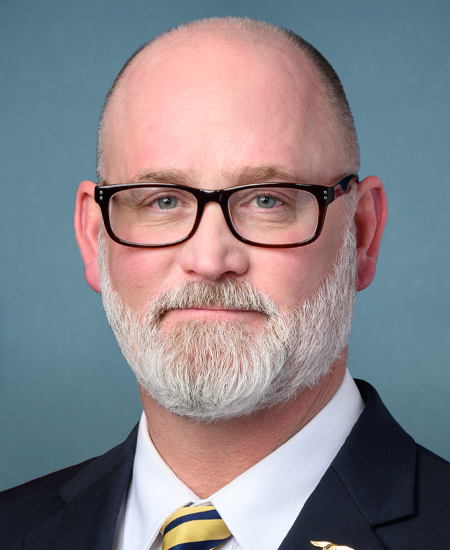
Rep. Derrick Van Orden
Sponsored bills
Maddy summaryThis bill updates federal law to ensure tribal child support enforcement agencies have the same access to tax information as state agencies. It amends the Social Security Act and Internal Revenue Code to explicitly include tribal organizations receiving federal grants under Section 455(f) in provisions allowing the use of tax refund data to collect overdue child support payments. Tribal agencies will now be treated equally with state agencies for accessing tax information and receiving reimbursement for enforcement reports. This change directly affects Native American tribes operating child support programs and the parents and children they serve, enabling more effective collection of overdue support.
Maddy summaryThis bill allows Members of Congress to use Department of Veterans Affairs (VA) facilities for meetings with veterans who are their constituents. It requires the VA Secretary to create regulations within 90 days, ensuring spaces are visible, accessible during business hours, and rented at rates similar to standard office space in the area. The regulations prohibit campaigning, political discussions, photographing patients without consent, and meetings during the 60 days before federal elections. It directly affects veterans seeking congressional assistance and Members of Congress who can now hold constituent meetings at VA locations. The bill does not change VA benefits or services but streamlines access to representatives for veterans.
Maddy summaryThe Autism CARES Act of 2024 reauthorizes and enhances federal programs supporting individuals with autism spectrum disorder. It requires the National Institutes of Health to expand research to include more fields like gerontology and psychiatry, and to ensure research reflects the full range of needs of people with autism, including those with co-occurring conditions. The bill mandates regular reports to Congress on progress, mental health needs, and transition services for young adults with autism, while increasing funding for autism-related programs from fiscal year 2025 through 2029. This legislation directly affects individuals with autism, their families, caregivers, and healthcare providers by improving access to evidence-based services and research.
Maddy summaryThis bill, HR 1097 (Everett Alvarez, Jr. Congressional Gold Medal Act of 2023), authorizes the award of a Congressional Gold Medal to Everett Alvarez, Jr., in recognition of his service as a U.S. Navy pilot and Vietnam War prisoner of war. It directly honors Alvarez, who was the first U.S. pilot shot down in the Vietnam War, spent over 8.5 years in captivity, and later served in the Peace Corps and Veterans Administration. The bill’s key mechanism is directing the U.S. Mint to strike a gold medal bearing his name and image, with bronze duplicates available for sale to cover costs. It does not create new policies or affect any group beyond the honoree.
Maddy summaryThe Conservation Reinvestment Act provides $1.45 billion in 2025 for economic loss coverage to farmers, plus $1 billion for sales-based crops and $450 million for flat-rate crop payments, all funded through the Commodity Credit Corporation. It increases annual conservation funding under the Food Security Act to $700 million by 2031, requiring at least 30% of these funds to support practices that improve soil carbon or reduce emissions. The bill also allocates $10 million for dairy processing cost reporting, establishes a $7 billion contingency fund for 2028, and allows schools to serve organic or non-organic whole milk under lunch programs. These changes directly affect farmers, conservation programs, and school nutrition providers through specific funding mechanisms and updated eligibility rules.
Maddy summaryHR 2367, the Truck Parking Safety Improvement Act, creates a federal grant program to address commercial truck parking shortages on highways. It provides competitive grants (totaling $175M-$320M over three years) for projects like building new rest areas, expanding parking at ports or truck stops, or improving safety at existing facilities. The program requires all funded parking to be free, publicly accessible to all truck drivers, and maintained without user fees. This directly affects commercial truck drivers, motor carriers, and highway safety by aiming to improve parking access, reduce traffic congestion, and enhance safety on federal-aid highways.
Maddy summaryThis bill (HR 1753) ensures 310+ female service members who served in specialized cultural support teams (2010-2021, identified by skill codes R2J/5DK) receive proper military records and veterans benefits. It requires the military to include this service in personnel records and count it as combat service for disability claims. Veterans denied benefits for injuries from this service can now file supplemental claims within three years of enactment, with claims treated as if filed on their original claim date. The bill also mandates VA outreach to inform affected veterans and families about this new process.
Maddy summaryThis bill requires canned agricultural products imported to the U.S. to display their country of origin on the front label or stamped/embossed on the top of the can. It applies specifically to agricultural products defined under the Agricultural Marketing Act of 1946. The labeling requirement would take effect 18 months after the bill is enacted. This directly affects importers of canned agricultural goods entering the U.S. market.
Maddy summaryThis bill creates a $10,000 annual tax credit for individuals who make non-directed living kidney donations (where donors don’t know the recipient’s identity) for five years (the donation year plus four subsequent years). It directly affects living kidney donors who qualify under these specific conditions, covering costs related to the donation process. The credit applies to kidneys removed after December 31, 2024, and expires December 31, 2034. The bill does not alter organ transplant recipient eligibility or medical procedures, focusing solely on financial incentives for donors.