

Maddy summaryThe Pharmacists Fight Back Act (HR 9096) sets new rules for Pharmacy Benefits Managers (PBMs) working with federal health care programs like Medicare Part D and Medicaid. It requires PBMs to reimburse in-network pharmacies at a rate covering the drug's actual cost plus a small fee (capped at $25), and to reduce patient cost-sharing by at least 80% of rebates received from drug manufacturers. The bill bans PBMs from steering patients to specific pharmacies, charging patients more than pharmacies are paid, or using rebates to lower pharmacy payments after claims are processed. It also mandates public reporting of drug pricing data to improve transparency, ensuring patients and pharmacies receive fairer treatment under federal health programs.
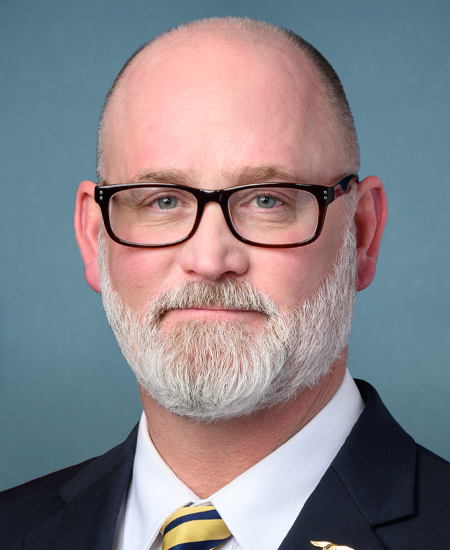
Rep. Derrick Van Orden
Sponsored bills
Maddy summary# Summary of Tariff Suspensions and Reductions Document This document is a section of U.S. tariff legislation that adds new duty suspensions and reductions to the Harmonized Tariff Schedule of the United States. It contains 120 new tariff items (numbered 9902.19.01 through 9902.20.24) that provide temporary duty-free or reduced-duty status for various goods. Key features of the document: 1. **Content**: The list includes chemical compounds, food ingredients, and specialty materials (such as shelled pine nuts, licorice extract, refined carrageenan, various chemicals like neodymium metal, tungsten concentrate, and numerous organic compounds). 2. **Tariff Treatment**: Most entries are listed as "Free" (meaning duty-free), with a few having small duty rates (e.g., 0.7%, 1.8%, 2.3%, 2.9%, 4.3%). 3. **Effective Period**: All listed suspensions and reductions are effective "On or before 12/31/2025." 4. **Purpose**: These tariff suspensions are intended to support specific industries, reduce costs for manufacturers, or provide temporary relief for certain imported goods. 5. **Technical Details**: Each entry includes the chemical name, CAS number, Harmonized Tariff Schedule code, duty rate, and a brief description of the product. This document represents a legislative amendment to the Harmonized Tariff Schedule, specifically adding new subchapter II of chapter 99 to provide temporary duty relief for these specific items.
Maddy summaryThe American Workforce Act creates a federal program providing paid training opportunities for U.S. citizens with high school diplomas but no bachelor's degrees. Employers in high-wage, high-demand industries receive workforce education subsidies (up to $9,000 per trainee) to cover training costs while trainees receive structured on-the-job work and educational training at a minimum wage. The program requires employers to provide transparent disclosure documents about training details, maintain minimum wage standards, and submit to oversight by a new American Workforce Division within the Department of Commerce. The program includes accountability measures such as whistleblower protections, penalties for noncompliance, and will expire after 10 years or following a comprehensive report to Congress.
Maddy summaryThis bill allows states to waive certain requirements when designating a new critical access hospital (CAH) in a metro area where a small hospital (300 beds or fewer) has closed. It specifically permits states to bypass standard criteria for a "subsequent facility" if it has 10 beds or fewer, meets existing CAH operational requirements, and satisfies specific pharmacy program rules. The policy directly affects rural communities that lost their only hospital, enabling faster replacement with a small-scale facility meeting CAH standards. This change aims to maintain healthcare access in areas where hospital closures have created gaps, without altering broader CAH eligibility rules.
Maddy summaryThe Essential Caregivers Act of 2024 requires nursing homes and similar facilities to allow residents to designate essential caregivers who provide emotional support or assistance with daily activities. During emergencies when regular visitation is restricted, facilities must permit at least one essential caregiver access to residents daily and cannot deny access without following specific procedures. Facilities may deny access for a maximum of 7 days during emergencies (or 14 days with state approval), and must provide a written explanation and appeal process if access is denied. The bill establishes a 48-hour appeal process for residents and caregivers to challenge denials, with facilities required to prove violations during appeals. This law applies to Medicare skilled nursing facilities, Medicaid nursing facilities, intermediate care facilities, and certain inpatient rehabilitation facilities.
Maddy summaryThis bill permanently extends Medicare reimbursement for telehealth services provided by federally qualified health centers (FQHCs) and rural health clinics (RHCs). It removes the previous time limit that tied telehealth coverage to a declared public health emergency or a 151-day post-emergency period. The key change modifies the Social Security Act to allow these clinics to continue offering telehealth services under Medicare without time restrictions. This directly affects FQHCs and RHCs, primarily serving rural and underserved communities, by ensuring ongoing access to Medicare payments for virtual care. The policy change makes telehealth coverage for these providers permanent, not temporary.
Maddy summaryThis bill requires heads of Executive agencies who serve on the National Security Council (like the Secretary of Defense or Homeland Security) to notify key government officials within 24 hours if they become unable to perform their duties due to illness. If they fail to meet this deadline, they must submit a detailed report within 30 days explaining the delay, listing acting officials and resources used, and documenting the incapacity period. It directly affects top national security agency leaders and ensures transparency during leadership gaps. The law aims to prevent confusion about who is temporarily in charge during medical emergencies involving critical national security roles.
Maddy summaryThis bill, HR 6860, protects patients with end-stage kidney disease (ESRD) who require dialysis by preventing health insurance plans from discriminating against them. It amends Medicare rules to prohibit plans from treating dialysis coverage differently than other medical services based on a patient’s ESRD diagnosis, need for dialysis, or any other factor. The bill clarifies that plans can still choose which dialysis providers to include in their networks but cannot deny or limit coverage for dialysis services solely because of the patient’s condition. It ensures Medicare remains the secondary payer for these services as intended, without forcing plans to cover specific providers.
Maddy summaryHR 5819, the COMPLETE Care Act, incentivizes Medicare primary care providers to integrate behavioral health services by increasing payments for specific services (like mental health and substance use disorder support) during 2025-2027. Providers using designated HCPCS codes for integrated care would receive 125-175% of standard payment rates, with the percentage declining annually. The bill also requires these providers to report on integration quality measures and mandates technical assistance for practices adopting integrated models, funded through new appropriations for 2024-2027. It directly affects Medicare-participating primary care practices serving beneficiaries needing mental health or substance use services.
Maddy summaryHR 5408, the SSI Savings Penalty Elimination Act, increases the resource limits for Supplemental Security Income (SSI) program eligibility. It raises the individual resource limit from $2,250 to $20,000 (and the couple limit from $1,500 to $10,000) for 2023, with future annual increases tied to inflation using the Consumer Price Index. This change directly affects low-income SSI recipients who currently lose benefits if their savings exceed the current thresholds. The key mechanism is raising these savings limits to reduce the "penalty" for saving modest amounts, while maintaining program integrity through automatic inflation adjustments.