Maddy summaryHR 3623, the Horse Transportation Safety Act of 2025, prohibits transporting horses between states in motor vehicles with two or more stacked levels. This directly affects horse transporters, including owners and carriers moving horses across state lines. The bill defines "motor vehicle" to exclude rail vehicles but requires compliance with the multi-level ban, imposing civil penalties of $100-$500 per horse transported in violation. Violations are enforced through separate penalties for each horse transported illegally, in addition to other applicable laws.
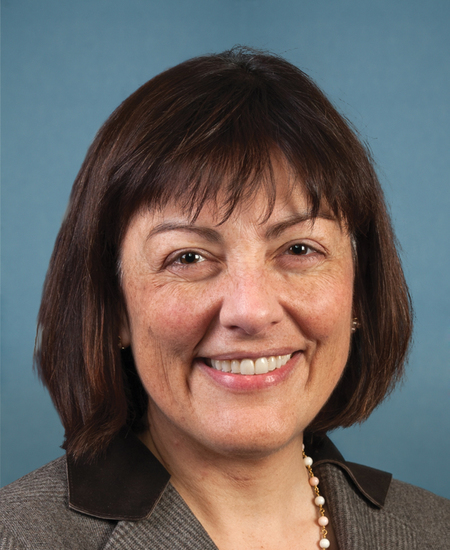
Rep. Suzan K. DelBene
Sponsored bills
Maddy summaryThis non-binding resolution (HRES 456) expresses congressional support for designating May 2025 as "Progressive Supranuclear Palsy Awareness Month." It directly affects individuals living with progressive supranuclear palsy (PSP), a rare neurodegenerative brain disorder impacting movement, cognition, and daily functioning, along with their families and caregivers. The resolution aims to raise public awareness, encourage research funding, and support organizations working to improve care and find treatments for PSP. It does not create new laws or funding but formally recognizes the need for greater attention to this condition.
Maddy summaryHR 3656 amends the Agricultural Research, Extension, and Education Reform Act of 1998 to allow the Secretary of Agriculture to waive the matching funds requirement for grants under the Specialty Crop Research Initiative. This directly affects specialty crop researchers and institutions applying for these grants, as they would no longer be required to provide their own matching funds for awards made after the bill's enactment. The key provision adds a new subsection (C) to Section 412(g)(3), authorizing the Secretary to grant waivers for matching funds on a case-by-case basis. The change simplifies funding access for specialty crop research projects without altering the initiative's core purpose. This is a procedural adjustment to grant administration, not a policy change to research priorities.
Maddy summaryThe Menstrual Equity For All Act of 2025 requires schools, colleges, correctional facilities, and federal buildings to provide free menstrual products to those who need them. It makes menstrual products covered by Medicaid, prohibits states from taxing these products, and creates grant programs to support low-income individuals. Key provisions include mandating free products in educational settings, requiring employers with 100+ employees to provide them, and expanding Medicaid coverage for these items. The bill directly affects students, incarcerated individuals, homeless people, Medicaid beneficiaries, and low-income families by addressing period poverty through concrete access requirements.
Maddy summaryThis bill prohibits the U.S. military from discriminating against service members or applicants based on gender identity. It bans policies that would deny service, involuntarily separate members, deny medically necessary healthcare, or require service in a gender different from one's identity. The law defines "gender identity" broadly to include a person's internal sense of gender, appearance, and mannerisms, regardless of sex assigned at birth. It directly affects transgender and gender-diverse individuals currently serving or seeking to serve in the Armed Forces.
Maddy summaryThe DEFIANCE Act of 2025 creates a new civil legal remedy for victims of non-consensual intimate digital forgeries (synthetic images or videos manipulating real people into sexual contexts without consent). It allows affected individuals to sue perpetrators in federal court for damages up to $250,000, injunctions to remove content, and privacy protections like pseudonyms. The bill specifically covers cases where forgeries are created or shared with intent to disclose, including scenarios involving sexual assault or harassment. It expands existing federal protections under 15 U.S.C. 6851 to address digital forgeries while ensuring state laws remain in effect.
Maddy summaryThis bill would establish 18-year fixed terms for all Supreme Court justices, replacing lifetime appointments. It requires the President to nominate one justice every two years (during first and third years after presidential elections), with Senate confirmation within 90 days, and prohibits reappointments after a single term. Current justices would be phased out in order of seniority as new justices are appointed under this schedule. The bill directly affects all sitting and future Supreme Court justices by mandating term limits and a structured appointment process.
Maddy summaryHR 3566, the ANCHOR for Military Families Act, requires the Department of Defense to provide military members and their families with comprehensive relocation assistance information at least 45 days before a permanent change of station. The bill mandates that this information cover educational resources for children (including school transitions, special education, and Individualized Education Programs), housing options, mental health support, spouse employment assistance, and legal/financial counseling. It directs the Secretary of Defense to integrate these details into accessible briefings, online resources, and materials at military installations. The law also requires annual reports to Congress on implementation progress and family awareness of available support programs. This bill directly affects active-duty service members and their families facing relocation due to military orders.
Maddy summaryThe Real Education and Access for Healthy Youth Act of 2025 would provide federal grants to support comprehensive sex education and sexual health services for young people aged 10-29. The bill establishes four grant programs: for K-12 schools and youth organizations, for colleges and universities, for educator training, and for sexual health services specifically targeting underserved youth. To qualify for funding, programs must be evidence-informed, medically accurate, inclusive of diverse gender identities and sexual orientations, culturally responsive, and trauma-informed. The bill appropriates $100 million annually for fiscal years 2026-2031, with specific funding allocations for each program type. It prohibits funding for programs that withhold health information, promote stereotypes, or fail to address the needs of specific groups like pregnant youth or survivors of violence.
Stronger Communities through Better Transit Act This bill requires the Department of Transportation (DOT) to establish a grant program to support operating projects for public transportation and related service improvements, particularly in underserved communities and areas of persistent poverty. Specifically, the bill requires DOT to allocate funding under the program for urbanized areas, states, and Indian tribes that are recipients of funds under either the Federal Transit Administration's (FTA's) Urbanized Area Formula Funding program or Formula Grants for Rural Areas program. Eligible recipients may use funding for operating costs associated with projects that improve public transportation service for transit-dependent populations and support increased transit ridership (e.g., service expansion, information technology enhancements, and workforce development). DOT must apportion the funding so that recipients receive funds that are proportional to their share of operating costs. The bill also provides for an increased federal cost share for operating assistance for projects or programs carried out in areas of persistent poverty or underserved communities. DOT must set up a multimodal access measurement interface for public agencies to aid transit agencies in determining and reporting on access to jobs and essential services. A grant recipient must (1) report specific information to the FTA for inclusion in the National Transit Database, and (2) survey transit riders and non-riding residents regarding transit service improvements. Further, the bill expands the purposes of the public transportation programs to include supporting public transportation's role in combating climate change through growing/retaining transit ridership.