

Maddy summaryThe VET PFAS Act (HR 3639) provides VA health care coverage for veterans and their family members exposed to PFAS chemicals at military bases, without requiring proof linking illness to exposure. Veterans who served at contaminated bases and family members who resided there (or were in utero while the veteran lived there) can now receive treatment for specific conditions like testicular cancer, kidney cancer, thyroid disease, and pregnancy-related hypertension. The law creates a presumption that these conditions are service-connected, streamlining access to VA benefits. Annual reports will track program usage, including the number of veterans and families receiving care and the conditions treated.
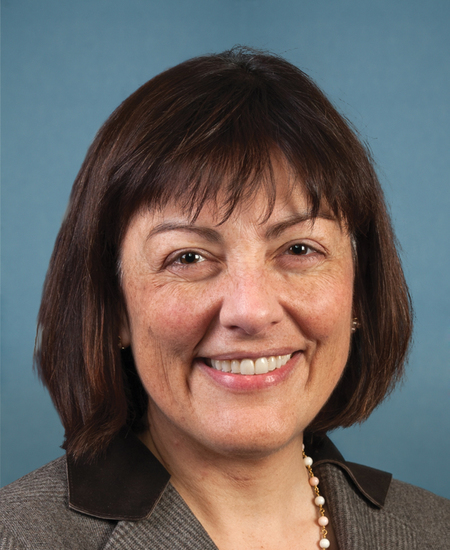
Rep. Suzan K. DelBene
Sponsored bills
Farmers Feeding America Act of 2025 This bill reauthorizes The Emergency Food Assistance Program (TEFAP), increases funding for the program, and provides additional delivery options for geographically isolated states (i.e., Hawaii, Alaska, Puerto Rico, the Northern Mariana Islands, the U.S. Virgin Islands, and Guam). TEFAP is a federal program that helps supplement the diets of people with low income by providing them with emergency food assistance at no cost. Through TEFAP, the Department of Agriculture (USDA) purchases a variety of commodities and makes those food products (e.g., canned, frozen, dried, and fresh fruits and vegetables, eggs, meat, dairy, and whole-grain and enriched grain products) available to state distributing agencies. The bill increases funding for purchasing commodities under the program. Further, the bill directs USDA to coordinate with geographically isolated states to (1) establish alternative delivery options for allocated commodities, and (2) allow for the states to order commodities through the USDA Department of Defense Fresh Fruit and Vegetable Program. USDA may also provide geographically isolated states the ability to directly purchase domestically grown food in lieu of receiving a portion of the commodities. Under this option, USDA may distribute as cash to the state up to 20% of the cash value of the commodities that are allocated to the state under TEFAP. Further, USDA may consider additional factors beyond lowest price in determining winning bids for contracts for fresh produce packages (including product variety and transportation distance).
Maddy summaryHR 3773 (PROTECT Act of 2025) amends federal law to recognize tribal courts as having authority equivalent to state courts for certain electronic evidence cases. It requires that warrants for electronic communications stored 180 days or less must follow procedures from the Indian Civil Rights Act (25 U.S.C. 1302(a)(2)) when issued by tribal courts. The bill also expands tribal jurisdiction over controlled substance offenses (like drug trafficking or possession) and firearms offenses (such as possession by domestic violence offenders) by defining these terms for tribal courts. This directly affects tribal courts and tribal law enforcement by standardizing legal procedures for evidence handling and broadening their authority under federal law. The changes align tribal court processes with federal and state standards for digital evidence and criminal jurisdiction.
Maddy summaryHR 3757, the Pride In Mental Health Act of 2025, provides $20 million annually (2026-2030) to fund grants for mental health services targeting LGBTQ+ youth, including nonbinary, intersex, and Two Spirit youth, and their families/caregivers. The bill mandates grantees to provide trauma-informed care, cultural competency training, school bullying prevention guidelines, and evidence-based practices while explicitly prohibiting the use of funds for conversion therapy or its promotion. It also requires the federal government to restore mental health reports on LGBTQ+ youth, conduct a national survey measuring mental health distress, and produce a report on mental health services for LGBTQ+ youth in foster care. The law directly affects these youth populations by expanding access to tailored mental health resources and data collection, with funding administered through the Substance Abuse and Mental Health Administration.
Maddy summaryHR 3762, the Supporting Healthy Moms and Babies Act, requires health insurance plans to cover comprehensive prenatal, childbirth, neonatal, perinatal, and postpartum care without cost-sharing (like copays or deductibles). It mandates specific services including ultrasounds, care for pregnancy loss, delivery support, and postpartum behavioral health services for conditions like diabetes or hypertension. The bill applies to group health plans and individual insurance policies starting after the law's enactment, covering both biological mothers and legal parents who did not give birth. This policy directly affects insured individuals seeking maternal and newborn healthcare, ensuring these essential services are fully covered under existing Affordable Care Act requirements.
Maddy summaryHR 649, the Whole Milk for Healthy Kids Act of 2025, amends the National School Lunch Act to allow schools participating in the program to offer students both organic and non-organic whole milk, in addition to reduced-fat, low-fat, and fat-free options. Key provisions include clarifying that milk fat in whole milk should not count toward saturated fat limits for meal compliance, prohibiting schools from purchasing milk from Chinese state-owned enterprises, and ensuring schools cannot be barred from offering the full range of milk types listed. The bill directly affects public and private schools serving the National School Lunch Program by expanding their milk options for students. It focuses on concrete policy changes to dietary offerings and sourcing restrictions within the school nutrition program.
Maddy summaryHRES 473 is a non-binding House resolution calling on the U.S. government to urgently use diplomatic efforts to ensure food and medical supplies reach civilians in Gaza. It directly addresses the needs of approximately 2.2 million Palestinians facing acute hunger, including 10,000 children identified with acute malnutrition, following a border blockade that blocked aid from March to May 2025. The resolution specifically urges the White House and State Department to secure "immediate and secure delivery and disbursement" of aid and a lasting end to the conflict, citing collapsed bakeries, exhausted food rations, and a near-total health system collapse.
Maddy summaryThe Family Vaccine Protection Act makes the Advisory Committee on Immunization Practices (ACIP) an official part of federal law, requiring it to provide vaccine recommendations based on strong scientific evidence. It mandates that the CDC Director must adopt ACIP's recommendations unless they don't meet the evidence standard, and if not adopted, the CDC must explain its decision and notify Congress within 48 hours. The bill establishes procedures for ACIP to review new vaccines within 90 days of licensure and to consider breakthrough therapies or public health emergencies. This act aims to strengthen transparency and evidence-based decision-making in vaccine recommendations for the public health system. It affects the CDC, ACIP, and Congress through formalized processes for vaccine policy development.
Maddy summaryThis bill repeals key provisions of the Protection of Lawful Commerce in Arms Act (PLCAA), which previously shielded gun manufacturers and dealers from civil lawsuits. It allows gun trace data from the federal Firearms Trace System to be used as evidence in civil court cases involving gun violence. Victims of gun violence (or their families) who sue gun manufacturers, dealers, or distributors in state or federal court can now access and rely on this trace information. The bill directly changes the legal landscape by removing a major barrier to holding gun industry entities accountable in civil cases. It does not alter criminal proceedings or affect gun ownership rights.
Maddy summaryThis resolution (HRES 457) is a symbolic measure expressing congressional support for designating June 6, 2025, as "National Gun Violence Awareness Day" and June 2025 as "National Gun Violence Awareness Month." It does not create new laws or policies but encourages public awareness through specific actions: wearing orange on June 6, focusing on gun safety during summer months, and holding community discussions. The resolution references statistics on gun violence deaths and honors Hadiya Pendleton, a teen victim killed in 2013. It directly affects the public by calling for voluntary observance and community engagement, not government mandates.